

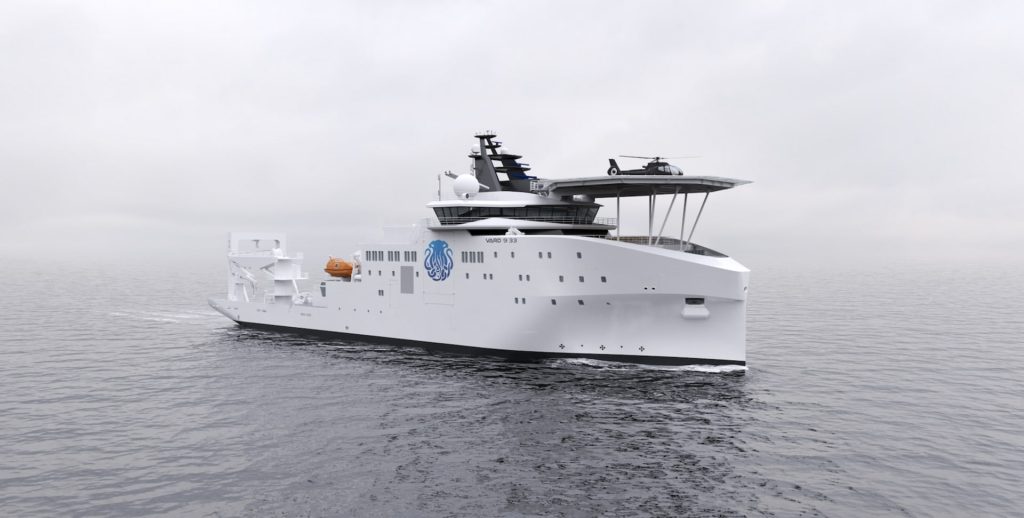
To millions of gamers, Gabe Newell is the visionary behind Valve and the Steam platform. His latest venture, however, isn’t set in a virtual world. He’s commissioned a deep-sea research vessel to explore the most alien places on Earth: the crushing, dark trenches of the ocean floor (Gabe Newell Ocean Research Ship).
This surprising pivot from digital entertainment to marine biology prompts a fascinating question: why is the king of virtual worlds so invested in exploring the planet’s final, physical frontier?
Gabe Newell Ocean Research Ship: What is the ‘Hadal’ and How Does It Work as a Floating Lab?
The ship, now named Hadal after the ocean’s deepest zone, is no stranger to this kind of work. It was formerly the celebrated Pressure Drop, the vessel that supported explorer Victor Vescovo’s record-setting dives to the deepest point of every ocean. Now, under Newell’s private research company, Inkfish, the Hadal‘s mission continues with a new chapter of discovery.
So, how does the explorer ship actually work? It’s best to think of it not as a submarine, but as a floating launchpad and command center. The huge vessel acts as a “mothership,” carrying a smaller, separate deep-diving submersible on its deck. It lowers this vehicle into the water and provides all the power, communication, and support needed for the mission miles below.
This two-part system is the core of the operation. The Hadal serves as the essential, high-tech base camp with sophisticated equipment, allowing a small, robust vehicle to do what the ship itself cannot: journey into the crushing darkness of the deep.
Surviving the Crush: What It Takes to Explore the Hadal Zone
The ship’s destination gives it its name. The Hadal Zone, named after the underworld of Greek myth, refers to the ocean’s deepest trenches, from 6,000 to nearly 11,000 meters down. These chasms are so profound that Mount Everest could sink into them and still have a mile of water above its peak. It is a world of absolute darkness and immense, unforgiving force.
Journeying into this realm presents one main, colossal challenge: pressure. At the bottom of the Mariana Trench, the water column exerts a pressure of over 16,000 pounds per square inch. To make sense of that number, imagine the weight of 50 jumbo jets stacked on a single postage stamp. This is the force the Limiting Factor submersible must withstand, a force that would instantly pulverize any ordinary vessel.
So how does it survive? The submersible’s secret lies in its core: a nine-centimeter-thick titanium sphere. This passenger compartment is machined to be almost perfectly spherical, the ideal shape for distributing the crushing pressure evenly across its surface. It acts as a tiny, high-tech fortress, protecting its occupants and allowing humanity to visit a place more hostile and less explored than the surface of the moon.
Gabe Newell Ocean Research Ship: Beyond Gaming: Why Mapping the Deep Sea Matters for Everyone
Gabe Newell’s venture is more than a tech billionaire’s hobby; it’s a vital scientific mission. His contribution to marine biology isn’t just about curiosity—it’s a direct search for life that could unlock future medicines and an initiative to map the last unknown landscapes on Earth. Projects like this, powered by private funding from Newell’s Inkfish company, push the boundaries of discovery and allow humanity to finally meet the most unexplored parts of our own world.