

Gabriel Vadasz is an attorney and entrepreneur based in Phoenix, Arizona, with experience spanning legal compliance, financial strategy, and regulatory advisory work. Through his legal practice and consulting roles, Gabriel Vadasz has advised clients on complex matters involving compliance, capital structuring, and business operations across regulated industries. He founded Diamondback Legal in 2019 and later worked as a consultant with the Maria Jones Law Firm, assisting clients in improving efficiency in areas such as immigration and criminal law.
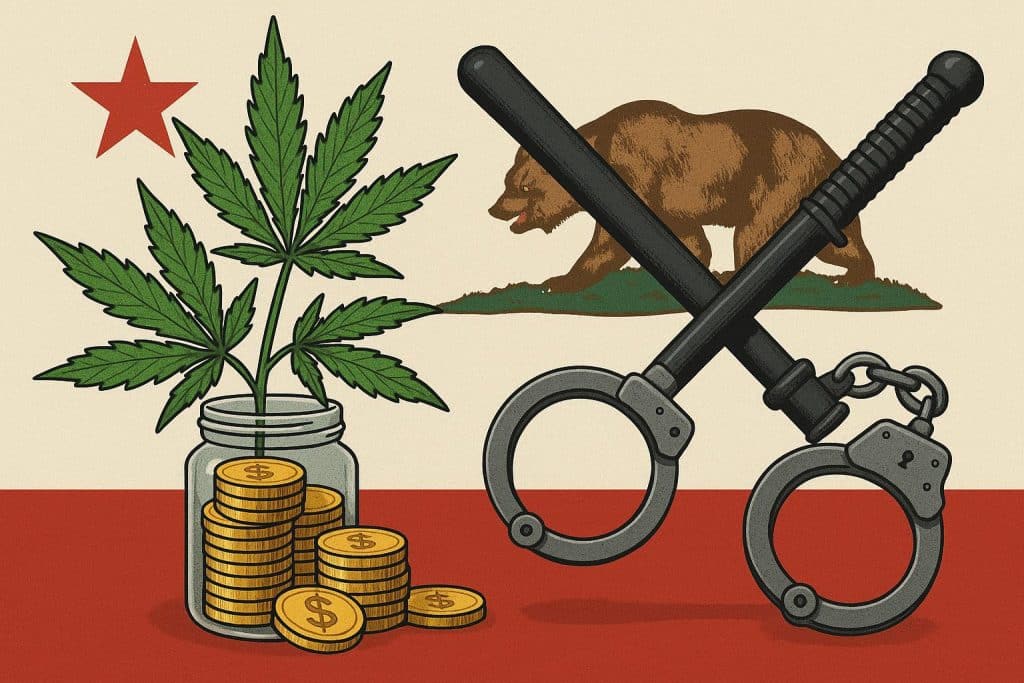
In parallel with his legal work, Gabriel Vadasz is a founding member of Vadasz Ventures, a San Francisco-based consulting and venture firm focused on strategic growth, finance, and corporate structuring. His professional background provides a practical lens for understanding how legislative and regulatory changes affect business environments. This perspective is especially relevant when examining California’s evolving cannabis laws, which balance tax policy adjustments with stricter enforcement measures to support legal operators while addressing illicit activity.
California Laws Reduce Cannabis Taxes, Boost Enforcement
California was one of the earliest US states to develop medical marijuana laws and maintains a highly regulated system for cannabis production and distribution. The state’s legal cannabis market is the largest worldwide and has goals such as ensuring fair labor practices and fostering environmental principles, while making sure that all product meets strict quality standards. In addition, a portion of taxes generated by the industry goes toward causes such as environmental protection, public health, and education.
The California government under Governor Gavin Newsom has positioned itself as supportive of the cannabis industry as a long-term source of economic revenue and jobs. One example is AB 564, which Newsom signed in September 2025, and which did away with a 25 percent increase on taxes applied to the legal cannabis industry.
In addition to preserving the current sales tax structure, the bill sets the excise tax rate for cannabis at15 percent statewide through 2028. This rolls back an excise tax increase to 19 percent that took effect in early 2025. The state applies an excise tax as a lever before sales taxes are accounted for. This was adopted as part of a 2022 agreement negotiated between marijuana enterprises and the State of California.
The excise tax took the place of a different fee structure that raised funds for child care assistance and other social programs. These had been funded as part of the 2016 ballot measure that made cannabis legal. A number of nonprofits in areas such as substance abuse, low-income children’s services, and environmental protection thus opposed AB 564.
In particular, conservation groups in the so-called Emerald Triangle of Northern California described the excise tax as a setback. They need funds for addressing the land degradation associated with illegal growers. Since its establishment in 2022, Unified Cannabis Enforcement Taskforce has guided 230 multiagency operations in confiscating and destroying illegal cannabis that totals 317 tons and has a value of around $890 million.
Legislators describe these new measures as necessary in ensuring competitive markets primed for long-term growth. Dispensaries argue that years of overregulation and overreliance on cannabis as a funding mechanism have left their operations with extremely small margins. With the Department of Cannabis Control estimating that legal sales make up about 40 percent of all cannabis consumed, taxable sales of the product have declined from a high watermark of $1.5 billion in 2021’s second quarter to $1.2 million in 2025’s second quarter.
Another California legislative focus is the October 2025 passage of SB 378, which prohibits online sales of hemp and cannabis products that are unlicensed, non-safety-tested, or illicit. This bill reflects the emergence of online venues such as Instagram and Amazon as go-to platforms for cannabis sales. They don’t have the mechanisms in place to screen for product that is not legal and could therefore be dangerous.
These sales also impair efforts to maintain a robust legal industry that provides essential tax revenue. With the new law in place, online marketplaces are liable for any advertising and sale of unlawful cannabis and hemp targeted at California consumers.
About Gabriel Vadasz
Gabriel Vadasz is an attorney and entrepreneur with experience in legal compliance, financial services, and strategic consulting. Based in Phoenix, Arizona, he has worked with clients on regulatory matters, capital structuring, and complex transactions, including mergers, acquisitions, and securities-related issues. As a founder of both a law practice and a consulting venture, Gabriel Vadasz brings a multidisciplinary perspective to understanding how legislative and regulatory changes influence business operations across highly regulated sectors.