

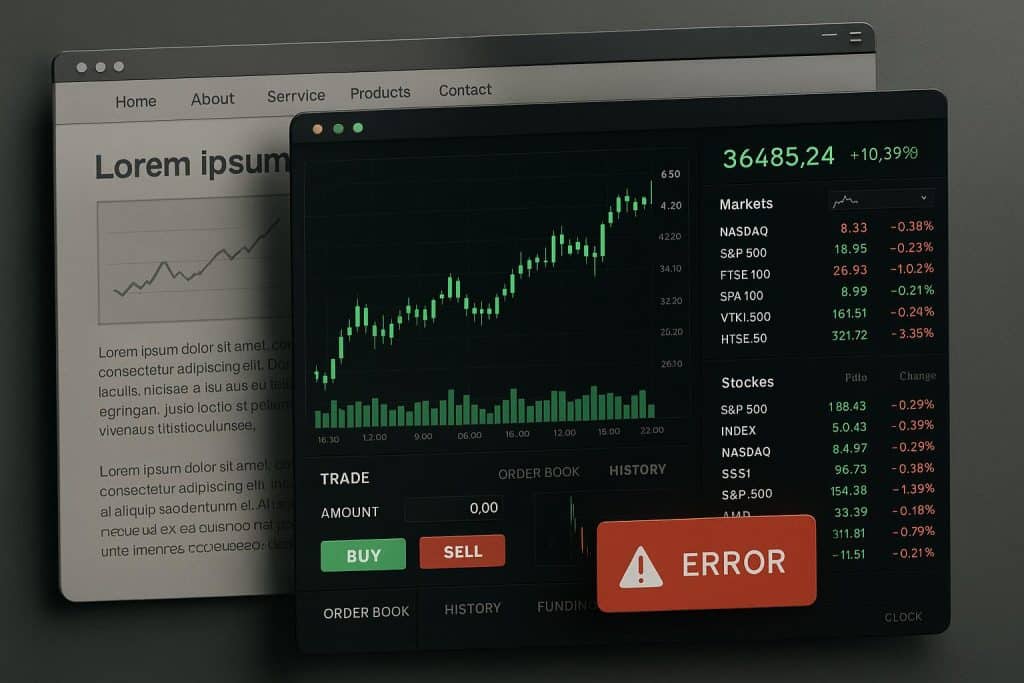
The investment landscape of 2026 is faster and more accessible than ever, but this digital evolution has a dark side. A new breed of Stock Trading Scams has emerged, powered by “Ghost Platforms”—sophisticated, high-tech illusions designed to look like legitimate trading hubs while existing only to siphon away your capital.
These are not your typical clunky websites from years past. They use advanced coding to mimic real-time market data, creating a seamless but entirely fraudulent user experience.
The 4 Stages of a Ghost Platform Scam
- The High-Tech Hook: You are lured via social media ads or “VIP” Discord groups promising early access to IPOs or AI-powered trading bots.
- The Polished Onboarding: You are prompted to download fake trading apps directly via a link (often bypassing official app stores). These apps look professional, complete with biometrics and “customer support” chats.
- The Illusion of Success: Once you deposit a small amount, the app shows immediate, massive gains. These “profits” are merely numbers programmed into a dashboard; no real trading is happening.
- The Final Disappearance: When you attempt a large withdrawal, the platform demands “verification fees” or “capital gains taxes” paid upfront. Once you pay—or refuse—the app crashes, the website vanishes, and the “brokers” ghost you.
5 Signs Your Trading Platform is a Ghost
1. The “Side-Loading” Requirement
Legitimate brokers host their apps on the Apple App Store or Google Play Store, which have strict security audits. If a platform asks you to download a “beta” version via a link or an .apk file, it is almost certainly one of many fake trading apps designed to bypass security filters.
2. Synthetic Market Data
Ghost platforms often show prices that are slightly “off” compared to major exchanges like the NYSE or NASDAQ. They manipulate these charts to ensure your “trades” always look successful, encouraging you to deposit more.
Verification Tip: Always cross-reference the app’s price movements with a trusted third-party site like Yahoo Finance or Bloomberg.
3. Unregulated “Safety” Claims
Scammers often display badges from fake or offshore regulatory bodies. In 2026, they may even claim to be “AI-Regulated” to sound futuristic.
- The Reality Check: A real broker will have a verifiable license number from a major authority like the SEC (US), FCA (UK), or ASIC (Australia).
4. Crypto-Only Deposits
If a stock brokerage refuses bank wires or credit cards and insists you deposit funds via Bitcoin, USDT, or other stablecoins, be on high alert. Crypto is the preferred tool for Stock Trading Scams because it is harder to track and nearly impossible to reverse.
5. The Withdrawal “Tax” Trap
This is the ultimate red flag. A legitimate brokerage deducts commissions from your account balance. If a platform tells you that you must send new money to pay for “withdrawal taxes” or “liquidity fees” before you can get your funds, you are being scammed.
Recovery and Reporting: Your Next Steps
Falling victim to a sophisticated digital heist is a heavy burden, but there are dedicated pathways for accountability. Because these “Ghost” entities operate across borders, traditional local police reports are often just the first step.
If you have been caught in the web of Stock Trading Scams or have lost money to fake trading apps, you should immediately document your transaction IDs, screenshots of your “profits,” and all chat logs.
For specialized assistance in tracking these fraudulent entities, the Finance Complaint List (financecomplaintlist.com) is a critical resource. Filing a report on the Finance Complaint List helps create a global footprint of the scammer’s tactics. This collective data is essential to help recover Stock Trading Scams assets by providing the necessary evidence for international cybercrime units and financial regulators to freeze illicit accounts and warn the global investing community.