

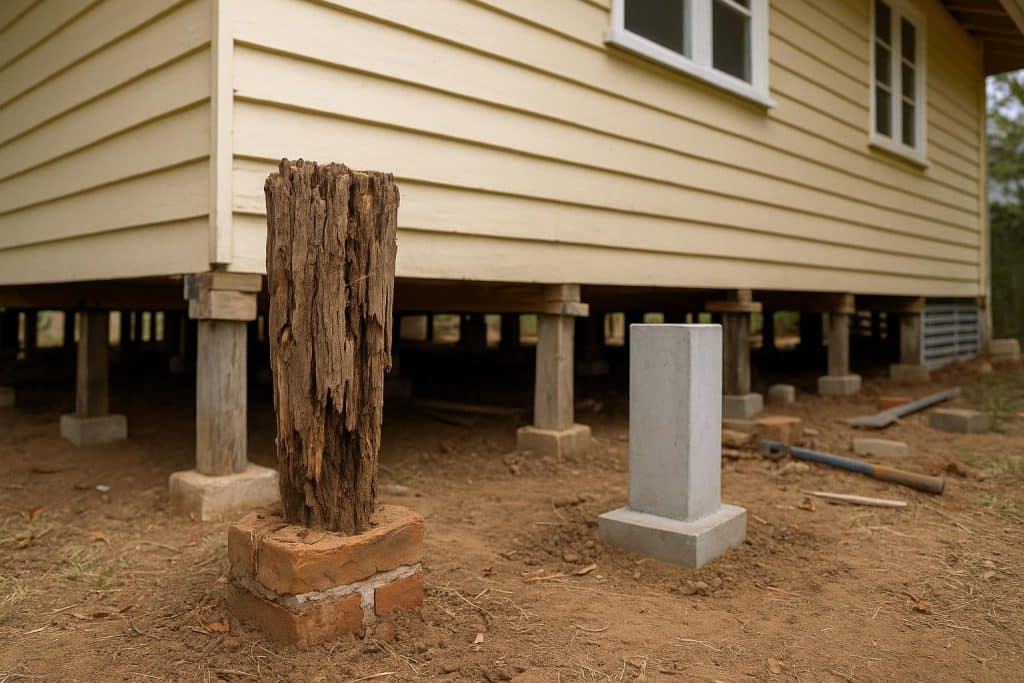
Restumping is one of those essential home maintenance tasks many homeowners don’t think about until problems become impossible to ignore. In Australia, particularly in older homes built on timber stumps, shifting soil conditions and natural material wear can gradually undermine your home’s structural stability. Knowing the early warning signs can help you act before minor issues turn into costly repairs.
Here are some of the most common indicators that your house may need restumping, why they matter, and what to do next.
Uneven or Sloping Floors
One of the earliest and most noticeable signs of stump failure is uneven flooring. You may feel floors dipping underfoot, notice furniture rolling slightly, or see gaps forming between floorboards and skirting boards.
These changes often occur gradually as timber stumps deteriorate or sink into reactive soil. If left unchecked, uneven floors can place additional stress on walls and ceilings, accelerating structural damage and increasing concerns about how much restumping costs in the long run due to delayed repairs.
Cracks in Walls, Ceilings, or Brickwork
Cracks are a classic sign that a home’s foundations are no longer level. While small hairline cracks can result from normal settlement, larger or widening cracks—especially diagonal ones—are often linked to failing stumps.
Pay close attention to:
- Cracks around doors and windows
- Stair-step cracks in brick walls
- Gaps forming where walls meet ceilings
These issues suggest uneven movement beneath the home and should be assessed by a professional.
Doors and Windows That Stick or Won’t Close Properly
If doors suddenly won’t latch or windows become difficult to open and close, it may not be a humidity issue. When stumps sink or shift, door and window frames can twist slightly out of square. This is a subtle but important sign, as it indicates ongoing movement rather than a one-off structural change.
Bouncy or Soft Floors
Floors that feel spongy, springy, or unstable can signal rotten or weakened timber stumps. Moisture exposure, termite activity, and age all contribute to stump degradation, particularly in older weatherboard homes. Soft floors are not just uncomfortable—they can become a safety risk if the underlying supports continue to weaken.
Visible Damage to Stumps Under the House
If your home has accessible subfloor space, a visual inspection can be revealing. Signs of trouble include:
- Timber stumps that are cracked, leaning, or rotting
- Concrete stumps that are sinking or no longer level
- Temporary packers or makeshift supports added over time
Any of these suggest the original stump system is no longer doing its job effectively.
Gaps Between Walls, Floors, and Ceilings
As a house shifts unevenly, gaps may appear where structural elements once fit tightly together. You might notice:
- Skirting boards pulling away from walls
- Gaps between ceilings and cornices
- Visible separation at internal corners
These gaps are often cosmetic at first but usually point to deeper foundation movement.
Recent Changes in the Surrounding Soil
Environmental factors play a major role in stump performance. Prolonged drought, heavy rainfall, tree root growth, or changes to drainage can all cause soil to expand, contract, or erode. If your area has experienced significant soil movement and your home is showing any of the above signs, restumping may be worth investigating sooner rather than later.
Why Early Action Matters
Ignoring the signs of failing stumps can lead to:
- Increased structural damage
- Higher repair costs
- Reduced property value
- Complications during future renovations or resale
Addressing issues early often means a smoother process, fewer secondary repairs, and greater long-term stability for your home.
Is it time to get a professional assessment?
If you’ve noticed one or more of these warning signs, the next step is a professional inspection. An experienced restumping specialist can assess the condition of your existing stumps, determine whether full or partial restumping is required, and provide clear guidance on timelines and costs.
Restumping may not be the most glamorous home improvement, but it’s one of the most important investments you can make in the safety, longevity, and value of your property.