

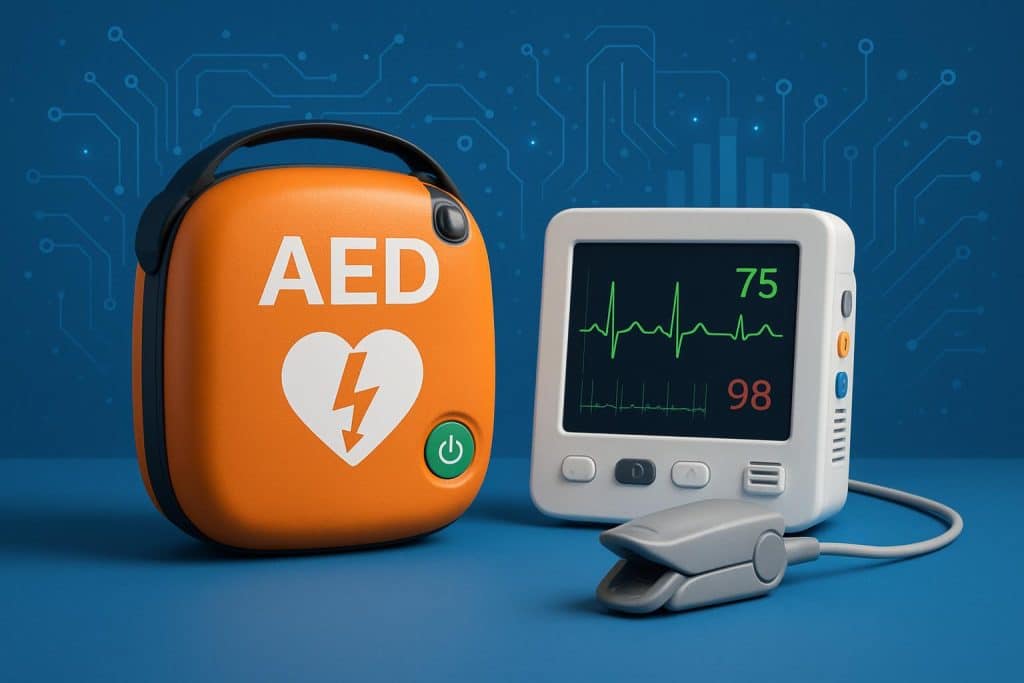
Not all technological breakthroughs make headlines. Some operate in the background, designed not for entertainment or productivity, but for moments when every second counts. Defibrillation technology is one such field, where innovation must be precise, reliable, and invisible until needed. Kuteras stands at the intersection of engineering discipline and emergency response technology.
An automatic defibrillator is essentially a real-time decision-making system. It captures ECG signals, filters noise, classifies cardiac rhythms, and determines whether therapy is required. This process mirrors many modern computing challenges—signal processing, embedded software, and safety-critical logic—compressed into a compact medical device. The automatic defibrillator / otomatik defibrilatör represents one of the most advanced applications of embedded technology in public spaces.
Kuteras builds its systems around biphasic defibrillator technology, a clinically proven method that delivers controlled electrical energy in two phases. From an engineering standpoint, this requires precise timing, voltage control, and adaptability to changing patient conditions. These are the same challenges faced in power management systems across renewable energy and electric mobility sectors.
What sets Kuteras apart is its modular approach. Through its OEM defibrillator module offerings, the company enables other technology developers to embed defibrillation capabilities without recreating complex high-voltage architectures. This reflects a broader shift in technology development toward modular, platform-based innovation.
Safety and reliability remain central. Defibrillators must meet strict international standards while operating in unpredictable environments. Kuteras incorporates multi-layered protections, automated diagnostics, and fail-safe designs—principles familiar to engineers working in aviation, robotics, and industrial control systems.
As technology blogs explore the future of smart cities and connected infrastructure, emergency medical devices deserve a place in the conversation. Kuteras demonstrates that innovation is not only about speed or convenience, but also about resilience, trust, and human impact.