

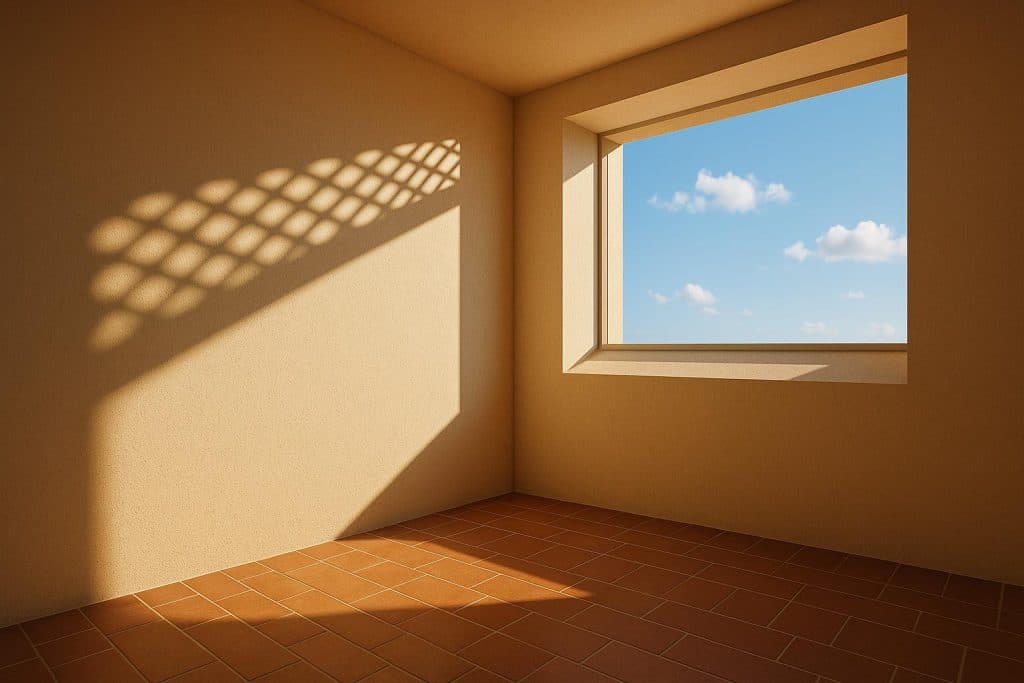
Hot climate living creates a paradox. Everyone wants saturated natural daylighting, but no one wants to pay for the energy costs associated with poor solar heat gain. We need interiors saturated with daylight, but we need heat kept outside.
It’s a matter of comfort – of course – but once comfort levels become compromised it’s also a matter of building energy expenses on a potentially exorbitant scale during peak summer months. Hot climate daylighting can lead to hundreds of extra dollars of electric bills monthly for an owner who tried to implement daylighting, because without adequate control measures, the systems fail and new expectations merely shift formerly anticipated lighting expenses into cooling costs.
What is Solar Heat Gain?
Solar heat gain is natural light in a hot climate, but it won’t go away. Instead, it must be controlled. When light enters, it carries both visible and infrared portions of the spectrum. While we require the visible portion for natural lighting, it’s the infrared spectrum that creates unnecessary heating.
However, when standard or regular daylighting systems are applied, this distinction doesn’t get made – solar light is all good. But in hot climates, a more nuanced approach must be applied to get the most light without the excessive heat.
Determining when solar gain is going to occur also matters significantly. The morning/evening sun, for example, enters at a lower angle; it is less intense per unit of amount than midday sun, which hits down on the roof directly at a higher angle. These help shape designs as well for windows/skylights in placement/orientation.
Glazing Technologies
Glazing technologies present opportunities for successful hot climate daylighting solutions as they control projections of different solar fractions. For example, low emissivity coatings can reject infrared while allowing visible light to penetrate with minimal resistance. Essentially, they use selective coatings to screen out infrared but accept visible light.
However, double and triple panes provide desirable thermal resistance from air spaces that limit infiltration/exfiltration but too many pans reduce transmission of light. The same applies in hot climates; however the importance is thermal performance versus transmission efficacy.
The best glazing option is spectrally selective glazing. These can block specified wavelengths with maximized transmission of visible light, leading to ideal glazing options that are both great for natural lighting and limited amounts of heat.
Therefore, if much of standard glazing in residential high-performance options of hot climate regions are meant to comply with energy code standards, skylights for houses Orange County, for example, incorporate these high-performance options with great ease that were not possible just a few years ago – now people have expectations.
Placement and Orientation
Where daylighting occurs makes a difference in the hot climate. North-facing windows and skylights can provide sufficient consistent natural light without excessive amounts of heat gain. South-facing can work but require excessive means of shading or glazing alterations to accommodate any time of year.
East and west are the most challenging because they receive low angle sun with high amounts of intensity when we want it least – when people are trying to cool down their houses the most in the afternoons. Often these require such exceptional external shading devices that they are not practical.
The overhead approach often works best – skylights in the hot climate – as long as they are designed specifically for the heat to enter as well at the highest point. Since this is when it will be hottest outside, appropriate skylight framing/glazing options can help capture cooling air while letting in amazing amounts of natural light while minimizing heat gain altogether.
Shading Options
External shading is often best for human control over solar heat gain while still attaining natural light. Fixed overhangs, operable blinds/louvers can limit direct sunlight but allow diffused sunlight into a space with ease and minimal effort.
The problem is that it must be selected at certain points – preventing heat gain does nothing for natural lighting needs in other areas of the day. Therefore, limitations occur by weather conditions or ability to manage people when expenses are involved for electric gains through automated systems based on temperature/time of day/solar intensity.
Internal shading offers more flexibility for daylighting relative to artificial light management since shades or blinds can let people block extra sources of glare and provide potential privacy options from outside. They rarely do anything to minimize the heat gain, however – even slightly.
Ventilation Solutions
Since some solar heat gain will inevitably infiltrate a hot climate daylighting system regardless of how well thought-out the glazing/shading combination, ventilation naturally can help vent any real or excess treatment. For example, stack ventilation where air rises naturally gets sucked out through upper spaces while new cooling air can enter lower spaces works effectively with hot climates best since excess cool air stays low.
Mechanical ventilation integrated with hot climate design systems can help relieve extra heat gain if needed – and HRV units can even take excess heat waste and redirect them for use during cooler seasonal times to improve overall energy efficiency effectiveness.
Cost Benefit Analysis
Generally speaking, hot climate daylighting systems cost exponentially more than at standard installations due to increased price factors over time but expense savings can justify these costs down the road – reduced artificial lighting loads or lower cooling costs due to better use and management can provide enormous association benefits during development.
This is especially true if savings attributed to preventing artificial loads don’t just transfer costs associated with cooling systems – creative thinking here helps determine local climate perspectives instead of anticipated energy use per client.
Considerations for Long-Term Performance
In a hot climate, so much environmental impact occurs on building components. From UV exposure and thermal striation to excessive temperature cycling on things like seals and frames – material performance dictates longevity; therefore, implementing those selections determined by option stresses is essential – not what other materials naturally do elsewhere (like cold weather).
Maintenance expectations are also higher in dustier climates through seal degradation and expansion/contraction wear leading to mechanical issues or simply visual issues. Therefore, long-term selection needs should account for these expected associations determined from stressors over the life of components and systems.
Hot climate daylighting is a complex combination that balances various competing goals – natural light versus heat gain; operations versus costs; instant gratification versus long-term benefits.