

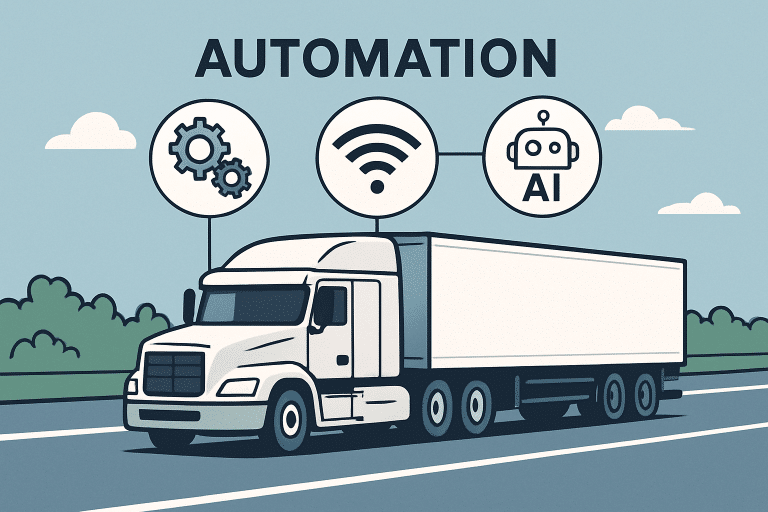
The trucking industry is rapidly evolving as automation technologies become central to modern logistics. Businesses across the sector are leveraging cutting-edge solutions, such as trucking dispatch automation, to optimize operations and meet increasing delivery demands. As freight volumes climb and supply chains grow more complex, automation is becoming a vital tool for maintaining reliability and cost-effectiveness.
Adopting automated systems allows companies to streamline repetitive tasks, reduce human error, and significantly enhance safety for their drivers and cargo. This shift isn’t just about replacing manual labor; it’s about empowering fleets with real-time data, predictive analytics, and seamless coordination. As a result, carriers can focus more on core business objectives rather than being bogged down by administrative hurdles.
Early adopters of automation in trucking are reporting measurable benefits, including decreased delivery times, improved resource allocation, and increased overall customer satisfaction. These advantages directly impact profit margins and clearly link tech investment to scalable business growth.
Growing consumer expectations for faster deliveries and full visibility are also accelerating the transition. Shippers now choose partners who can demonstrate technological agility and a commitment to reliable, tech-driven service. Staying relevant requires not just embracing change but leading the charge into the future of logistics.
For organizations eager to enhance network optimization and streamline processes, integrating a robust transportation management system offers a scalable solution that supports the evolving needs of the supply chain.
The Rise of Automation in Trucking
The most visible advancement in trucking automation is the rollout of autonomous trucks on public highways. A striking example is the commercial deployment of driverless trucks along a 200-mile corridor of I-45 between Dallas and Houston. Aurora, a pioneer in autonomous vehicle technology, has transitioned from lengthy road trials to fully operational driverless hauls. These trucks are not only setting records for efficiency but are also providing crucial solutions to labor shortages and addressing high turnover rates that have long burdened the industry.
Autonomous vehicles leverage a suite of sensors, cameras, and artificial intelligence (AI) algorithms to interpret complex road conditions and make real-time driving decisions. Technologies such as LiDAR enable trucks to “see” far ahead in all conditions, further enhancing safety and reliability. These advancements are set to transform both long-haul and regional freight transport, offering a tantalizing glimpse of a more resilient and efficient future for supply chains nationwide.
AI-Powered Logistics
The rise of AI-powered solutions has transformed how carriers plan routes, predict cargo delays, and manage fleet health. EXL and Schneider, two leaders in freight logistics, adopted AI-driven scheduling systems that reduced appointment scheduling times by more than 50% and cut costs by 24%. These innovations bring value not only to carriers but also to their clients and drivers, who benefit from predictable routes, optimized loads, and fewer empty miles.
From route optimization to real-time tracking, AI is also enabling proactive issue resolution, allowing logistics teams to respond to disruptions before they escalate. According to The Wall Street Journal, the adoption of AI tools in logistics is expected to continue accelerating, particularly as companies seek ways to combat rising operational costs and meet tighter delivery windows.
Regulatory Developments
As automation technologies outpace policy, regulators are working quickly to establish frameworks that ensure safety while fostering innovation. A prime example is the California Department of Motor Vehicles’ move to issue draft regulations for autonomous trucks. The current draft requires a safety driver in autonomous vehicles for all cargo types but lays the groundwork for potential future deployments with less human oversight. Feedback from stakeholders and the public will be crucial to shaping final guidelines and ensuring that evolving standards reflect the realities of American highways.
The regulatory landscape is set to play a decisive role in shaping how quickly—and safely—automation continues to progress in the industry. Lawmakers are keen to balance the promise of safer, more efficient roads with the need to manage risk in a way that inspires public confidence. As deployments grow, expect increased collaboration among technology providers, regulators, carriers, and independent safety watchdogs.
Challenges and Considerations
The journey to a fully automated trucking industry is not without obstacles. Integrating new systems demands substantial upfront investment, including staff training and infrastructure upgrades. Additionally, concerns about workforce displacement remain a topic of heated debate. While automation may shift certain job functions, it also creates opportunities for upskilling and specialized tech roles.
Safety remains paramount. Any technical glitch or system failure can have significant consequences, both legally and operationally. That’s why pioneering companies are investing in fail-safe architectures, redundant data streams, and rigorous pilot testing to ensure operational stability and reliability.
Successfully navigating these challenges requires close partnerships between truck manufacturers, carriers, technology firms, and policymakers. The aim is to build consensus around best practices and transparent standards that prioritize human safety while advancing progress.
The Future of Trucking Automation
The future of trucking is one in which automation, human expertise, and robust digital platforms converge for optimal outcomes. As both AI-driven systems and autonomous vehicles mature, expect to see an industry with unprecedented transparency, speed, and efficiency. Those able to harness automation’s capabilities—while balancing its risks—will set a new standard for the rest of the field.
Ultimately, automation is not about replacing the human element but augmenting it. Drivers, now aided by advanced decision-support tools, can focus on tasks requiring critical thinking and customer engagement. Companies that lead this cultural and technical evolution will be best prepared for the opportunities and challenges that lie ahead.
Automation is not a distant future but an unfolding reality, reshaping trucking one mile at a time. Embracing these changes and investing in technological infrastructure will be crucial to thriving in the modern logistics landscape.