

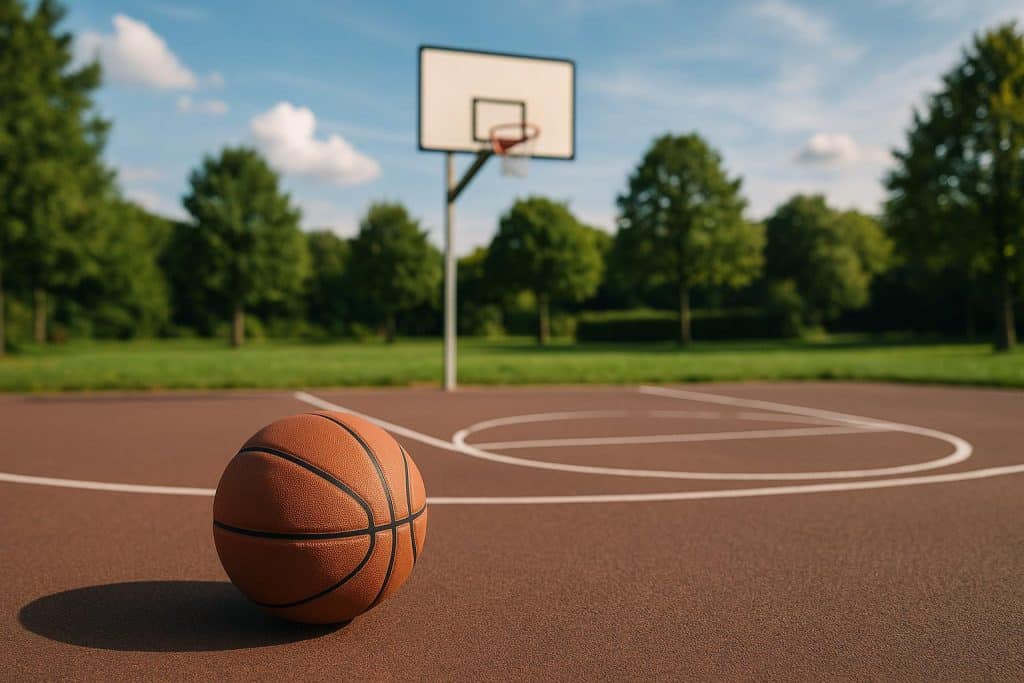
Basketball remains one of the most accessible and physically demanding recreational sports worldwide. Unlike many structured fitness programs, basketball combines cardiovascular activity, coordination, social interaction, and competition within a single activity.
The sport appeals to different age groups because it can be played casually in neighborhood courts or competitively in organized leagues. This flexibility helps people maintain consistent physical activity over long periods.
As sedentary lifestyles become more common, basketball continues encouraging healthier movement patterns and stronger social engagement.
Basketball Improves Cardiovascular Health
Basketball involves continuous movement, sprinting, lateral motion, jumping, and rapid directional changes.
This combination creates strong cardiovascular demand while also improving endurance and circulation.
Regular play helps support:
- Heart health and oxygen efficiency
- Stamina during daily activities
- Long-term cardiovascular conditioning
Because basketball naturally alternates between high-intensity bursts and recovery periods, it functions similarly to interval training.
Full-Body Movement Improves Coordination
Basketball requires multiple physical skills simultaneously.
Players must dribble, pass, defend, sprint, and react quickly while maintaining balance and coordination. This improves body control and movement efficiency over time.
The sport develops both upper and lower body strength through repeated movement patterns such as jumping, pivoting, and directional acceleration.
This makes basketball more physically comprehensive than many repetitive workout routines.
Social Participation Encourages Consistency
Many people struggle maintaining exercise routines because solitary workouts can become repetitive.
Basketball solves this problem by combining fitness with social interaction.
Community courts, recreational leagues, and pickup games create environments where physical activity feels engaging rather than purely exercise-focused.
Reasons Basketball Encourages Long-Term Participation
- Strong social and team-based interaction
- Competitive motivation during games
- Easy access through public courts and local leagues
Enjoyment increases the likelihood of maintaining consistent activity habits.
Basketball Supports Mental Wellness
Physical activity affects emotional and cognitive health directly.
Basketball helps reduce stress while improving focus, reaction speed, and emotional regulation during competitive situations.
The combination of movement, teamwork, and active concentration creates strong mental engagement throughout games and practices.
Many players also use basketball as a stress outlet outside work or academic environments.
Accessibility Makes Basketball Easy to Start
One reason basketball continues growing globally is its accessibility.
The sport requires relatively limited equipment compared to many organized activities. Public courts are widely available in cities, schools, and recreational centers.
Players can participate individually through shooting drills or in group settings ranging from casual pickup games to structured tournaments.
This accessibility lowers barriers to entry significantly.
Team Identity Strengthens Community Connection
Basketball culture places strong emphasis on group identity and team representation.
Uniforms, local clubs, school programs, and community leagues all contribute to stronger social participation around the sport.
Custom basketball jerseys help teams create visual consistency and strengthen community recognition during games, tournaments, and local events.
Shared identity often improves long-term engagement within sports communities.
Youth Participation Encourages Healthy Habits
Basketball is widely used in youth development programs because it combines physical activity with teamwork and discipline.
Young athletes often develop:
- Communication and leadership skills
- Structured fitness habits
- Improved coordination and endurance
Sports participation during adolescence is frequently linked to healthier long-term activity patterns later in life.
Basketball programs also create positive community environments for younger participants.
Recreational Basketball Supports Adult Fitness
Basketball is not limited to school or professional competition.
Adult recreational leagues and community court systems continue expanding because many people prefer interactive sports over traditional gym workouts.
The pace of basketball naturally increases calorie expenditure while maintaining strong engagement through gameplay.
This makes it easier for adults to stay active consistently without relying entirely on repetitive exercise routines.
Basketball Culture Influences Lifestyle Choices
Basketball culture extends beyond the court itself.
Fitness routines, nutrition habits, apparel trends, and social identity are all influenced by basketball participation and fandom.
Teams and organizations frequently create coordinated merchandise and event apparel such as custom t-shirts for tournaments, community events, training programs, and fan engagement activities.
This broader culture helps reinforce active lifestyle participation outside gameplay alone.
Technology Is Changing Basketball Training
Modern basketball training increasingly incorporates technology and performance tracking.
Players now use:
- Wearable fitness devices
- Shooting analytics systems
- Video-based performance review platforms
Technology helps athletes improve conditioning, monitor workload, and develop skills more efficiently.
These tools also make training more accessible for recreational players interested in structured improvement.
Community Courts Promote Physical Activity
Public basketball courts play an important role in urban recreation.
Courts create accessible environments where people can exercise socially without requiring expensive memberships or specialized facilities.
Neighborhood basketball spaces also encourage spontaneous physical activity, especially among younger demographics.
Communities with active recreational infrastructure generally support healthier participation patterns overall.
Final Take
Basketball encourages active lifestyle choices by combining cardiovascular exercise, social interaction, coordination development, and community engagement within one accessible sport.
Its flexibility allows people to participate casually or competitively while maintaining long-term physical activity habits.
As health awareness and recreational participation continue growing, basketball remains one of the most effective sports for supporting both physical wellness and community connection.