

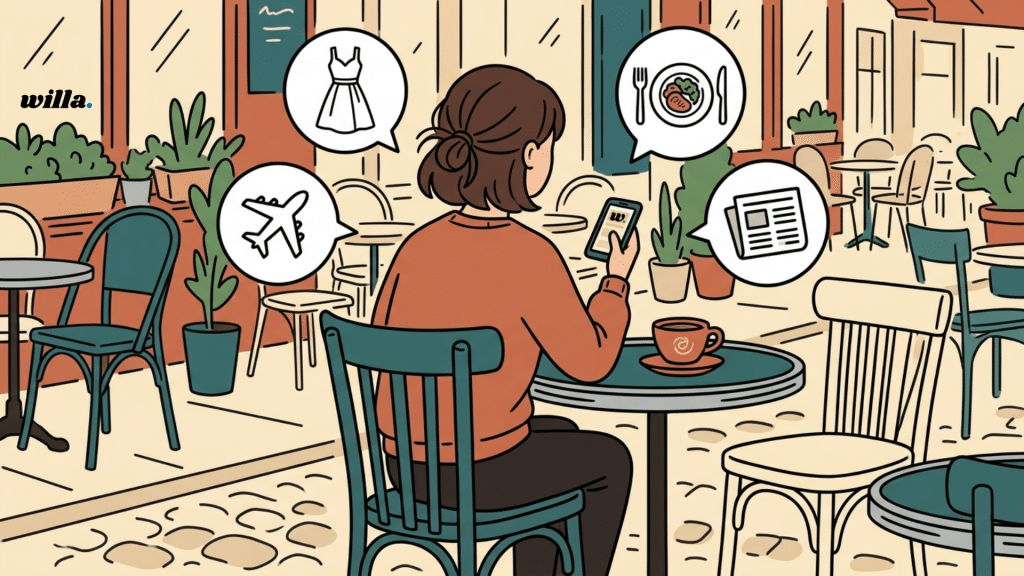
Finding and saving ideas online has never been the problem. Using them has. Until now.
There is a habit most people share but rarely talk about. A restaurant spotted on TikTok gets saved for later. A hotel seen on Instagram goes into a collection. A recipe, a design idea, an outfit. Bookmarked, screenshotted, filed away. And then forgotten.
The average person saves content across multiple apps every single day. Most of it never gets used. The intention is there. The follow-through rarely is.
Saving content online has never been easier. That is part of the problem.
The Problem With How Saving Works Today
Every major platform has a native save feature. Browsers have bookmarks. Phones fill up with screenshots. There are more sources of inspiration than ever before: social media, newsletters, websites, short-form video. The volume of content worth saving has grown faster than any system for managing it.
The result is fragmentation. A person planning a trip might have restaurant ideas saved to Instagram, hotel inspiration pinned on Pinterest, travel tips in a browser tab that has been open for weeks, and a screenshot buried somewhere in their camera roll. The content exists across a dozen places. None of those places talk to each other. Finding anything when it is actually needed is where the system breaks down.
What Changes When Saves Have a Home
An emerging technology startup, Willa, is built around solving exactly this problem. The platform brings saved content from Instagram, TikTok, Pinterest, Reddit, and any website into one organized, searchable place. No algorithm deciding what appears next. No ads. Just the things a person intentionally chose to save, findable when they actually need them.
When saves from different sources land in one place, patterns emerge. A collection of travel saves reveals not just destinations but a style of travel. A set of recipe saves reflects not just ingredients but a way of eating. Saved content in aggregate starts to look like something more personal than a scattered list of links.
That shift matters because it changes what the content can actually be used for. Saves stop being reminders that fade. They become a picture of what someone genuinely wants. A reflection of their taste.
But bringing saves together is just the start.
Where AI Changes What Is Possible
Willa connects to the AI tools people already use. When someone asks for a trip itinerary, a dinner plan, or a shopping list, the AI draws from their actual saves rather than producing a generic answer. The saves become context. The output becomes personal.
“The things people save online reflect who they are and what they care about. Every save is an act of intent. When those saves are brought together and connected to AI, they stop being a graveyard of good intentions and start becoming something a person can actually bring to life.” – Emma, co-founder and CEO of Willa.
The difference between a generic AI response and a genuinely useful one often comes down to context. Saved content, organized and accessible, is one of the richest sources of personal context a person already has. Willa makes it usable.
A Shift in How People Relate to What They Save
The broader shift happening is not just technological. It is behavioral.
For years, saving content online was a one-way action. Something caught the eye, it got saved, and the interaction ended there. The save was a mental note that usually went unread.
Saved content is intentional, declared, and chosen. That makes it one of the clearest signals of what someone actually wants.
As AI becomes more embedded in daily life, the tools that can unlock that signal are changing what saving means. People curate collections with a clearer sense of what those ideas can become.
Bookmarks are not disappearing. In fact, they are becoming more visible. And they are getting a new job.
Willa is available on iOS, Android, web, and as a Chrome extension. Learn more at withwilla.io.