


Python keeps showing up in analysis work because more fields now depend on streams of data that are too large, too messy, or too fast to read by hand. That does not just apply to finance dashboards, web traffic reports or AI applications. It also applies to:
That does not just apply to finance dashboards or web traffic reports. It also applies to:
- game records
- satellite feeds
- factory sensors
In each case, the hard part is not getting the data. It is turning raw logs, files, and signals into patterns that people can actually use. For readers who already know the basics, the more interesting question is not whether Python can do analysis. It is where analysis becomes surprisingly useful. Some of the strongest examples appear in places that do not always get grouped together:
- a game session can become a learning archive
- a satellite image can become a working map
- a scan can become a searchable research object
- a machine log can become an early warning system
That range is exactly what makes Python so useful.
Learning From Game History Instead of Guessing
One of the clearest hidden use cases sits inside poker online session data. A player who wants to improve does not need vague memories of a good night or a bad one. What matters is the record of repeated decisions: position, stack depth, bet size, timing, board texture, and the action that followed. Python is well suited to this because it can read exported hand histories, turn them into tidy tables, and then group them by spots that repeat across many sessions.
That changes how review works. Instead of asking, “Did that hand feel right?” a player can ask, “How often do I call too wide from this seat?” or “What happens when I continue on this board after taking the lead preflop?” In other words, the script turns memory into evidence.It can help spot useful patterns in poker.
For example, it can:
- find common moves that players make,
- compare win rates from different table positions,
- measure how often a certain bet size makes others fold,
- and show where results change after a small strategy change.
Even simple charts can show patterns that are easy to miss while you are playing live.
This is also why digital poker is such a useful training ground for analysis. The environment produces repeated choices under changing conditions, which is exactly the kind of structure Python handles well. A player who wants to play online poker can build a review loop that feels almost like film study in sport. Sessions become datasets. Past decisions become categories. Mistakes become searchable moments rather than vague regrets.
The deeper value is not automation for its own sake. It is feedback. Python can help label hands by spot, cluster similar actions, and even test “what changed after I adjusted this part of my game?” That makes poker online a strong example of applied analysis because the code is not replacing judgment, as for judgement itself, poker platforms always offer some materials (as the example below) to think about and sharpen the way gamers think about poker:
View this post on Instagram
Turning Satellite Data Into Fast, Working Maps
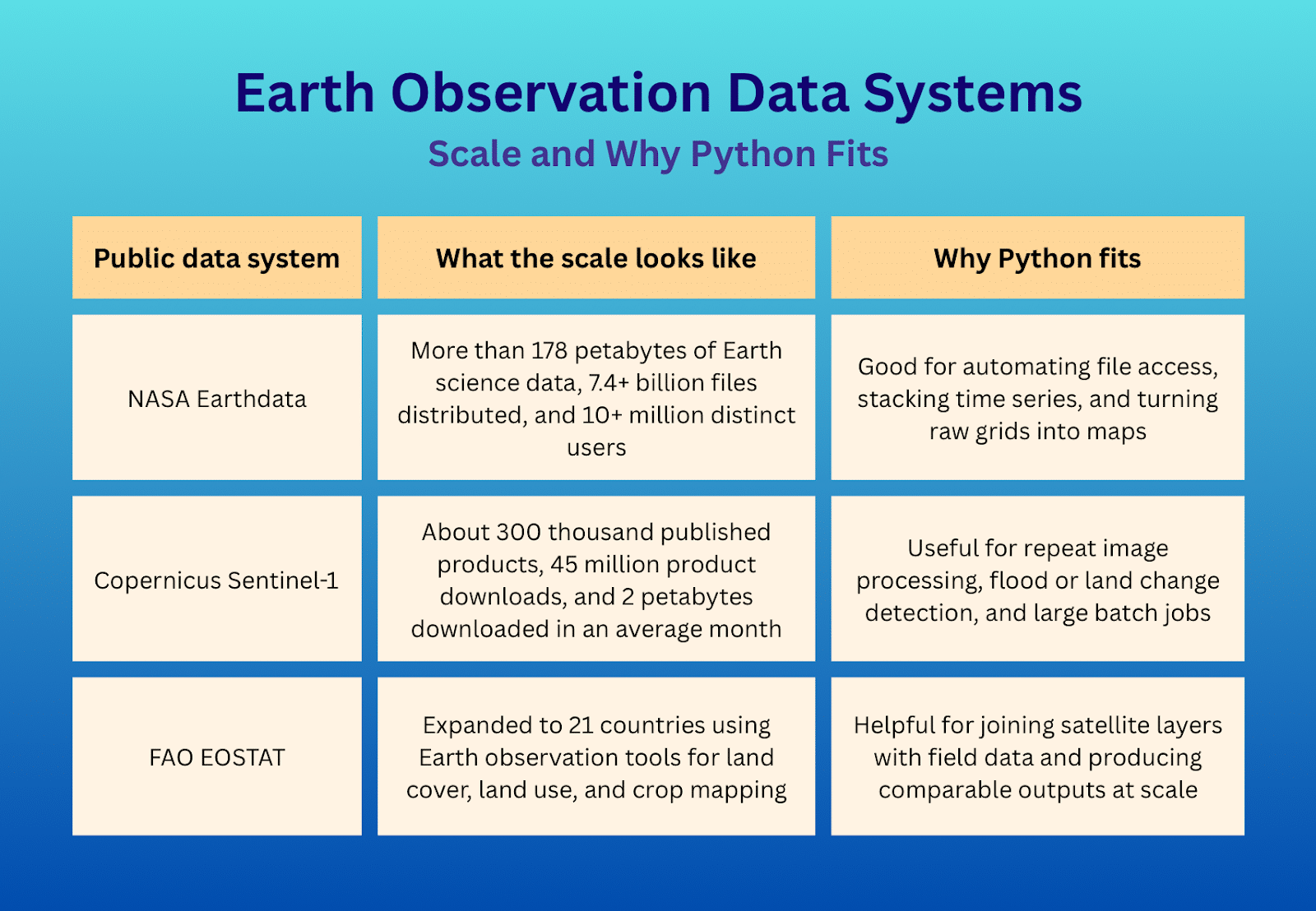
A very different use case appears in Earth observation. Here, Python is not reading hand histories but huge image and sensor files from space, then combining them with weather, land, or crop data so analysts can track change over time. That matters because satellite work is no longer a niche workflow. The scale is already massive, which is exactly why scripted analysis matters.
Finding Trouble in Machine Data Before a Breakdown
A third use case shows up in factories and industrial operations. Python is especially useful when machines generate steady sensor streams that need to be read as time series rather than as isolated alerts. Instead of waiting for a single failure, analysts can use Python to compare vibration, temperature, throughput, and maintenance history, then look for the small pattern shifts that usually come first. That is becoming mainstream practice.
In Deloitte’s 2025 survey of 600 manufacturing leaders:
- 57% said they were using data analytics across a factory or network of factories.
- 29% said they were using AI or machine learning at that same level.
- Companies reported average production gains of 10% to 20% after using smart manufacturing tools.
For analysis teams, Python is useful because it lets them do many jobs in one place. They can clean messy sensor data, look for unusual problems, test danger limits, and update dashboards without switching to a completely different system.
Python is most valuable when teams need to:
- make the same kind of decisions again and again,
- work with lots of data,
- and learn quickly from past patterns.
That is why some of Python’s most surprising uses often turn out to be the most practical ones.