

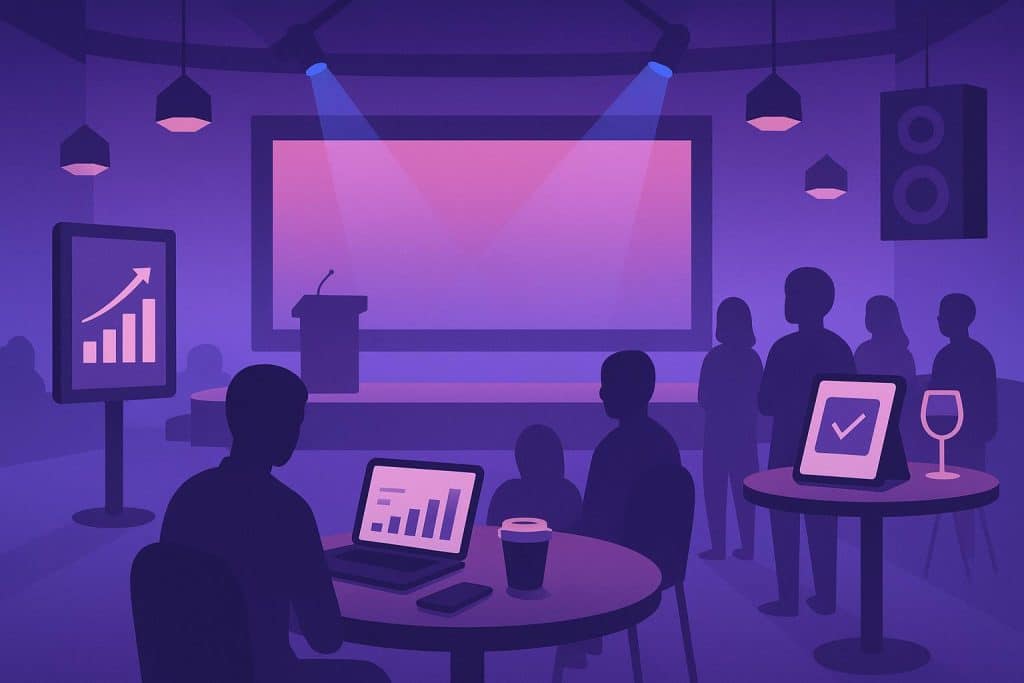
Corporate events, trade shows, conferences, and public activations have become more experience-focused than ever before. Businesses are no longer judged only by presentations or products. Attendees now evaluate organization, comfort, branding, safety, and interaction quality throughout the entire event environment.
As competition for attention increases, companies are investing heavily in technology, venue design, and operational planning to improve attendee engagement and long-term brand perception.
Modern event strategy now combines logistics, branding, analytics, and environmental management into one coordinated experience.
Event Layouts Influence Attendee Engagement
Physical layout has a direct effect on attendee behavior.
Poorly designed spaces create congestion, reduce interaction, and limit visibility for exhibitors or speakers. Modern event planning prioritizes movement efficiency and accessibility from the beginning.
Businesses now analyze traffic flow patterns to improve booth placement, networking zones, and audience interaction areas.
Layout Features That Improve Event Experience
- Wider navigation pathways between exhibits
- Clearly defined meeting and networking spaces
- Strategic placement of high-engagement attractions
Good spatial planning improves attendee participation and comfort.
Visual Branding Shapes First Impressions
Brand visibility remains one of the most important parts of event marketing.
Attendees are exposed to dozens or even hundreds of competing displays during large events. Companies must create visually organized and recognizable spaces quickly.
Consistent branding across banners, displays, presentation materials, and furniture helps businesses appear more professional and memorable.
Strong visual identity also improves social media visibility during live events.
Branded Displays Improve Booth Recognition
Trade show and conference environments are highly competitive visually.
Businesses increasingly invest in coordinated presentation materials that create a more polished and organized appearance across exhibit spaces.
Products such as customized table runners help companies reinforce branding consistency while improving the overall professionalism of display areas.
Small presentation details often influence how attendees perceive overall company quality.
Technology Improves Event Interaction
Digital systems now support nearly every aspect of modern event management.
Companies use mobile event scheduling, contactless registration systems, live polling tools, and real-time engagement analytics to streamline operations and improve attendee interaction.
Technology also reduces administrative bottlenecks during large-scale events and helps organizers respond more quickly to changing conditions throughout the venue.
Hybrid Events Continue Expanding
Many businesses now combine in-person and virtual participation options.
Hybrid event models allow organizations to reach larger audiences while maintaining physical networking opportunities. This approach improves accessibility for remote participants, international attendees, and clients who cannot travel.
Businesses also benefit from extending the lifespan of event content through recorded sessions and digital distribution.
Environmental Comfort Affects Attendee Retention
Comfort strongly influences how long attendees remain engaged during events.
Poor ventilation, overcrowding, excessive noise, or uncomfortable layouts reduce participation and satisfaction quickly. Modern event planning increasingly focuses on environmental management including air circulation, climate control, acoustics, and seating arrangements.
Comfort-focused design supports longer and more productive attendee engagement.
Safety Technology Is Becoming More Advanced
Safety planning now extends beyond traditional security staffing.
Event organizers increasingly use smart monitoring systems to improve environmental awareness and reduce potential risks within crowded venues.
Technologies such as vape detectors are becoming part of broader venue management strategies, especially in conference centers, schools, and indoor public facilities where air quality and behavioral monitoring are important.
Advanced monitoring systems help event operators maintain safer environments without creating intrusive experiences for attendees.
Personalization Improves Attendee Experience
Modern attendees expect more personalized interaction during events.
Businesses now use registration data, attendee interests, and behavioral analytics to customize communication and recommendations before, during, and after events.
Personalized Event Strategies
- Customized session recommendations
- Targeted networking opportunities
- Tailored post-event communication
Personalization improves relevance and increases attendee satisfaction significantly.
Social Media Has Changed Event Design
Events are now designed with digital visibility in mind.
Businesses understand that attendees actively create and share content throughout conferences, trade shows, and activations. As a result, event spaces increasingly feature interactive displays, branded installations, dynamic lighting, and visually distinctive environments designed to encourage online sharing.
Organic attendee content extends event marketing reach far beyond the venue itself.
Data Analytics Improve Future Event Planning
Event organizers now rely heavily on analytics to measure performance and improve future strategies.
Data systems help track engagement levels, attendance patterns, traffic flow, and audience behavior throughout the event lifecycle.
Metrics Businesses Commonly Track
- Session attendance and participation
- Booth interaction rates
- Audience retention and engagement time
Analytics allow businesses to evaluate return on investment more accurately and improve future planning decisions.
Staff Training Influences Experience Quality
Even highly advanced event technology cannot replace effective staff interaction.
Attendees judge companies heavily based on responsiveness, professionalism, and communication quality during live events. Well-trained event teams improve visitor engagement, problem resolution speed, and overall brand perception during interactions.
Human interaction remains one of the most influential parts of successful event experiences.
Final Take
Companies create better event experiences by combining strong branding, technology integration, environmental comfort, safety systems, and personalized engagement strategies.
Modern event success depends on much more than presentations or product displays alone. Attendees now expect organized, interactive, and professionally managed environments that support both convenience and meaningful engagement.
As event expectations continue evolving, businesses that invest in experience-focused planning will likely achieve stronger audience retention and long-term brand impact.