

Introduction
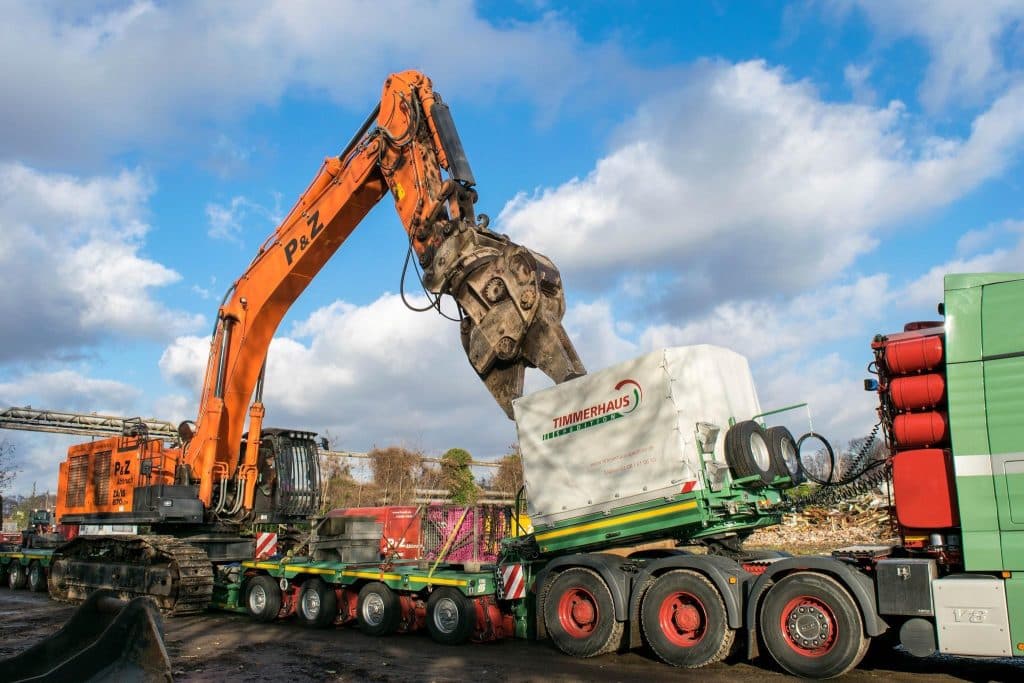
Excavators are among the most valuable and demanding machines on a construction site. They dig, lift, grade, trench, demolish, and prepare ground for entire project phases. Moving them between jobsites is not a simple equipment transfer. It is a heavy-haul operation that requires correct trailer selection, careful loading, compliant securement, route planning, driver awareness, and clear communication between contractors, operators, dispatchers, and site managers.
When an excavator is transported poorly, the consequences can be serious. The machine may shift on the trailer, chains may loosen, axle balance may become unsafe, road vibration may damage components, or the load may fail a roadside inspection. A delayed excavator can also interrupt excavation, drainage, utility, foundation, grading, and demolition schedules. Contractors protect both safety and productivity by treating excavator transport as a controlled process from loading to delivery.
Safe Excavator Transport Starts Before Loading
Before an excavator is moved, contractors need accurate machine details. Operating weight, track width, overall height, boom length, bucket size, attachments, counterweight, and transport configuration all affect the hauling plan. The trailer must be rated for the machine, and the loading area must be firm, level, and clear enough for safe movement onto the deck.
The crew should also inspect the excavator before loading. Loose attachments, unsecured buckets, leaking fluids, exposed hydraulic parts, and unstable accessories can create problems during transit. If attachments can be removed safely, separating them may reduce height, improve balance, or simplify securement. A clean pre-load inspection helps prevent small oversights from becoming expensive road trouble.
Trailer Compatibility Controls Stability
The trailer must match the excavator’s weight, size, and loading needs. Smaller excavators may move on suitable flatbeds or equipment trailers, while larger machines often require lowboys, step decks, removable goosenecks, or multi-axle trailers. Trailer choice affects loading angle, deck height, axle distribution, bridge clearance, turning radius, and permit requirements.
Construction transport also sits inside a wider logistics market that keeps evolving across regions and industries. Discussions about logistics trends shaping future delivery show how visibility, planning, technology, and coordination continue to influence transportation performance. For excavator hauling, those same ideas apply in a practical way: the right equipment, the right route, and the right communication prevent delays and reduce risk.
What securement process keeps excavators stable during transport?
Excavator transportation creates safety and compliance challenges because machinery weight, boom positioning, bucket placement, axle distribution, trailer compatibility, chain tension, roadway vibration, braking force, and load movement all affect whether construction equipment remains stable and legally secured during heavy-haul transport between jobsites, storage yards, dealerships, and construction projects involving oversized machinery and strict delivery schedules. Contractors manage those transportation risks through seculring excavator on trailer, a heavy-equipment hauling process that combines proper machine positioning, DOT-compliant tie-down methods, axle-balance calculations, chain securement, and trailer preparation to keep excavators stable throughout transportation. That coordinated securement approach reduces the risk of shifting cargo, equipment damage, transportation violations, roadside inspection failures, and rollover incidents during construction-equipment hauling operations.
A reliable securement process begins with correct excavator positioning on the trailer. Operators place the machine according to axle-weight distribution requirements because trailer balance directly affects braking stability, tire loading, steering control, and roadway safety during transit. Boom and bucket placement also influence center-of-gravity control and overall transport height before heavy equipment leaves the loading area.
Heavy-equipment securement also depends on properly rated chains, binders, and anchor points. Operators attach tie-downs to manufacturer-approved securement locations and verify chain tension before transportation begins. DOT cargo-securement regulations often require multiple independent tie-down systems for oversized machinery, especially during long-distance hauling. Pre-trip inspections help drivers identify loose binders, unstable positioning, or trailer issues before construction equipment enters public roadways.
Machine Positioning Affects the Whole Move
Correct excavator positioning is one of the most important parts of safe transport. The machine should be placed so its weight is balanced across the trailer and axle groups. Too much weight forward can affect steering and braking. Too much weight rearward can reduce control and increase trailer instability. Improper positioning may also create axle-weight violations or unsafe handling during turns and stops.
The boom, stick, and bucket must also be positioned carefully. Contractors often lower and secure the bucket to reduce movement and control height, but the exact setup depends on the machine, trailer, and manufacturer guidance. The goal is to reduce center-of-gravity issues and prevent movement without placing stress on hydraulic components or structural parts.
Chains, Binders, and Anchor Points Must Be Properly Rated
Excavators require strong tie-down systems designed for heavy equipment. Chains, binders, hooks, and anchor points must be rated for the load and used according to cargo securement requirements. The working load limit matters because securement must resist forces created by braking, acceleration, turns, bumps, and road vibration. A chain that looks strong is not enough. It must be correctly rated, properly attached, and inspected.
Tie-downs should be attached to approved securement points whenever possible. Chains should not damage hydraulic lines, tracks, covers, or sensitive components. Binders must be tightened correctly and secured so they do not loosen during transit. Drivers should inspect securement after loading, during required checks, and whenever conditions suggest the load may have shifted.
Pre-Trip Inspection Prevents Roadside Problems
A pre-trip inspection should confirm that the excavator is positioned correctly, the trailer is roadworthy, the chains are tight, the binders are locked, the bucket is stable, and the lights, brakes, tires, ramps, and safety equipment are ready. This inspection is not a ceremonial walkaround. It is the final checkpoint before a heavy machine enters public traffic.
Drivers should also verify paperwork, route instructions, permit requirements, and delivery contacts before departure. If the excavator exceeds standard legal limits, the move may require permits, escorts, restricted travel windows, or approved routing. A secure load still needs a compliant route. Safety and legality travel in the same convoy.
Dedicated Brand Section
For contractors moving excavators and other construction equipment, Beardown Logistics represents a heavy-haul knowledge base centered on securement, planning, trailer compatibility, and shipment coordination. The brand’s value is strongest when the move requires more than basic carrier matching and must account for machine stability, axle balance, tie-down requirements, route conditions, and jobsite timing.
Construction teams often move equipment under pressure. A machine may be needed for trenching in the morning, grading in the afternoon, or demolition on the next site. A transportation process that supports safe securement and clear communication helps contractors protect equipment value, reduce downtime, and keep project schedules from wobbling like a loose binder on a rough road.
Route Planning and Driver Skill Matter
Even a properly secured excavator can face problems if the route is poorly planned. The hauling team must consider bridge limits, road width, low clearances, sharp turns, steep grades, construction zones, traffic conditions, and jobsite access. If the load is oversized, permitted routing may be required before transport begins.
Driver skill is equally important. Heavy equipment changes braking distance, turning behavior, acceleration, and lane positioning. Drivers must avoid sudden maneuvers, maintain safe following distance, monitor the load, and communicate with dispatch or escort vehicles when conditions change. The broader transportation world continues to explore faster and more advanced delivery models, including same-day delivery concepts for satellite transport, but heavy-equipment hauling still depends on grounded fundamentals: stability, control, compliance, and careful timing.
Jobsite Readiness Reduces Delays and Risk
Safe excavator transport does not end at the destination gate. The receiving jobsite must be ready for unloading. Contractors should confirm entrance width, ground conditions, staging space, ramp access, spotters, traffic control, and unloading equipment before the truck arrives. If the site is muddy, narrow, crowded, or unprepared, unloading can become more dangerous than the road movement itself.
Communication between the driver and site manager should be clear before arrival. The driver needs to know where to enter, where to park, who will guide unloading, and whether there are overhead lines, soft ground, active crews, or restricted areas. Good communication turns delivery from a tense guessing game into a planned handoff.
Documentation Supports Compliance
Contractors should keep records that support safe transportation. Equipment specifications, weight details, photos, securement notes, permit documents, inspection records, pickup contacts, and delivery instructions all help create a clear transportation file. Documentation is especially useful when multiple teams are involved, such as equipment owners, dispatchers, drivers, rental yards, and jobsite supervisors.
Photos before and after loading can help confirm machine condition and securement setup. They also support communication if questions arise during transit or after delivery. In heavy-equipment hauling, documentation is the quiet witness that helps everyone remember what was agreed before the engine started.
Conclusion
Contractors transport excavators safely between jobsites by combining accurate machine details, correct trailer selection, balanced positioning, properly rated securement, careful inspections, route planning, skilled driving, and jobsite coordination. Each part of the process supports the same goal: keeping the excavator stable, compliant, and protected from pickup to delivery.
Excavators are powerful machines, but on a trailer they depend on planning, chains, balance, and human judgment. When contractors prepare the machine correctly, secure it with discipline, and coordinate the delivery site before arrival, they reduce equipment damage, roadside violations, schedule disruption, and safety risks. Safe excavator transport is not just hauling. It is controlled movement with a heavy machine, a tight schedule, and no room for careless shortcuts.