

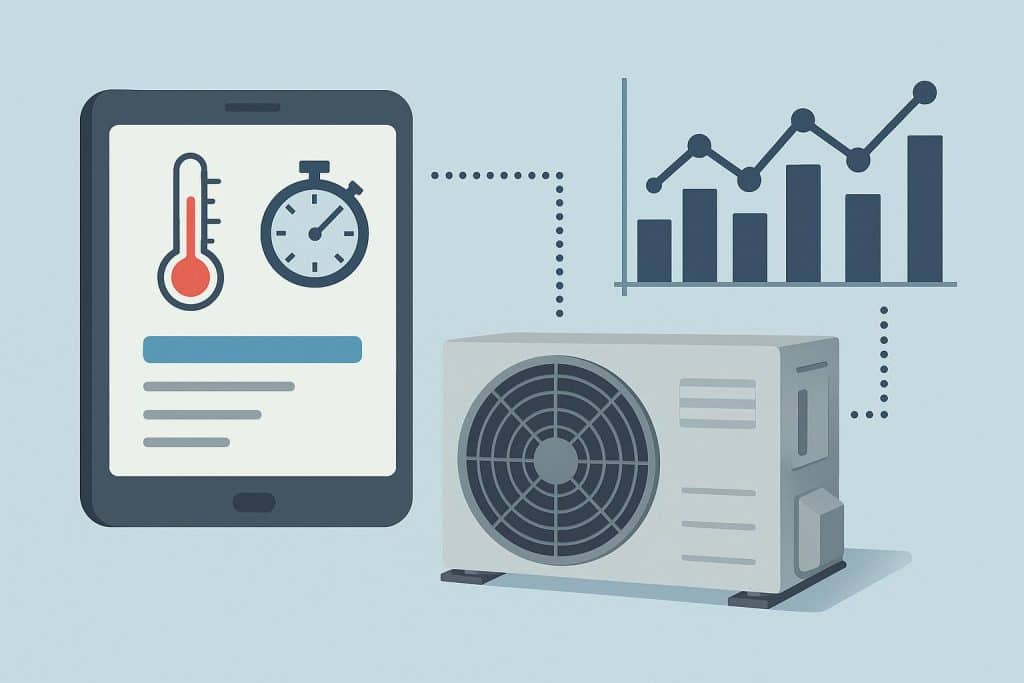
Temperature is the number everyone sees, but runtime is often the clue that explains why comfort, humidity, and energy use don’t feel right. A thermostat can show the setpoint while the system cycles in short bursts all day, or it can run for long stretches and still struggle to catch up. Both situations tell a story about the home, the equipment, and how air is being delivered. HVAC contractors evaluate runtime because it reveals how hard the system is working, how stable the indoor environment is, and whether the system is operating within safe limits. By focusing on runtime patterns—not just the final temperature—contractors can diagnose airflow restrictions, control issues, sizing mismatches, and moisture problems that a simple thermostat reading will never show.
Runtime Tells the Real Story
- What Runtime Patterns Reveal About System Health
Contractors start by looking at how long the system runs per cycle and how often it starts and stops. Short cycling can indicate overheating limits, restricted airflow, oversized equipment, or a thermostat placement that causes rapid saturation. A long continuous runtime can indicate a high building load, low capacity, duct leakage, or refrigerant or combustion issues that reduce output. Contractors compare runtime with outdoor conditions, because a system running longer on a mild day is often a warning sign, while longer runtime during extreme heat or cold can be normal. They also look for patterns such as frequent starts in the evening, which may signal heat gain from sun exposure or occupancy changes, or long overnight operation, which can indicate infiltration or insufficient insulation. Runtime becomes a diagnostic language: it shows whether the system is stable, stressed, or miscontrolled, even when the house eventually reaches the desired temperature.
- Using Runtime to Diagnose Heating Problems
In heating mode, runtime is tied to how safely and steadily the furnace can deliver heat. Contractors pay attention to whether the unit runs long enough to warm the home without tripping safety limits, and whether it shuts down early due to overheating. During Furnace repair service calls, runtime often exposes hidden airflow problems, such as a clogged filter, closed registers, or undersized returns that cause the heat exchanger area to get too hot and trigger limit switches. That limit cycling can make the home feel uneven, because the blower may keep running while the burners cycle on and off. Contractors also evaluate whether the furnace is oversized for the home, because an oversized unit can raise the air temperature quickly, satisfy the thermostat faster, and shut off before the heat spreads evenly. By reviewing the runtime, contractors can determine whether the issue is fuel delivery, heat transfer, airflow, or control logic, rather than assuming the thermostat number tells the full story.
- Cooling Runtime and Moisture Control Expectations
During the cooling season, runtime is directly related to humidity. A system that reaches setpoint quickly may not run long enough to remove moisture, leaving the home feeling clammy even at cooler temperatures. Contractors evaluate runtime alongside indoor humidity levels to determine whether the system is providing sufficient latent load removal or only handling sensible cooling. Short cycling can also prevent the coil from staying cold long enough to condense moisture consistently. Contractors check blower speed, coil condition, refrigerant charge, and duct airflow because each factor influences how well the coil dehumidifies during a run cycle. They also consider thermostat settings, such as aggressive setbacks, which can cause rapid cycles and poor moisture control. Runtime analysis helps contractors recommend adjustments such as longer, steadier operation at lower capacity, corrected airflow across the coil, or control strategies that prioritize humidity stability rather than chasing a single temperature.
- Separating Normal Runtime From Warning Signs
Not every long run is a problem, and not every short run is harmless. Contractors use context to separate normal runtime from warning signs by comparing performance to outdoor temperature, building size, insulation quality, and equipment type. A variable-speed heat pump may run longer by design at low output to maintain stable comfort, which can be efficient and quiet. A single-stage system, by contrast, may cycle more noticeably, and a pattern of very short cycles can indicate a control or airflow fault. Contractors also look at the temperature rise in heating and the temperature drop across the evaporator coil in cooling to see whether the runtime matches the expected heat transfer. If the system runs for a long time but produces only a weak temperature change, the capacity is likely compromised. If it cycles frequently with strong temperature change, control placement or sizing may be the issue. This interpretation prevents overcorrecting normal behavior while still catching patterns that signal risk.
- Adjustments Contractors Make Based on Runtime Findings
Once runtime patterns are understood, contractors can make targeted changes that improve comfort and reduce stress on equipment. They may adjust blower speeds, correct duct restrictions, or rebalance dampers to reduce static pressure and improve delivery, which often shortens runtime without increasing cycling. They may recommend relocating the thermostat or adjusting the sensors if the system shuts off in a non-representative area. For multi-stage or modulating equipment, they may configure staging so the system stays in lower output longer, creating steadier indoor conditions and better moisture control. Contractors can also identify when equipment size no longer matches the home due to renovations or envelope upgrades, leading to runtime behavior that feels inefficient. The goal of these adjustments is not to chase the shortest runtime possible, but to create predictable cycles that maintain comfort, control humidity, and keep components operating within safe temperature and pressure limits.
HVAC contractors evaluate system runtime because it reveals how the system behaves under real conditions, not just whether the thermostat reaches a number. Runtime patterns reveal short cycling, airflow restrictions, control issues, humidity problems, and capacity limitations that temperature readings alone can hide. By comparing runtime to outdoor conditions and measuring heat transfer across the system, contractors can separate normal operation from warning signs and apply targeted adjustments that improve stability. When runtime becomes part of the diagnostic process, comfort becomes more consistent, humidity is easier to manage, and equipment is less likely to wear prematurely from unnecessary starts, stops, and strain.