

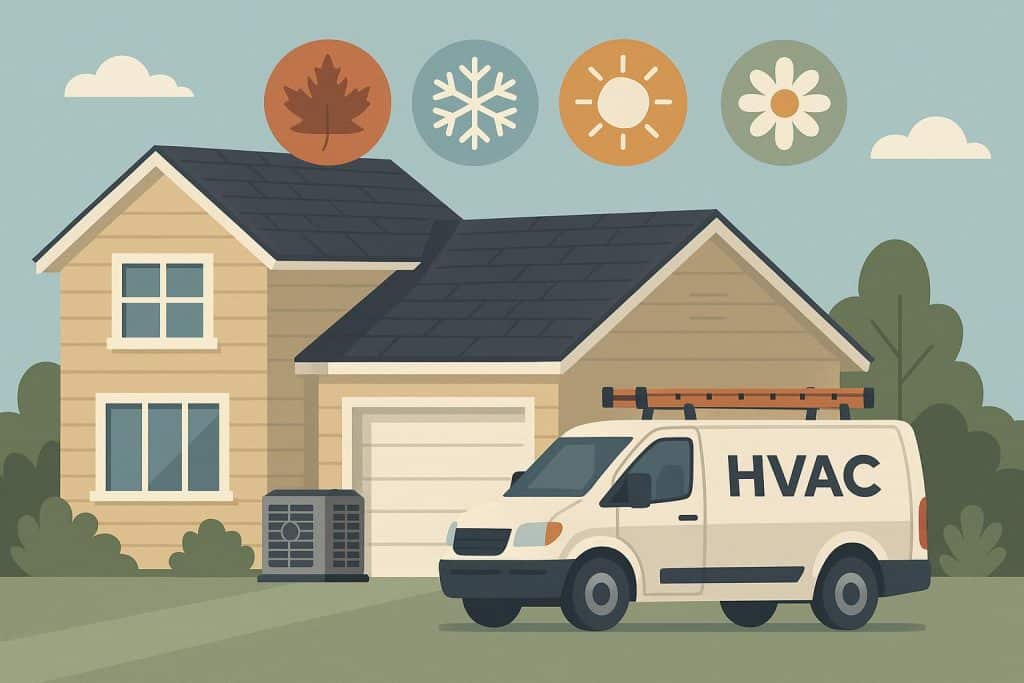
Indoor comfort is not limited to a single season. True comfort means staying cool in summer heat, warm in winter cold, and balanced in transitional months when temperatures fluctuate daily. HVAC contractors focus on year-round comfort by addressing how heating, cooling, airflow, and controls work together as a system. Their role extends beyond fixing breakdowns to include evaluating how buildings respond to changing weather and daily use. By fine-tuning systems to adapt smoothly across seasons, contractors help create indoor environments that remain steady, responsive, and comfortable regardless of the season.
Comfort Across All Seasons
Understanding Comfort Beyond Temperature
Year-round comfort involves more than setting a thermostat to a preferred number. HVAC contractors consider how humidity, airflow, and temperature consistency affect occupants’ comfort in a space. A room that is technically warm enough may still feel uncomfortable if air movement is poor or humidity is too high. Contractors evaluate how conditioned air circulates, how evenly temperatures are maintained, and how quickly systems respond to changes. In many service situations, companies such as Forest City Heating and Air Conditioning focus on resolving comfort complaints by improving system balance rather than simply increasing output. This broader understanding of comfort allows HVAC systems to meet human needs rather than just numerical targets.
Seasonal Transitions and System Adaptability
One of the greatest challenges to indoor comfort occurs during seasonal transitions. Spring and fall often bring cool mornings, warm afternoons, and fluctuating humidity levels. HVAC contractors adjust systems to handle these changes without constant manual intervention. This may involve recalibrating controls, adjusting airflow settings, or ensuring that heating and cooling components switch smoothly when needed. Adaptable systems reduce temperature swings and prevent the discomfort caused by delayed responses. Contractors design adjustments so systems respond proportionally rather than abruptly, maintaining comfort during unpredictable weather.
Airflow Consistency and Room-to-Room Comfort
Even temperatures across a building are essential for year-round comfort. HVAC contractors assess airflow distribution to prevent rooms from becoming excessively warm or cool, depending on the season. Duct layout, register placement, and return air pathways all influence how air moves through spaces. By correcting imbalances, contractors help ensure that conditioned air reaches all occupied areas evenly. This consistency reduces the need for frequent thermostat adjustments and helps occupants remain comfortable wherever they are in the building. Balanced airflow supports comfort in both heating and cooling modes.
Humidity Control and Seasonal Comfort
Humidity plays a major role in how temperature is perceived. High humidity can make warm spaces feel oppressive, while overly dry air can cause discomfort during colder months. HVAC contractors evaluate how systems manage moisture throughout the year. They assess whether air conditioning removes sufficient moisture in summer and whether heating systems dry indoor air excessively in winter. Adjustments may involve changes to airflow or recalibration of controls to help systems maintain balanced moisture levels. Proper humidity control enhances comfort while protecting furnishings, flooring, and indoor air quality.
Equipment Performance Across Changing Demands
Heating and cooling equipment must perform reliably under varying loads throughout the year. HVAC contractors monitor how systems respond to peak demand during extreme temperatures and how they operate during milder conditions. Systems that cycle too frequently or run for too long can cause uneven comfort. Contractors fine-tune performance to support steady operations that match actual needs. This approach enables systems to deliver consistent comfort without unnecessary strain, supporting reliability and occupant satisfaction across seasons.
Controls and Occupant Interaction
How occupants interact with HVAC systems influences year-round comfort. Contractors ensure that thermostats and control interfaces are intuitive and accurately reflect indoor conditions. Poorly placed or miscalibrated controls can cause systems to respond incorrectly, leading to discomfort. By aligning controls with actual living patterns, contractors help systems adjust naturally throughout the day and night. Accurate control feedback supports smooth transitions between heating and cooling modes, maintaining comfort without constant manual changes.
Maintenance as a Comfort Strategy
Routine maintenance plays an important role in sustaining comfort over time. Dust buildup, worn components, and drifting settings can gradually reduce system effectiveness. HVAC contractors perform inspections to ensure airflow, temperature control, and humidity management function as intended. Maintenance ensures that comfort-related adjustments remain effective as the seasons change. This proactive care helps prevent unexpected disruptions to comfort and supports reliable operation year-round.
Comfort as a Continuous Process
Year-round comfort results from thoughtful system design, careful adjustments, and ongoing attention. HVAC contractors improve comfort by addressing airflow, humidity, controls, and equipment performance as interconnected elements rather than isolated parts. Their work helps systems adapt smoothly to seasonal changes and daily demands. Understanding this process highlights why comfort issues often require system-wide evaluation rather than quick fixes. When HVAC systems are tuned for balance and adaptability, indoor environments remain comfortable, responsive, and stable throughout the entire year.