

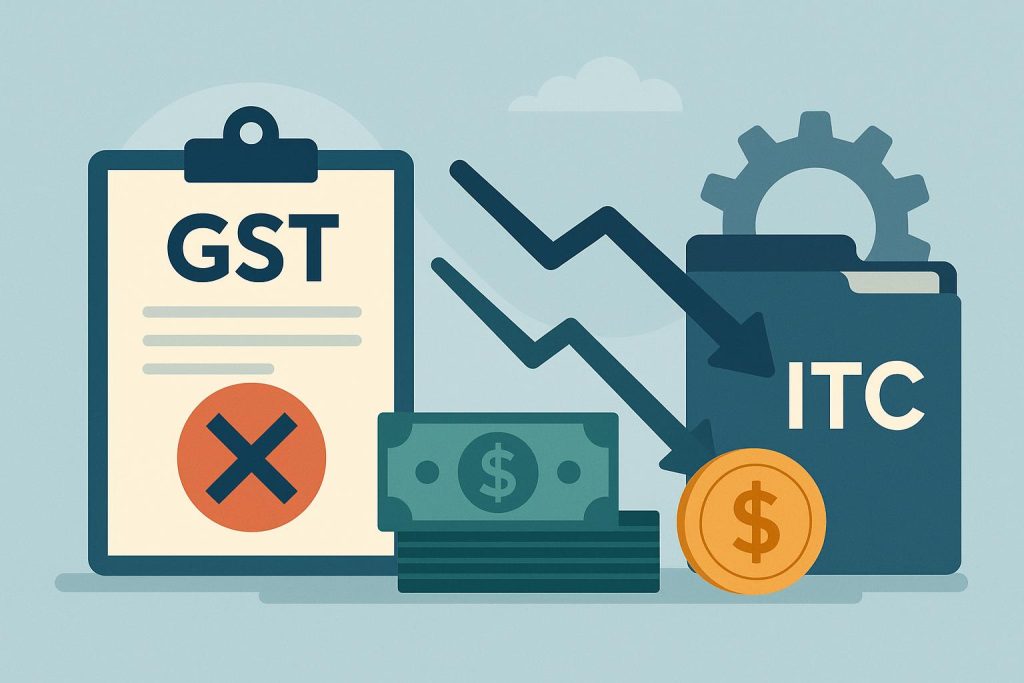
Goods and Services Tax (GST) compliance is not just a statutory requirement—it plays a critical role in maintaining healthy cash flow for businesses. Incorrect GST filing, whether due to errors, delays, or mismatches, can directly impact working capital, block Input Tax Credit (ITC), and invite scrutiny from tax authorities.
For many businesses, especially MSMEs, these issues don’t just remain accounting problems—they turn into real cash flow challenges that affect daily operations.
This article explains how incorrect GST filing affects cash flow and ITC claims, common mistakes businesses make, and how to avoid them.
Understanding the Link Between GST Filing, Cash Flow, and ITC
Under GST, businesses are required to pay tax on outward supplies but can reduce their tax liability by claiming ITC on GST paid on purchases. This mechanism ensures tax is levied only on value addition.
However, this system works smoothly only when returns are filed correctly, returns are filed on time, and supplier and recipient data matches. Any break in this chain can result in ITC blockage, excess tax outflow, and cash flow stress.
How Incorrect GST Filing Impacts Cash Flow
1. Blocked or Delayed Input Tax Credit
One of the biggest consequences of incorrect GST filing is the inability to claim ITC. Common reasons include errors in GSTR-3B, mismatch between GSTR-2B and GSTR-3B, supplier not filing GSTR-1, and claiming ineligible ITC.
When ITC is blocked, businesses must pay GST in cash instead of adjusting credit, leading to higher cash outflows. This means more tax paid upfront and less working capital available for operations.
2. Interest and Late Fees Increase Cash Outflow
Incorrect or delayed GST filings often lead to late fees for delayed returns and interest on unpaid tax. Even small delays can accumulate significant costs over time.
If tax liability is underreported due to an error and discovered later, interest applies from the original due date—not from the date of correction. These unplanned expenses reduce liquidity and profitability.
3. Excess GST Payment Due to Errors
Mistakes such as wrong tax rate application, incorrect place of supply, or wrong classification of goods or services can result in paying more GST than required.
While refunds are possible, the process is time-consuming and involves documentation, verification, and delays. During this period, funds remain stuck with the government instead of being used in business operations.
4. Refund Delays Affect Working Capital
Incorrect filing can lead to rejection or delay of GST refunds, especially for exporters and inverted duty structure cases. Errors in returns, mismatch of figures, or non-compliance can push refunds into prolonged verification cycles.
This causes working capital to remain locked, affecting business expansion and day-to-day expenses.
How Incorrect GST Filing Affects ITC Claims
1. ITC Mismatch Between GSTR-3B and GSTR-2B
ITC can only be claimed if it appears in GSTR-2B. Common issues include suppliers uploading invoices incorrectly, suppliers failing to file GSTR-1, and invoice duplication or omission.
If ITC claimed in GSTR-3B does not match GSTR-2B, it may be reversed or questioned by tax authorities.
2. Claiming Ineligible ITC
Certain credits are blocked under GST, such as personal expenses, motor vehicles (with exceptions), and goods lost, stolen, or destroyed.
Incorrectly claiming such ITC can lead to reversal of credit, interest liability, and penalties.
3. Time Limit for Claiming ITC
ITC must be claimed within the prescribed time limit, generally up to November following the end of the financial year or filing of the annual return, whichever is earlier.
Incorrect filing or oversight may cause businesses to miss this deadline, resulting in permanent loss of ITC.
4. Notices and Scrutiny from Tax Authorities
Frequent mismatches, incorrect reporting, or abnormal ITC claims can trigger GST notices, scrutiny assessments, and audits.
Once under scrutiny, refunds and ITC claims often face additional checks, further delaying credit availability.
Common GST Filing Mistakes That Lead to Cash Flow Issues
Some of the most common mistakes include incorrect invoice reporting, manual data entry errors, non-reconciliation of GSTR-2B and purchase records, dependence on non-compliant suppliers, filing returns without proper review, and ignoring amendments and corrections.
How Businesses Can Avoid These Problems
Regular reconciliation of purchase registers with GSTR-2B, sales data with GSTR-1, and tax liability with GSTR-3B helps identify mismatches early.
Monitoring vendor compliance is equally important. Suppliers must file GSTR-1 on time and upload accurate invoices, as non-compliant vendors can directly impact ITC.
Timely filing of returns helps avoid late fees, interest, and ITC restrictions. Using automation tools and professional review reduces manual errors and ensures compliance accuracy, especially when dealing with large volumes of data.
Conclusion
Incorrect GST filing does more than cause compliance headaches—it directly affects a business’s cash flow, working capital, and financial stability. Blocked ITC, excess tax payments, interest, penalties, and refund delays can quietly drain resources if left unchecked.
In today’s compliance-driven environment, accurate and timely GST filing is not optional. It is essential for sustaining healthy cash flow and protecting ITC eligibility. Businesses that invest in proper systems, regular reconciliation, and expert oversight are better positioned to avoid these pitfalls and maintain financial efficiency.