

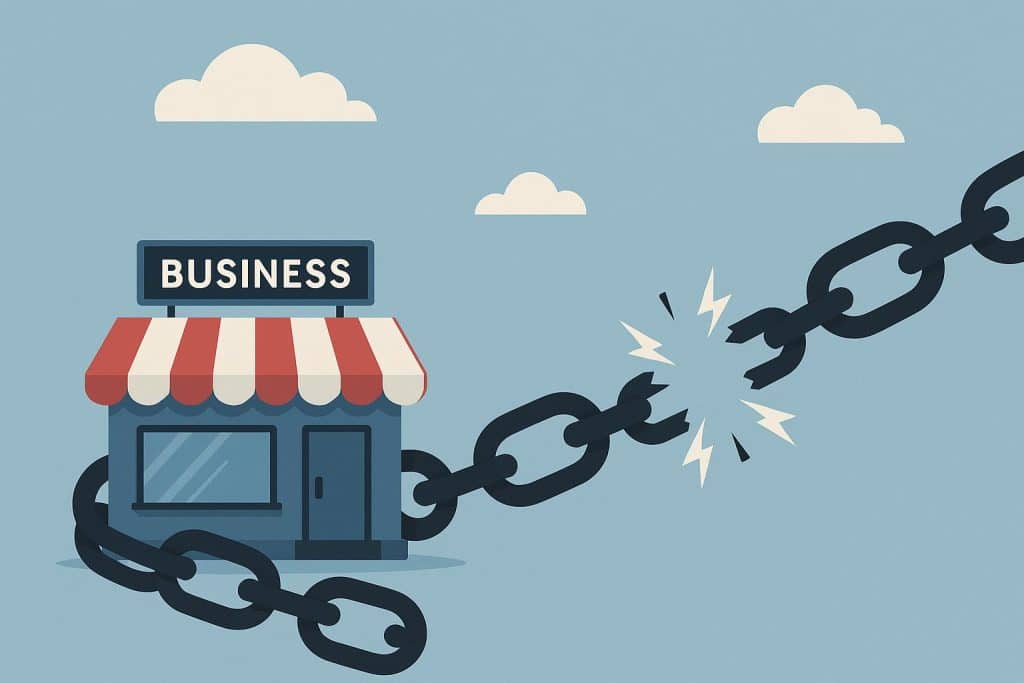
For most local service businesses, client acquisition follows a familiar and frustrating pattern. Business is good when referrals come in. When they don’t, revenue drops. The owner works harder, delivers exceptional service, and hopes word-of-mouth picks up again. Repeat indefinitely.
This referral dependency creates an invisible ceiling that keeps otherwise excellent businesses stuck at the same revenue level year after year. The problem isn’t the quality of service or the owner’s work ethic. It’s the lack of a predictable client acquisition system.
The Referral Trap
Referrals feel like the purest form of marketing. Someone liked your work enough to recommend you. No ad spend required. No complex funnels. Just organic growth through great service.
But referral-based growth has a fatal flaw: it’s completely outside your control.
You can’t turn referrals on when you need them. You can’t scale them when you’re ready to grow. You can’t predict when they’ll arrive or how many you’ll get. This unpredictability makes it nearly impossible to forecast revenue, plan hiring, or invest in growth.
The businesses that break through this ceiling all make the same fundamental shift. They stop treating client acquisition as something that happens to them and start treating it as a system they control.
Why Traditional Marketing Fails Local Service Businesses
When local service business owners decide to take control of client acquisition, they typically try one of three approaches:
Facebook ads. They launch campaigns offering discounts or introductory deals. The ads generate leads, but the quality is poor. Most prospects are price-shopping, and the few who convert often cancel within months. The math rarely works.
Google Ads. They bid on service keywords in their area. Costs are high because they’re competing with national brands and lead generation companies. The ROI is marginal at best.
Social media posting. They commit to consistent content creation, hoping organic reach will drive inquiries. After months of effort, they realize that social platforms have effectively killed organic reach for businesses that don’t pay for promotion.
These tactics fail because they’re designed for different business models. They work for e-commerce brands with large marketing budgets or SaaS companies with high lifetime values. For local service businesses with smaller marketing budgets and longer sales cycles, they rarely generate positive ROI.
The System That Actually Works
The businesses that successfully move beyond referral dependence follow a different approach. Instead of chasing individual marketing tactics, they build a complete acquisition system with four integrated components.
1. Position as the Local Authority
Most local service businesses are interchangeable in the eyes of prospects. They offer similar services at similar prices with similar promises. This commoditization forces them to compete on price or rely on referrals.
The solution is to establish authority positioning that differentiates you from competitors. This means creating content that demonstrates expertise, publishing case studies that show results, and building a reputation as the go-to expert in your category.
Authority positioning changes the entire acquisition dynamic. Instead of chasing prospects, they seek you out. Instead of competing on price, you charge premium rates. Instead of explaining why you’re different, your reputation precedes you.
This doesn’t require massive content production or expensive PR campaigns. It requires consistent demonstration of expertise in the channels where your target customers spend time.
2. Design Offers That Pre-Sell Prospects
Traditional service businesses make the mistake of selling their core service directly. They advertise personal training, legal consulting, or home remodeling without understanding that cold prospects aren’t ready to make those commitments.
The businesses that acquire clients predictably use front-end offers designed specifically for acquisition. These offers have lower barriers to entry, shorter commitment periods, and specific outcomes that feel achievable to prospects.
A gym might offer a 6-week transformation program instead of open-ended membership. A law firm might offer a strategy session instead of full representation. A remodeling company might offer a design consultation instead of a full project quote.
These offers work because they align with where prospects are in their decision-making process. They provide a low-risk way to experience your service quality before making a larger commitment.
3. Implement Multi-Channel Lead Generation
Referral-dependent businesses typically have one or two lead sources. When those dry up, revenue drops. The solution isn’t to find one better channel but to build multiple channels that feed leads consistently.
This means combining organic strategies (SEO, content marketing, partnerships) with paid strategies (targeted ads, local search, sponsored content) and community strategies (events, speaking, networking). No single channel needs to produce massive volume. The system works because multiple channels produce steady flow.
The key is matching channels to customer acquisition cost economics. Local service businesses can’t afford to spend hundreds per lead on Google Ads. But they can afford to invest in content that generates leads over time, supplemented by targeted ads in specific geographic areas.
4. Build Lead Nurturing Systems
Most local service businesses lose prospects because they lack follow-up systems. A lead inquires, receives one or two responses, and then falls through the cracks if they don’t immediately convert.
The businesses that maximize conversion rates implement automated nurturing systems that stay in touch with prospects over weeks or months. These systems combine automated emails, text messages, and personal outreach to move prospects through the decision-making process.
Modern AI tools make this dramatically easier than it was even two years ago. Businesses can now implement sophisticated nurturing systems without hiring marketing teams or mastering complex software.
Case Study: From Referral Dependence to Predictable Growth
Fitness studios provide a clear example of how this system works in practice. Most gym owners start with referral-based growth. Members tell friends, a few new people join, and the cycle continues until it doesn’t.
Gym Academy, a consulting firm specializing in gym growth, has helped hundreds of gym owners break this pattern using the exact system described above. Their approach focuses on building predictable acquisition systems rather than chasing individual marketing tactics.
Their clients typically start by establishing local authority through content and community presence. They redesign their offers to create low-barrier entry points. They build multi-channel lead generation systems. And they implement nurturing that converts prospects over time rather than requiring immediate decisions.
The results demonstrate what’s possible when local service businesses move beyond referral dependence. Clients consistently report moving from 5-10 inquiries per month to 50-100. From hoping for growth to planning for it. From reactive business operations to proactive scaling.
The Implementation Reality
Building a complete client acquisition system sounds overwhelming. Most business owners already work 50-60 hours per week delivering service to existing clients. Adding marketing system development on top of that feels impossible.
The solution is sequential implementation rather than attempting everything at once. Start with authority positioning since that creates the foundation for everything else. Spend 90 days creating content and building reputation. Then move to offer design. Then layer in lead generation channels one at a time. Then add nurturing systems.
This sequential approach takes 6-9 months to fully implement, but businesses start seeing results within the first 90 days. Authority positioning alone generates inbound interest. Improved offers increase conversion rates immediately. Each additional component compounds the results of previous work.
Moving Forward
The difference between businesses stuck at referral-dependent revenue levels and those experiencing predictable growth isn’t size, market, or competitive advantage. It’s whether they treat client acquisition as something that happens to them or something they systematically control.
Every local service business has the capacity to build these systems. The tools are accessible. The strategies are proven. The only question is whether business owners will commit to building the system or continue hoping referrals improve.
For businesses ready to make that shift, the path forward is clear. Start with authority. Design better offers. Build multiple lead channels. Implement nurturing. Execute sequentially rather than simultaneously. And commit to the 6-9 month timeline required to build a complete system.
The businesses that do this work don’t just grow. They fundamentally change their relationship with client acquisition. They stop hoping for growth and start controlling it. They stop working harder and start working systematically. They stop competing with other local service providers and start operating in a category of one.
That’s not just better marketing. It’s a different way of building a business.