

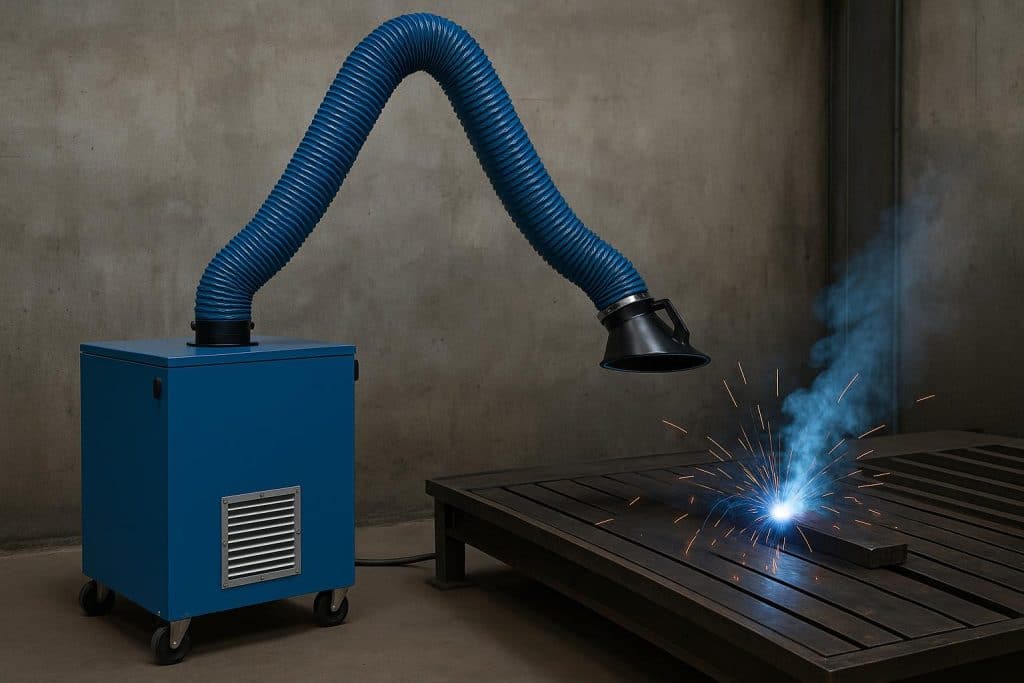
If not handled appropriately, welding emits vapors that can cause bodily injury. From a security perspective, having clean air is essential for a safe workspace. Airflow (measured in cubic feet per minute, or CFM) is one of the most important considerations in choosing a fume extractor. Selecting the right CFM is vital in ensuring effective fume extraction so your workers, as well as the environment, remain safe.
Understanding Welding Fume Extraction
Fume extractors suck up airborne particles produced during welding. They suction polluted air through filters to trap dangerous substances before the air re-enters the work area. A correctly matched extractor helps to maintain a safe environment around everyone. The correct airflow rating from a proper duct fan depends on multiple factors.
How CFM Is Important: What Is CFM?
Before asking, “How many CFM for welding fume extractor is needed?”, let’s understand what CFM is. CFM (Cubic Feet Per Minute) is the acceptable amount of air that flows from a system. In fume extraction, more CFM indicates a greater volume of air passing through the filters every minute. Puffing in some fresh air means the fumes are not staying around the welder. Lack of CFM can lead to harmful air and health consequences.
Factors Influencing Required CFM
There are many factors when it comes to ventilation for fume extraction. Factors include the type of welding process, the thickness of the materials being welded, the size of the workspace, and the distance between the extractor and the welding area. Larger welding jobs generally create more fume, and you may need strong airflow. Enclosed spaces usually require lower CFM than open areas.
Welding Process Considerations
Different welding methods produce different amounts of smoke. For example, stick and flux-cored arc welding tend to create much more smoke than gas tungsten arc welding does. Increased airflow is required as there is more smoke and particles to capture before they can get away. Processes that require more fume generation should have more intensive extraction, while those that are light can have less CFM equipment.
Workspace Size and Layout
The size of the workspace will also affect how much airflow you will need. In larger workshops, however, the fumes are more dispersed and difficult to collect effectively. More CFM is typically required for a larger room. In tighter spaces, extraction devices should be located near the weld point and may work adequately with lower airflow.
Distance From Extraction Point
The extraction nozzle is more effective when it is closest to the welding spot. Fume extractors are most effective when they are within a foot of the source. The further away, the more air volume it takes to capture the fumes. Adjustable arm extractors help guide the suction to where it’s necessary.
Filter Type and System Design
Airflow requirements are also dependent on filter selection and total system design. Due to limitations on air movement when there is a high-efficiency filter in play, you may need higher than normal CFM capability to keep up. This should not demand more energy than is needed with properly sized ducting and clear airflow paths.
Recommended CFM Ranges
For mild welding jobs, in general, it ought to be 80 to 150 CFM. A minimum of 250 CFM or above might be necessary for heavier applications, like thick steel welding. Match specific extractors to their anticipated workload, if manufacturer recommendations exist.
Balancing Performance and Energy Use
An extractor with a fast CFM will extract fumes much quicker, but it will also produce a draft, which consumes unnecessary energy and produces more noise. Choosing the appropriate model that fits the needs of the workspace enables the trade-off of efficiency, safety, and operational costs. Adjustable airflow matching the specific task enables variable speed settings, which help throughout the day.
Ensuring Safe Welding Environments
Adequate airflow keeps the workers safe from harmful vapors and provides a healthier atmosphere, too. Continued performance needs scheduled maintenance, replacement of filters, and planned checks. Measuring the air quality ensures that the CFM you chose is giving good protection.
Conclusion
Selecting the right CFM for a welding fume extractor involves careful consideration of several factors. Evaluating process type, workspace size, and system design ensures the chosen equipment meets safety requirements. Proper airflow not only safeguards health but also maintains a productive work environment. With thoughtful planning, clean air remains a consistent feature in any welding area.