

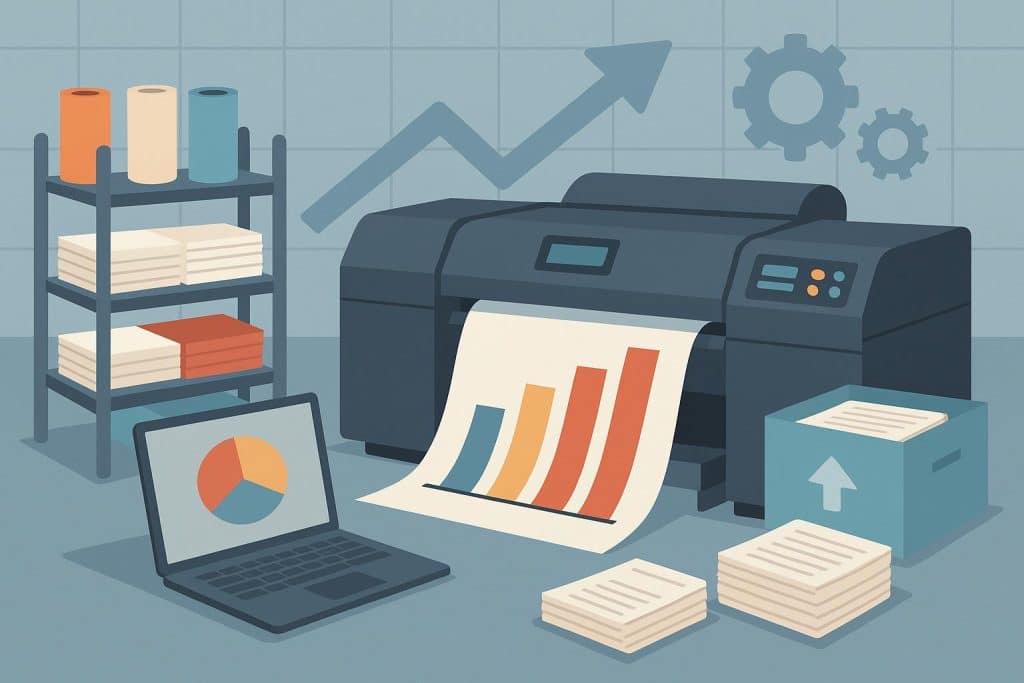
Digital tools and automation have transformed how businesses operate, but physical products remain a powerful way for brands to connect with customers. From custom apparel to promotional merchandise, modern printing technologies are playing a critical role in helping small businesses produce high-quality products without the limitations of traditional manufacturing.
As competition increases across e-commerce and retail markets, businesses are looking for production methods that balance speed, flexibility, and consistent quality.
The Shift Toward Flexible Production Models
Traditional printing often required high setup costs and large minimum orders, making it difficult for smaller businesses to compete. Modern printing solutions have changed this by supporting short-run production and on-demand fulfillment.
This shift allows businesses to test new ideas, respond to trends quickly, and reduce excess inventory. Instead of committing to large quantities upfront, brands can scale production gradually as demand grows.
Why Printing Technology Matters for Product Quality
The technology behind a printing process directly affects how a product looks and performs over time. Color accuracy, durability, and material compatibility all depend on how designs are produced and transferred.
Businesses that rely on professional DTF printing services benefit from cleaner details, strong adhesion, and consistent results across different materials. This level of quality is especially important for brands that want to build long-term customer trust.
Supporting Growth Through Local Production
While digital platforms allow businesses to reach global audiences, production speed and communication still matter. Working with providers that offer local DTF printing services can reduce turnaround times and simplify coordination, especially for time-sensitive projects.
Local production also allows businesses to make adjustments more easily and maintain better quality control, which can be challenging with distant or outsourced manufacturing.
Custom Apparel and Merchandise as Brand Assets
Custom apparel and merchandise are more than just products—they are extensions of a brand’s identity. Businesses use printed items to reinforce messaging, create recognition, and build stronger connections with customers.
Modern printing technologies enable brands to maintain visual consistency across different product lines while still experimenting with new designs. This flexibility supports both creativity and operational efficiency.
Efficiency, Cost Control, and Sustainability
Efficient production methods help businesses manage costs while reducing waste. Short-run printing and optimized layouts minimize excess materials and unsold inventory, which is both financially and environmentally beneficial.
As sustainability becomes more important to consumers, production strategies that prioritize efficiency and responsible resource use are increasingly valued.
Looking Ahead: The Role of Printing in Business Innovation
Printing technology continues to evolve alongside digital tools. Improvements in automation, workflow management, and material compatibility are making custom production more accessible than ever.
For small businesses, these advancements represent opportunities to innovate, differentiate, and scale without the barriers that once limited growth.
Conclusion
Modern printing technologies are helping small businesses bridge the gap between creativity and scalability. By adopting flexible production methods and working with reliable service providers, brands can deliver high-quality products while maintaining control over costs and timelines.
As markets become more competitive, printing solutions that support speed, consistency, and adaptability will remain essential tools for sustainable business growth.