

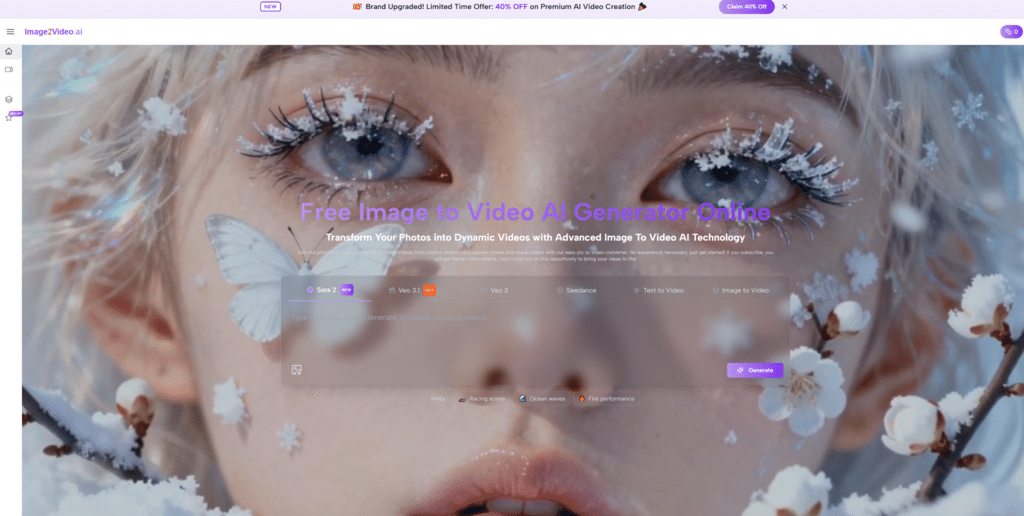
We all have that one photograph.
Maybe it’s a faded snapshot of a childhood beach trip, where the ocean sits still as a painting. Or perhaps it’s a candid portrait of a loved one blowing out birthday candles, the flame forever suspended in a static peak. You look at it, and your mind tries to fill in the gaps. You try to remember the sound of the waves crashing or the way the candlelight flickered against their smiling face.
But the image remains stubborn. It is frozen in amber.
Why Static Images Are No Longer Enough
For decades, we’ve accepted this limitation. We’ve told ourselves that a picture is worth a thousand words, even if it lacks the one thing that makes memory feel real: motion.
In the age of TikTok and Instagram Reels, static imagery is losing its grip on our attention. We are biologically wired to notice movement. A static ad gets scrolled past; a moving visual stops the thumb. But for most of us, bridging the gap between a still JPEG and a cinematic video has been an impossible chasm.
The Barrier of Entry
I remember trying to animate a simple landscape photo a few years ago. I downloaded complex software, watched hours of tutorials on “keyframes” and “masking,” and after three days of frustration, I ended up with a video that looked like a cheap, robotic GIF. The water didn’t flow; it warped. The trees didn’t sway; they vibrated.
It was expensive, time-consuming, and frankly, soul-crushing. I wanted to tell a story, not become a VFX engineer.
Enter the Era of “Living Photos”
Then, everything changed. I recently stumbled upon a tool that felt less like software and more like a magic wand. It wasn’t about editing; it was about directing.
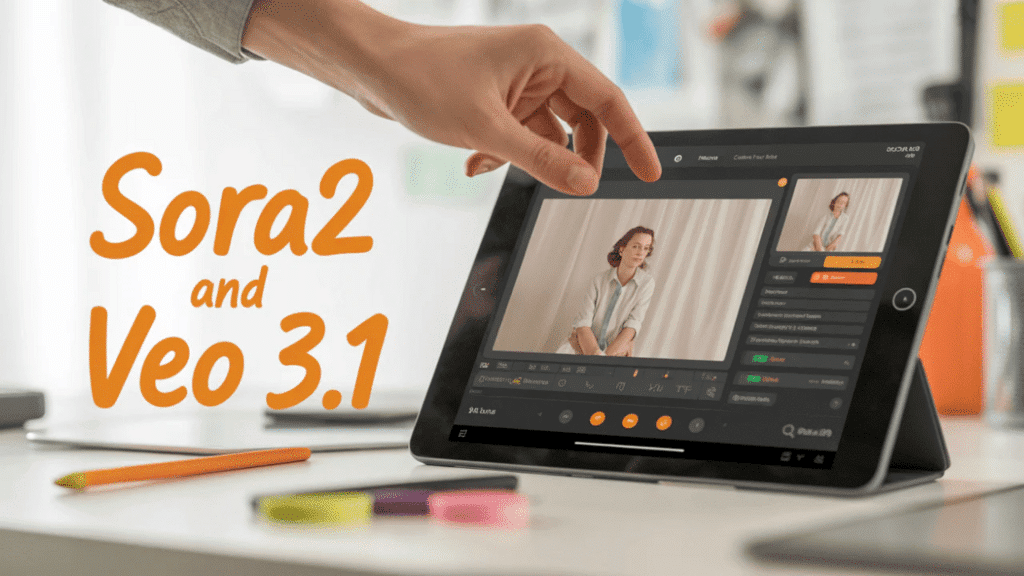
This is where the convergence of Sora 2 and Veo 3.1 comes into play. These aren’t just buzzwords; they are the engines behind a new revolution in digital storytelling.
My First Encounter with Image to Video AI
Let me share a personal experience. I took an old photo of a rainy street in Tokyo—a moody shot with neon signs reflecting on the wet asphalt. It was a good photo, but it was silent.
I uploaded it to Image to Video AI. I didn’t touch a timeline. I didn’t set a keyframe. I simply typed: “Heavy rain falling, neon lights flickering, steam rising from the street vents.”
Thirty seconds later, my jaw hit the floor. The rain wasn’t just an overlay; it was interacting with the puddles. The steam curled naturally, dissipating into the night air. The neon sign buzzed with an erratic, realistic rhythm. The photo hadn’t just moved; it had come alive.
Under the Hood: The Dual-Engine Powerhouse
To understand why this platform succeeds where others fail, we need to look at the technology. Most AI tools use a single model that tries to do everything. This platform uses a “brain and body” approach.
Sora 2: The Visionary Director (The Brain)
Think of Sora 2 as a film director who perfectly understands your script. When you type “gentle breeze,” Sora 2 understands the context. It knows that a breeze in a pine forest looks different than a breeze on a calm lake.
- Contextual Intelligence: It analyzes the semantic meaning of your image.
- Prompt Adherence: It listens to your specific instructions, no matter how abstract.
Veo 3.1: The Physics Engine (The Body)
If Sora 2 is the director, Veo 3.1 is the cinematographer and physics expert. It understands how the world moves.
- Fluid Dynamics: It knows how water ripples and how smoke billows.
- Lighting Consistency: As objects move, Veo 3.1 ensures the shadows and reflections shift realistically.
Together, they eliminate the “uncanny valley” effect that plagued early AI videos.
A Paradigm Shift in Workflow
The beauty of this technology isn’t just the output; it’s the process. We are moving from “Manual Construction” to “Intent-Based Generation.”
Here is a breakdown of how the landscape has shifted:
The Old Way vs. The AI Way
| Feature | Traditional Animation (After Effects/Photoshop) | Image to Video AI (Sora 2 & Veo 3.1) |
| Skill Level Required | Expert (Years of training) | Zero (Just typing) |
| Time to Create | Hours or Days per clip | Under 30 Seconds |
| Cost | Expensive software subscriptions ($50+/mo) | Free / Affordable tiers |
| Motion Quality | Often mechanical or “puppet-like” | Fluid, physics-based, organic |
| Creative Control | Manual manipulation of pixels | Natural language prompts |
| Hardware | High-end PC with powerful GPU | Runs in any browser |
Unleashing Creativity: Real-World Applications
Who actually benefits from this? It turns out, almost everyone.
1. The Social Media Alchemist
Content creators are under constant pressure to produce. A static photo of a coffee cup is boring. But animate the steam rising and the cafe bustle in the background? Suddenly, it’s a “mood.” This tool allows creators to recycle old content and give it a fresh, viral-ready life.
2. The E-Commerce Storyteller
For small business owners, product photography is standard. But imagine a jewelry brand where the diamonds actually sparkle and the light shifts across the gold. You don’t need a video production crew; you just need your product photo and a text prompt.
3. The Memory Keeper
This is perhaps the most touching application. I’ve seen users take black-and-white photos of ancestors and add subtle movements—a blink, a head turn, a smile. It transforms genealogy from a history lesson into an emotional reunion.

How to Craft the Perfect Animation
While the AI does the heavy lifting, your input still matters. Here is a quick guide to getting the best results based on my testing.
Step 1: Choose the Right Image
The AI works best with images that have “implied motion.” A waterfall, a busy street, a portrait with wind-blown hair. These images are begging to move.
Step 2: Be Descriptive
Don’t just say “animate this.” Be the director.
- Bad Prompt: “Make the water move.”
- Good Prompt: “Gentle waves rolling onto the shore, sunlight glistening on the water surface, slow motion.“
Step 3: Iterate
The speed of the platform allows you to experiment. Try a “stormy” version of your landscape, then try a “sunny” version. See which one tells the better story.
The Future is Fluid
We are standing at the precipice of a new era in digital media. The line between photography and videography is blurring.
The tools powered by Sora 2 and Veo 3.1 are not just “video generators”; they are imagination amplifiers. They democratize the ability to create cinematic visuals, taking the power out of the hands of the few professionals and placing it into the hands of anyone with a story to tell.
Final Thoughts
Your photos are sleeping. They are frozen moments waiting for a spark. Whether you are building a brand, growing a social following, or simply trying to hold onto a memory a little tighter, Image to Video is finally here to wake them up.
Don’t let your best moments stay static. Give them the breath of life they deserve.