

The online entertainment industry has undergone an incredible transformation in the last decade, and technology has driven almost every aspect of that change. What used to be limited to basic streaming, simple gaming platforms, and static digital media has become a fast-moving ecosystem driven by personalization, interactivity, and constant innovation. Today, audiences don’t just expect access to content. They demand convenience, immersion, speed, and experiences to suit their preferences in real time.
Technology has not only changed the way entertainment is delivered but also how it is produced, marketed, monetized, and consumed. Streaming services now use algorithms to suggest what users need to watch next. Video game platforms are creating huge social spaces where people interact as much as they play. Live content, virtual reality, artificial intelligence, and mobile-first design have all formed to push the industry towards a more dynamic and responsive model. As a result, the lines between entertainment formats are becoming less rigid and the experience of the audience is becoming more fluid.
This move is not confined to one segment. Film, music, gaming, live streaming, social platforms, digital casinos: everyone has been affected by the same technological wave of advancement. Businesses that adapt swiftly are discovering new ways to attract and retain users, but those that resist change risk losing relevance in an increasingly competitive environment.
Streaming Platforms Have Redefined Content Consumption
One of the most visible changes in the sphere of online entertainment has been the emergence of streaming technology. Audiences are no longer forced to rely on traditional timetables or even physical media to access films, television series, music, or live broadcasts. Instead, content is available at any time on multiple devices, allowing people to watch or listen whenever and wherever they want.
This convenience has forever altered the audience’s expectations. Users now prefer on-demand entertainment that fits their lifestyles rather than content fixated on time slots. Streaming platforms have responded by enhancing video quality, minimizing buffering, and developing seamless cross-device experiences. Smart TVs, smartphones, tablets and laptops are also working together as a single connected entertainment environment.
Technology has also altered the business model of streaming. Subscription services, ad-supported tiers, and hybrid monetization strategies have expanded options for consumers and companies. At the same time, data analytics enables platforms to analyze viewing patterns and invest in content that is appropriate for audience behavior. This makes the distribution of entertainment more targeted and strategic than it’s ever been before.
Artificial Intelligence Is Individualizing the User Experience
Artificial intelligence has become one of the most important tools in the online entertainment sector. Rather than providing the same experience for every user, modern platforms are increasingly personalizing content based on habits, preferences, search history, and interaction patterns. This personalization helps to keep audiences engaged and more likely to spend more time on a platform.
Some of the most obvious examples are recommendation engines. Whether an individual is looking at movies, music playlists, game recommendations, or live content, AI helps determine what appears first and what is most likely to hold someone’s attention. This type of personalization creates a more relevant experience and reduces friction for users when deciding what to consume.
AI is also affecting content creation and moderation. Some platforms use machine learning to edit trailers, create subtitles, optimize thumbnails, and detect problematic or copyrighted material. In gaming and interactive entertainment, AI can adapt challenges and environments based on a player’s behavior. This makes for an experience that is more responsive and more engaging, which is more valuable than ever in a crowded market.
Mobile Technology Has Increased Entertainment Access
The rise of smartphones and mobile internet has made online entertainment more accessible than ever before. People no longer need purpose-built devices or home setups to enjoy digital content. Entertainment now moves with the user, fitting into daily routines; during commutes, breaks, travel and leisure time at home.
Moreover, this has put pressure on companies to develop for smaller screens and shorter attention spans while retaining quality. Mobile apps found their way at the center of the entertainment business model and responsive design is no longer an addition but a basic requirement. Platforms that are poor at delivering a smooth mobile experience may struggle to retain users.
Mobile technology has also increased the kind of entertainment people are interested in on a regular basis. Casual gaming, short-form video, live streaming, music apps and interactive betting platforms all benefit from the simplicity of instant access. In the middle of this evolution, technology has also affected the way users compare digital platforms, including entertainment-focused categories such as parhaat nettikasinot, where speed, usability and mobile functionality often affect which brands will be noticed first.
Interactive and Social Features Are Changing Engagement
Technology is making entertainment interactive. Instead of just consuming content, users want to participate in it, respond to it and share it with others. This has helped to turn entertainment into a social experience which combines the elements of media, communication and community.
Live streaming is a great illustration of this shift. Audiences can now watch creators, comment live, send reactions and influence the atmosphere of the experience. The relationship between the performer and the audience has become more intimate and more active. This same trend is seen in the gaming industry, with the emergence of multiplayer gaming, voice over ip, and live events, entertainment has become a social activity throughout instead of a solitary activity.
Social features also enhance retention. When users make connections on a platform, it increases the likelihood that they will return. Communities form around fandoms, creators, games, and entertainment brands, adding another layer of value to platforms that are not just about content but also about the communities around them. Technology has made it possible for entertainment businesses to create ecosystems, rather than distributing products.
This is important, given that engagement is no longer measured solely by views or downloads. Companies are keenly interested in watch time, participation, repeat visits, sharing behavior and community growth. The more interactive the platform is, the better the long-term relationship with users is likely to be.
Immersive Technologies Are Creating New Possibilities
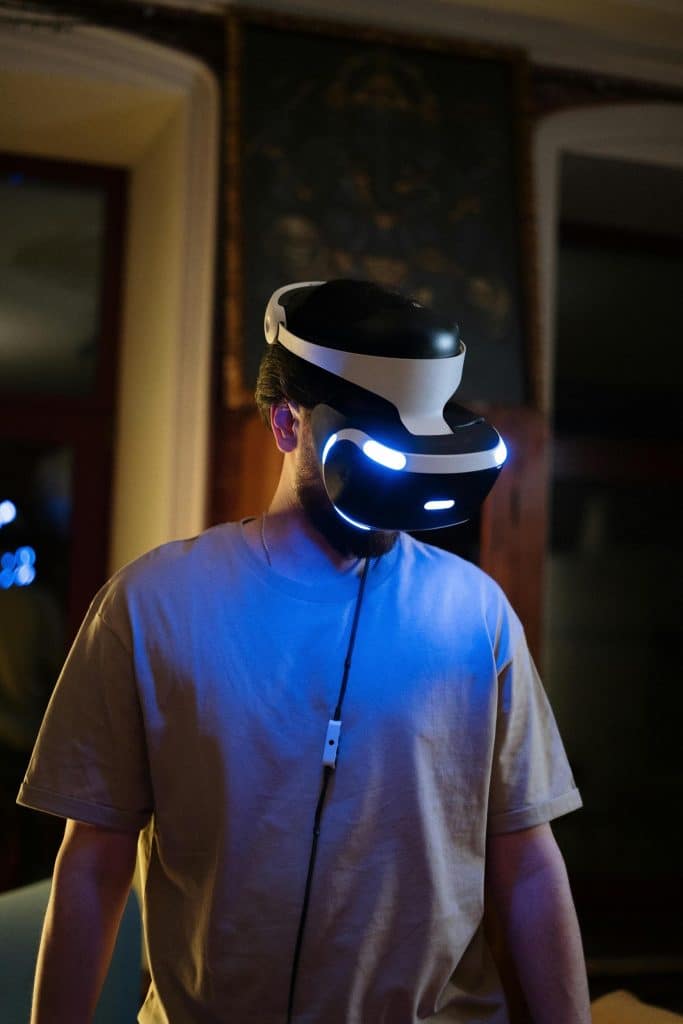
Virtual reality, augmented reality, and advanced graphics technologies are opening up new ways for online entertainment to look. These tools are making experiences more immersive by putting users inside digital environments, rather than having them look on from afar. Although these technologies are still developing in numerous areas, their influence is already evident.
Gaming has been one of the biggest beneficiaries. VR titles, interactive simulations and mixed reality show how entertainment can become more physical and sensory. Beyond gaming, immersive technology is also impacting live concerts, digital exhibitions, virtual events and branded experiences. With improvements in hardware and lower costs, it is likely that these formats will become more mainstream.
Even beyond complete VR environments, visual technology is enhancing entertainment experiences. High-definition streaming, realistic animation, motion capture, and faster rendering are all factors that contribute to a more rich digital content. These improvements are important because modern audiences are very sensitive about presentation quality. Better technology increases the expectations and businesses living up to those expectations can stand out more easily.
The Industry Will Continue to Evolve with Technology
Technology is making the online entertainment industry faster, smarter, more interactive, and accessible. It has shifted passive consumption to active engagement and digital platforms into adaptable ecosystems that are created around the user. From AI-powered personalization to mobile-first access, immersive experiences to real-time community interaction, the industry is headed towards a future in which entertainment is increasingly responsive and personalized.
This is far from an evolution that is over. As artificial intelligence gets better, immersive technologies mature and digital infrastructure becomes even more advanced, entertainment companies will continue to rethink how they capture attention and build loyalty. The platforms that actually make it are those that recognize that technology is not a background function but the core engine of modern entertainment.
In that sense, technology is not only changing the online entertainment industry. It is redefining what entertainment is in the digital space.