

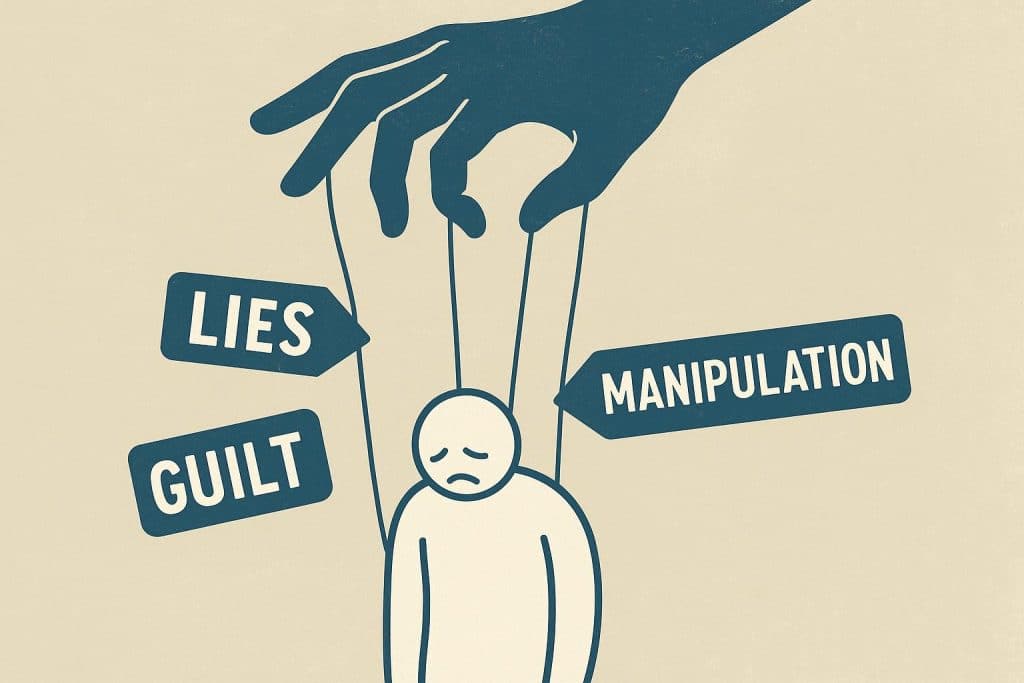
Loving someone who struggles with substance use can put you in a painful spot. You want to help. You want to believe them. You want to hold onto the version of them that sounds sincere, tearful, sorry, and ready to change. But when addiction is driving the conversation, honesty often gets bent. Promises come fast. Guilt gets used like a lever. Boundaries start looking, somehow, like cruelty.
That confusion is part of the trap.
A relative under the influence may ask for money, demand access to your home, pressure you to forgive too quickly, or tell you that saying no means you do not care. Sometimes the manipulation is loud and obvious. Sometimes it is subtle, almost polished. It comes wrapped in love, panic, shame, family history, or urgency. And that is what makes it so hard to spot.
The goal is not to become cold. It is not to stop caring. It is to learn how to stay compassionate without becoming easy to control. Those two things can exist together, even if it takes time to believe that.
When help turns into pressure
At first, manipulation may not look like manipulation at all. It may look like a crisis. A missed rent payment. A story about being stranded. A promise to pay you back next week. A tearful apology followed by a request. Then another request. Then another.
You start thinking, maybe this time is different.
Sometimes it is not even the words that pull you in. It is the tone. The desperation. The fear that something awful will happen if you do not act right now. That urgency can make you override your own judgment. It can push you into making choices you already know do not feel right.
The emotional fast lane
People caught in active substance use often live in chaos, and chaos creates speed. Everything feels immediate. Every problem sounds like an emergency. And emergencies do one thing really well: they shut down careful thinking.
That is why a manipulative pattern often works best when it keeps you rushed. If you feel you must answer on the spot, send the money now, forgive tonight, unlock the door this minute, you have less time to notice what is happening.
Slowing things down is not cruel. It is smart. It gives your brain time to catch up with your heart.
The promise loop
Another common pattern is the promise loop. It sounds familiar because it repeats itself with tiny changes.
“I swear this is the last time.”
“I’m serious now.”
“I’ve changed.”
“You have to trust me sometime.”
Each statement pulls on hope. And hope is powerful. Families live on it. But hope without proof can become a revolving door. You keep opening it, and the same storm keeps walking in.
Belief matters, but evidence matters more.
Guilt is often the hardest hook to resist
Some people ask directly for what they want. Others make you feel so bad that you hand it over yourself. That is where guilt comes in. And honestly, guilt can be more effective than anger.
A relative may say you are abandoning them. They may bring up childhood memories, past favors, or the fact that “family is supposed to stick together.” They may compare you to someone more lenient. They may cry. They may accuse. They may go quiet and let the silence do the work.
You end up feeling like the bad guy for having normal limits.
That feeling does not mean you are doing something wrong.
Compassion is not the same as compliance
This is where many people get tangled. They think that if they love someone, they must say yes. If they feel sorry for them, they must rescue them. If they understand the pain behind the behavior, they must ignore the behavior itself.
But compassion does not require access to your wallet, your home, your time, or your peace.
You can care deeply and still say, “I’m not giving you money.”
You can love someone and still say, “You can’t stay here tonight.”
You can feel sad for them and still refuse to be lied to.
That is not a contradiction. It only sounds like one until you have lived through enough manipulation to see the difference.
For some families, real support starts when help becomes more structured and less emotional. That may mean pointing someone toward care like Behavioral Health Outpatient Services instead of stepping back into the same rescue cycle again.
Spotting manipulation before it pulls you under
Manipulation works best when it stays fuzzy. So one of the most useful things you can do is name the pattern clearly. Not dramatically. Just clearly.
Once you can say, “This is guilt,” or “This is pressure,” or “This is another promise with no follow-through,” the fog starts to lift.
Red flags that matter more than the speech
Listen less to the performance and more to the pattern. That shift changes everything.
Here are a few signs you are being pulled into manipulation:
- You feel rushed to decide
- The story changes when you ask simple questions
- You are made to feel selfish for having limits
- Apologies come with demands attached
- The same crisis keeps happening with different details
- You feel drained, cornered, or oddly confused after every conversation
That last one matters. Your body often notices manipulation before your mind fully explains it. You get tense. Your stomach drops. Your thoughts scatter. You walk away replaying the conversation like a meeting that somehow ended with you assigned all the work.
Watch what happens after you say no
A healthy request can survive a boundary. Manipulation usually cannot.
When you say no, what happens next tells you a lot. Do they accept it, even if disappointed? Or do they escalate? Do they punish you with anger, shame, or emotional blackmail? Do they suddenly become cruel after sounding vulnerable five minutes earlier?
That switch matters. It reveals whether the conversation was about connection or control.
Boundaries sound simple until family gets involved
People love to say “set boundaries” as if it is one clean sentence and then you are done. Real life is messier. Family history gets mixed in. Old roles flare up. You may be the fixer, the peacemaker, the oldest child, the one who always picks up the phone. Breaking that role can feel strange, even wrong.
Still, boundaries work because they are clear. Not because they are clever.
What a firm boundary actually sounds like
A boundary does not need a long speech. In fact, the more you explain, the more room there is for debate.
Try language like this:
Simple lines that protect your footing
“I’m not able to give you money.”
“You can call me when you’re sober.”
“I won’t talk to you while you’re yelling.”
“I’m not changing my answer.”
“I care about you, and this is still my limit.”
These statements are calm. That is the point. They do not invite a courtroom argument. They do not ask for permission. They do not pretend this is easy. They simply hold the line.
And yes, holding the line can feel brutal the first few times. Then something shifts. You stop feeling mean and start feeling steady.
You do not have to play detective or savior
A lot of people burn themselves out trying to verify every story, fix every problem, and prevent every collapse. They become part therapist, part case manager, part fraud investigator. It is exhausting. And often, it does not help.
You are not required to solve every crisis your relative creates.
That may sound harsh. It is not. It is reality. Addiction has a way of pulling whole families into its orbit, until everyone starts spinning around one person’s needs, moods, and disasters. Then the household, or the wider family, starts running like a company in permanent emergency mode.
That is not love. That is instability dressed up as duty.
Support that does not destroy you
Healthy support has shape. It has limits. It has terms. It may look like paying a treatment provider directly instead of handing over cash. It may look like offering a ride to an appointment, but not to a friend’s house at midnight. It may look like helping someone find structured services geared toward recovery, including programs such as Recovery Support For Women when the situation calls for something more stable than family promises and panic-driven fixes.
Support should not cost you your safety, your peace, or your ability to trust your own judgment.
That matters. It really does.
Staying compassionate without losing yourself
This is the hardest part for many people. Not saying no. Living with the feelings that come after.
You may feel guilty even when you made the right call. You may question yourself when your relative gets angry, dramatic, or wounded. You may wonder whether being firmer is making things worse.
Here’s the thing. Boundaries often make manipulation louder before they make it weaker. When an old pattern stops working, the person using it may push harder. That does not mean your boundary failed. It often means it hit the exact place it needed to.
Let your values lead, not your panic
When emotions run high, it helps to ask a few plain questions:
Am I responding to a real need or to pressure?
Have I seen this pattern before?
Would I make the same choice if I had 24 hours to think?
Is this help, or is this rescue?
That pause can save you from decisions you will regret later.
And just as important, build support around yourself too. Talk to a therapist. Reach out to trusted friends. Find a support group for families affected by addiction. Write things down after hard conversations so you can track patterns instead of getting lost in the latest version of the story.
Because manipulation thrives in isolation. Clarity grows in connection.
The real goal is clarity, not cruelty
You do not need to become suspicious of everyone. You do not need a hard shell or a cold heart. What you need is clear vision. The ability to hear a painful story without instantly absorbing responsibility for it. The ability to care without surrendering your judgment. The ability to say, “I love you, but no.”
That kind of clarity protects both people, even when it does not feel good in the moment.
A relative under the influence may lie. They may plead. They may promise. They may try to make your boundaries look like betrayal. But your job is not to make every interaction feel soft. Your job is to make your choices honest.
And sometimes honesty sounds like this: I see what is happening. I care about you. But I will not be pulled into it.