

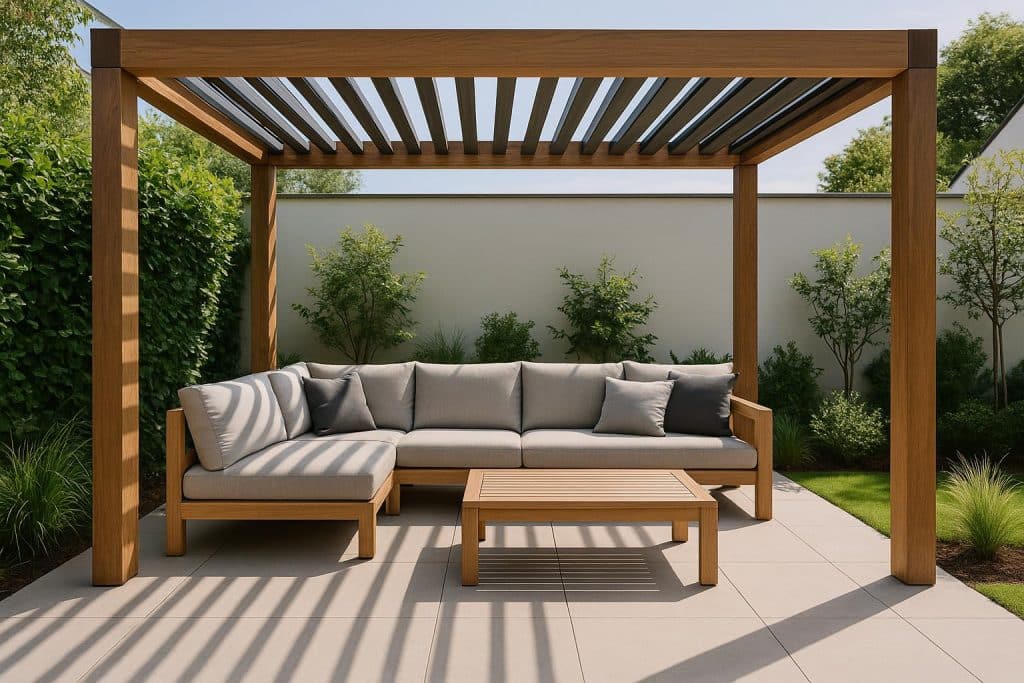
When it comes to transforming your outdoor space, pergola design and installation are key factors to consider. With a properly designed pergola, it can be used as a point of attraction by providing style and functionality. No matter how much you want to add some shade to a patio or a fashionable walkway, planning a pergola must be done to have it fit into your environment and fulfill its intended purpose.
In this paper, we will take you through the stage of creating a pergola that is both beautiful and useful at the same time. We will discuss how to choose the right location, materials, and methods of installations, among others, to have the best pergola that will improve your outdoor living environment.
Key Factors to Consider When Designing a Pergola
The initial thing when designing your pergola is the location where you would like to have it and what purpose would you use it. Do you want to find some shade to have a table or a rest? Or do you desire any ornamental effect of a walks path? Your pergola will depend on the intention of the purpose and design, and where it will be built.
Then, there is the size of the available space. Your pergola size must be in relation to your outdoor space. A huge pergola may dominate a tiny patio, as well as a small building may not create a huge impression in an expansive area. You should make sure that the size of the pergola is in accordance with the overall design of your garden or yard.
Pergola style is also a very important consideration. Pergolas are of different designs, such as traditional, modern, rustic, and contemporary. The style must blend with the appearance and feel of your house and garden. An elegant, simple-lined pergola could be perfect, in case you have a modern house. A wooden pergola with a weathered finish may be an ideal choice on a more rustic or vintage appearance.
These are the considerations when choosing materials to your pergola, depending on the climate and your maintenance needs. Wood is a more conventional option, which is beautiful in the natural sense, yet it should be maintained regularly in order to avoid rot and decay. Metal pergolas, e.g. aluminum or steel, are more modern in their appearance, and do not need as much maintenance. Another low-maintenance material is the vinyl pergolas that are able to stand the elements and still give a good appearance.
Your pergola should also use the type of roof. Others like an open roof design that will enable the sun to pass through whereas others can always choose the covered top to shield them. On hot days a fabric cover or canopy that may be withdrawn can give a feeling of having privacy without being so opaque as to lock out too much light. Latticework can also give an illusion of privacy without being overly dark.
Steps for Designing and Installing Your Pergola
The planning on how to design and install a pergola which balances style and functionality begins by planning your design. Take the measurements of the area in which you intend to construct the pergola and draw a plan according to how you want it to look like. The design must look into the size of the pergola and its relationship with your outdoors area. In case you are not sure with the design, you may refer to a landscape architect or a contractor to give you professional recommendations.
After a definite design, assemble the materials you will use. This encompasses the building components, posts, beams and rafters, and the other constructions like a roof, paint or other finishes. Also, it is important to get good quality materials that will not give in to the elements and prolong the life of your pergola.
It is necessary to prepare the ground before one starts the installation. Make sure that the space where the pergola is going to be located is flat with no impediments. In case it is required, pour concrete footings to ensure the posts are firmly fixed in the ground. This is a very critical step in ensuring stability of the structure.
Once you have the base, then you can begin to build the pergola. Start with posts and install them straight and firmly. The beams and rafters are next attached to create the pergola structure. At this stage, you might desire to include a roof or canopy, depending on how you design it. In case of the bigger and more intricate pergolas, it can be a good idea to hire the assistance of a professional contractor to make sure that everything is constructed to last.
After the concept has been developed, you can consider fine details. In case you have decided on wood as your medium, then put on a protective stain or a sealant to cover the wood so it does not get wet or allow UV rays to pass. You would also be able to give a decorative touch to your pergola by adding some lighting and climbing plants. In case you want something that requires little maintenance, you may decide to paint your pergola with weatherproof paint which fits your outdoor theme.
Enhancing Your Pergola with Style
Although a pergola is an efficient outdoor construction, it can also be a beautiful feature in your landscape. Climbing plants can be added to improve the look of your pergola and they can include wisteria, ivy or roses. The plants are able to pass through the rafters, which offers a touch of nature and lushness as well as offer extra shading.
The other option that can be used to enhance the attractiveness of your pergola is through the use of outdoor lighting. Evening String lights, lanterns or recessed lighting may be used to provide a warm and welcoming effect. Select the type of lighting that fits your personality, be it soothing and ambient lighting to ensure you have a relaxing atmosphere or be it the bright lights to create a livelier party environment.
Your pergola can be expanded by adding outdoor furniture under it to make it more functional. It is good to add reclining furniture, a dining table, or even a hammock to relax. Select cushions and throws made of weather resistant materials so that they can endure the seasons. Pergola extensions can be connected with the help of rugs and cushions, which will make the pergola an part of your house.
To provide more privacy, you may consider adding some curtains or drapes which are going to be suspended on the rafters. These may help protect you against the sun or the wind and make a more intimate environment. Use a fabric that is outdoor friendly as it would last longer in different weather conditions.
Common Pergola Design Mistakes to Avoid
Even when selecting and installing a pergola, one should not make several typical mistakes. Making a wrong size is one of the greatest mistakes. The look of a pergola can be either too small or too big to fit in a certain area, which will create a sense of imbalance in the whole area. Always make sure that your pergola size fits the space where it is to be set.
The other frequent error is failure to maintain. Wood though beautiful needs frequent maintenance otherwise it can be damaged by weather and insects. In case you want something that is easy to maintain, you can also consider such materials as vinyl or aluminum, which are less difficult to maintain.
Last, but not the least, the pergola should be sound structurally. This involves the selection of good materials and fixing of posts. The foundation work is also a point that should not be neglected as a pergola that is not well anchored may turn out to be unstable with time.
Final Thought
Creating and fitting a pergola into your backyard is a fulfilling area of work that will beautify your outdoors area. Through choosing the factors like location, materials and style, you can make the pergola enhance your house besides providing useful advantages such as shade and privacy. Are you seeking a calming scape, or a cool outdoor accent, the appropriate pergola would make your back yard become a place of comfort and appeal.
FAQs
What is the best material for a pergola?
The best material depends on your preferences and climate. Wood is a traditional choice, while aluminum and vinyl are low-maintenance alternatives.
How much does it cost to build a pergola?
Costs vary based on size, materials, and location, but on average, a pergola can cost between $2,000 to $5,000 for a professionally installed structure.
How can I ensure my pergola is durable?
Choose high-quality materials, maintain the structure regularly, and ensure the posts are securely anchored.
Can I add a roof to my pergola?
Yes, you can add a roof for more shade. Options include fabric canopies, lattice, or even solid roofs made from metal or wood.
How do I maintain a wooden pergola?
Regularly clean the wood, inspect for signs of wear, and apply a protective stain or sealant to prevent damage from the elements.