

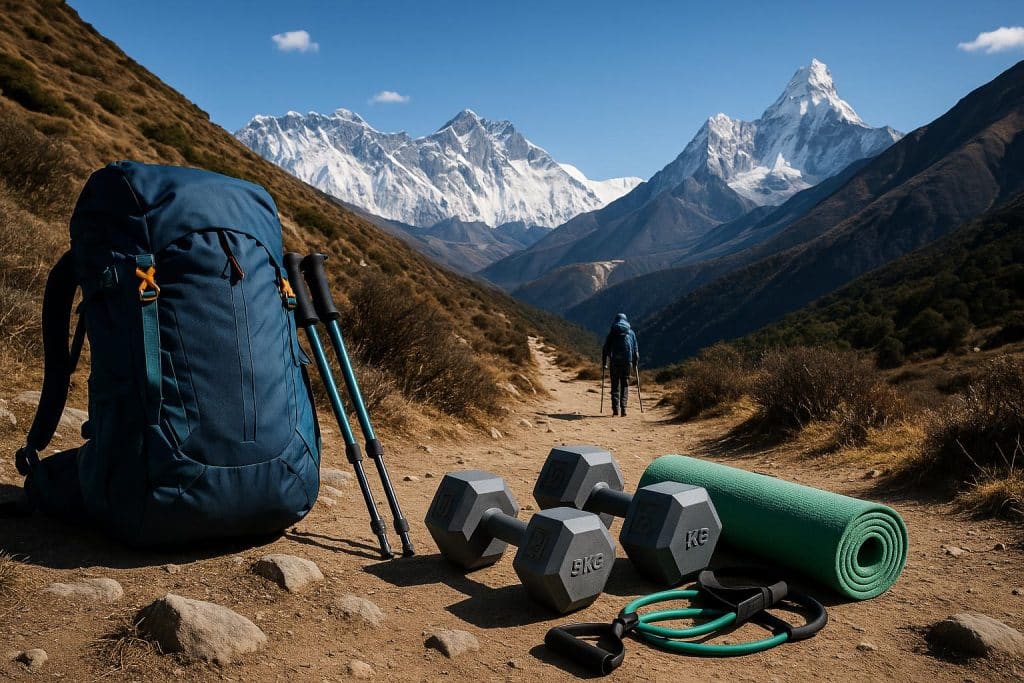
Preparing for the Everest Base Camp Journey isn’t about getting to be a few super-jocks; it’s about preparing your body (and intellect) for long days of trekking at elevation. The journey to Everest Base Camp takes you to a rise of 5,364 meters, where oxygen is lean, and the body feels electrically charged. The majority of trekkers are not accustomed to physical exertion and withdraw due to fatigue or issues with altitude, according to Rishi Raj Bansiwal of Nepal Mountaineering Association. : Explains the Weider System, a 12-week training regimen designed to build endurance, stability, and durability with virtually no risk of injury. The journey, with good planning, ought to be more of a joy than a hardship at all.
Physical Preparation for Everest Base Camp Trek
When to trek The Mount Everest base camp Trek is walking 5-7 hours on average each day, on rocky pathways, suspension bridges, and also local yak trails. Speaking of the weather, it can be unpredictable up there and very chilly; you don’t want to lug around a monstrous backpack either. He said: ” The essence is not technical; the only thing breathing again and again is your attitude and endurance. Your heart and cardiovascular system have to acclimate to reduced oxygen; your legs and core (and even stabilizing muscles) are under constant duress. The training should be specific as well, so you include enough time for aerobic and muscular endurance improvement, also including some balance work, whilst at the same time recovering to simulate what it will feel like in Nepal when you arrive!
Why the 12-Wk Program Is Your Best Choice
Shaping Your Plan: The plan you’ve never seen, 12 weeks of just enough hard to see measurable change and not burn out. This level allows for a slow increase in your cardiovascular system, without overtraining. Get too little training, and you are hurt or burned out; train too long, and motivation slips. Over that time period, your body acquires the stamina to whoop those slopers, the joint stability for stuck landings, and mental fortitude against elbow pressure. It’s a duration that doesn’t add time pressure due to work commitments and also allows space to have an option for rest days, which is suitable for someone new to trekking training towards an Everest Base Camp experience.
Cardiovascular Conditioning:
The establishment of your EBC journey preparation ought to be cardiovascular conditioning. High-impact work out, like brisk walking or running, cycling, and stair climbing, makes the heart and lungs work more efficiently. Instead of sprinting, in other words, the objective is to remain at moderate-intensity development for a maintained time. From the second week on, sessions can start to be longer and maybe a little harder to simulate trekking days. Others come pretty close, like incline walking and stair training (which is more like the uphills you’ll encounter on a trail). Longer-term aerobic training can take your wind away, if you catch our meaning, and improve your capacity to hold a consistent pace at altitude.
Strength Training for Trek-Specific Muscles
You absolutely must weight train to save joints and strength on long trekking days. Really emphasise legs, glutes, core, and lower back as these are the focus areas that will experience the burn. Workouts: The exercise will help you build functional strength for climbing and descending. Examples of workouts are squats, lunges, step-ups, deadlifts, etc. Wells: Having a strong core is also suitable for posture and balance, of course, especially when you have to carry heavy things (like a backpack over uneven terrain). Arm strength is also suitable for stability when using trekking poles as well. Gradual use and adding weights will avoid injury.
Balance, Mobility, and Injury Prevention Better at Movement.
Balance and mobility are something that often get overlooked but are essential, particularly in regard to your safety out on the hills. Develop flexibility in your hips, ankles & knees to reduce the strain placed on those areas when driving off long passes. Balanced, purposeful actions also prevent slips and falls, and give out good looks to technical terrain. The stretching and mobility work is also beneficial to recovery, as it pulls the muscle fibers in different directions and keeps them from stiffening (or hurting) too much, thereby enabling you to keep on training without having downtime during this 12-week plan.
Mental Conditioning and Endurance Mindset
It is the mind as much as it is the body when it comes to training for the Everest Base Camp Trek. The long days, the early mornings, and the effects of altitude can test motivation and patience. Slowly increasing the number of training sessions will help develop mental toughness and discipline. You want to create the art of pacing and teach body and mind to be able to endure the discomfort that cycling under fatigue or stress requires. Visualization and breathing exercises can also help manage anxiety that comes with the higher altitude. You will be able to adapt and sustain the challenges and enjoy the ride without getting so carried away by the distasteful part.
Twelve weeks of progressive weekly training
The focus for the first 4 weeks of training should be to establish a base level of fitness with mild cardio, light strength work, and mobility work. I was completely sore after my first run and emotional, thinking about how badly I wanted knee surgery! In weeks five through eight, you’ll be completing longer endurance workouts, heavier strength work, and incline-focused sessions. E)Reality: In the final month, you’ll simulate trekking conditions with longer walks, stairs, wearing a backpack, and 90 seconds or less of rest between exercises. The final week should be a taper, allowing your body to recover and peak as you head out. This systematic progression cycle keeps things moving without doing too much.
Final Thoughts
It’s payment for your safety, pleasure, and trip. WELL CONSTRUCTED 12 WEEK FITNESS BLUEPRINT prepares your body to handle the long trekking days, high altitude , and challenging trails. Similar to the tortoise and hare principle, consistency beats intensity. You arrive on the trail with cardiovascular stamina, strength, flexibility, and mental grit in your back pocket. But with some preparation, a trek to Everest Camp will not just deliver bragging rights – it will open your eyes to the beauty, culture, and achievement of trekking in the Himalayas.