

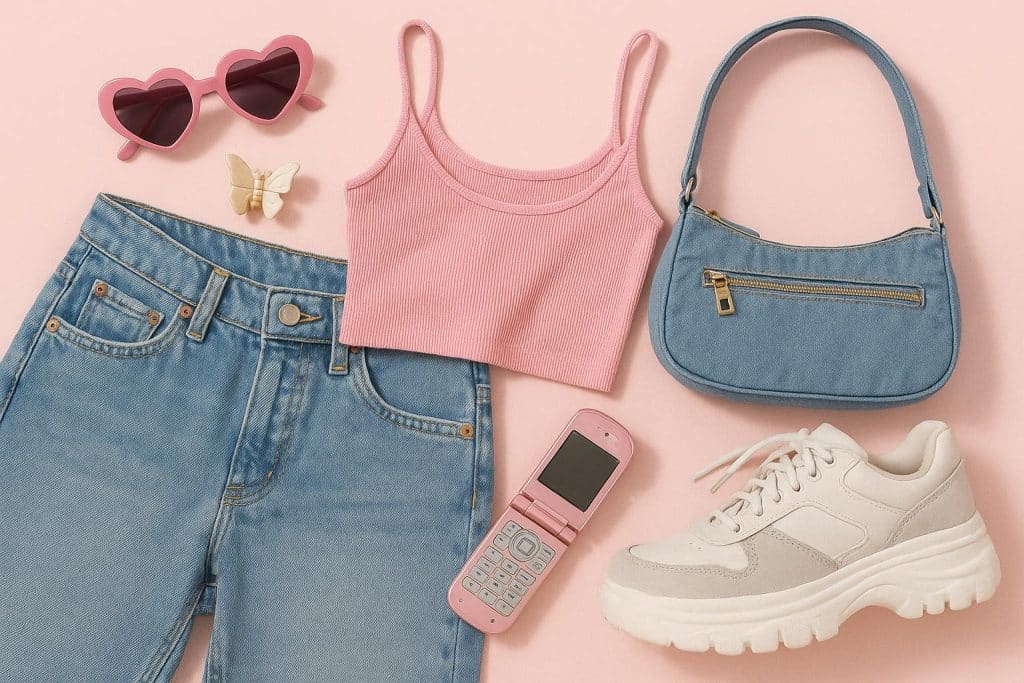
Y2K clothing is everywhere again. From social media to streetwear, early-2000s references have become part of the visual landscape. Low-rise silhouettes, bold graphics, shiny fabrics, and exaggerated proportions are no longer confined to archives or nostalgia posts. Yet wearing Y2K today comes with a challenge. When revival turns into imitation, the aesthetic quickly feels dated, costume-like, or disconnected from the present. The real question is not whether Y2K still works, but how it can exist now without being trapped in the past.
The key lies in understanding that Y2K clothing was never meant to be frozen. The aesthetic was experimental, forward-looking, and rooted in a specific cultural moment. To wear it today, the goal is not accuracy, but reinterpretation. Y2K survives because it adapts.
Understanding Y2K as an Attitude, Not a Costume
At its core, Y2K was about attitude before it was about specific garments. The early 2000s were marked by rapid technological change, early internet culture, and a sense that identity could be fluid, playful, and exaggerated. Fashion reflected that mindset. Clothes were loud, sometimes chaotic, and often provocative.
Copying those outfits piece by piece removes that spirit. When Y2K becomes a checklist of items rather than an expression, it loses its relevance. Wearing Y2K today works best when it is treated as a mindset. Confidence, experimentation, and a willingness to stand out matter more than recreating an exact silhouette from 2001.
This approach also prevents Y2K from becoming ironic. Instead of dressing “as” the era, modern Y2K styling dresses “with” it, borrowing its energy while remaining grounded in the present.
Updating Silhouettes Instead of Repeating Them
One of the most effective ways to modernize Y2K clothing is by rethinking proportions. Early-2000s silhouettes were often extreme. Ultra-low-rise jeans, skin-tight tops, or oversized layers worn all at once defined the era. Today, those extremes can feel heavy-handed if repeated exactly.
Modern Y2K styling softens these contrasts without erasing them. A single exaggerated element paired with contemporary cuts keeps the look balanced. For example, a bold Y2K-inspired top can work effortlessly when styled with cleaner trousers. Oversized pieces feel intentional when contrasted with more structured elements.
Rather than stacking multiple nostalgic references, restraint becomes part of the styling. Letting one Y2K piece define the outfit allows the aesthetic to breathe. The result feels intentional instead of theatrical.
Mixing Y2K Clothing With Modern Staples
Contrast is essential when wearing Y2K clothing today. The most successful looks often combine expressive Y2K elements with modern staples that ground the outfit. Neutral pants, minimalist outerwear, or understated footwear create space for louder pieces to stand out.
This balance keeps the look wearable. Instead of leaning fully into nostalgia, the outfit exists between eras. Y2K becomes an accent rather than a uniform.
This approach explains why curated platforms like Y2K Wave matter today, selecting Y2K clothing that fits naturally into modern wardrobes rather than feeling locked in the early 2000s. Instead of copying the past, the focus shifts toward wearable pieces designed to blend with contemporary silhouettes.
By mixing eras thoughtfully, Y2K clothing becomes adaptable. It works in everyday settings rather than feeling reserved for themed outfits or social media posts.
Choosing Details That Feel Timeless, Not Dated
Details often determine whether a Y2K outfit feels current or stuck in the past. Logos, graphics, metallic textures, and bold prints are central to the aesthetic, but using them without restraint can quickly push a look into parody.
Modern Y2K styling favors intention. One strong graphic has more impact than several competing visuals. Shiny or textured fabrics work best when balanced with matte or neutral elements. Fit matters more than excess.
The goal is not to erase what makes Y2K recognizable, but to refine it. When details are chosen carefully, they feel expressive rather than overwhelming. This approach preserves the boldness of Y2K while aligning it with modern sensibilities.
Layering and Proportion in a Modern Context
Layering plays a key role in translating Y2K clothing into a contemporary setting. Early-2000s layering was often chaotic, mixing lengths, textures, and fits without much restraint. Today, layering becomes more structured.
Playing with length rather than bulk keeps the silhouette clean. A visible underlayer, a cropped top over a longer base, or an oversized outer layer can all reference Y2K without copying it directly. Proportion becomes a styling tool rather than a rule.
This approach also makes Y2K clothing more versatile across seasons. Layering allows expressive pieces to adapt rather than dominate, keeping the look flexible and wearable.
Making Y2K Clothing Personal
Y2K originally thrived on individuality. It was an era where personal style mattered more than cohesion. That spirit translates naturally to today’s fashion landscape, where self-expression often outweighs trend-following.
Wearing Y2K clothing today works best when it reflects personal taste rather than external expectations. Some people lean into bold references, others prefer subtle nods. Both approaches are valid as long as the styling feels authentic.
Personal interpretation is what keeps Y2K alive. When the aesthetic becomes a tool for expression rather than imitation, it avoids stagnation. The look evolves with the wearer instead of repeating a fixed image.
Avoiding the Trap of Over-Nostalgia
One of the biggest risks with Y2K clothing is leaning too heavily into nostalgia. Overly literal references can make an outfit feel disconnected from its environment. Fashion that relies entirely on the past often struggles to feel relevant.
Modern Y2K styling avoids this by prioritizing context. Where the outfit is worn, how it moves, and how it interacts with contemporary fashion all matter. Y2K works best when it feels like a response to the present, not an escape from it.
By grounding the aesthetic in modern life, Y2K becomes part of an ongoing conversation rather than a static revival.
Conclusion
Wearing Y2K clothing today is not about recreating the early 2000s. It is about understanding what made the era resonate and translating that energy into a modern context. By focusing on attitude, updated silhouettes, thoughtful contrast, and personal expression, Y2K evolves beyond nostalgia.
The aesthetic endures because it adapts. When worn with intention, Y2K clothing feels less like a revival and more like a continuation, shaped by the present rather than confined to the past.