

There is growing hard evidence that vehicle tracking is not just GPS and a map. Big field tests and government projects now show that telematics can change driver behavior and fuel use. Federal research has recently evaluated telematics for safe and fuel efficient driving in trucks and found measurable improvements in both safety and economy.
So what is a vehicle tracking system, exactly?
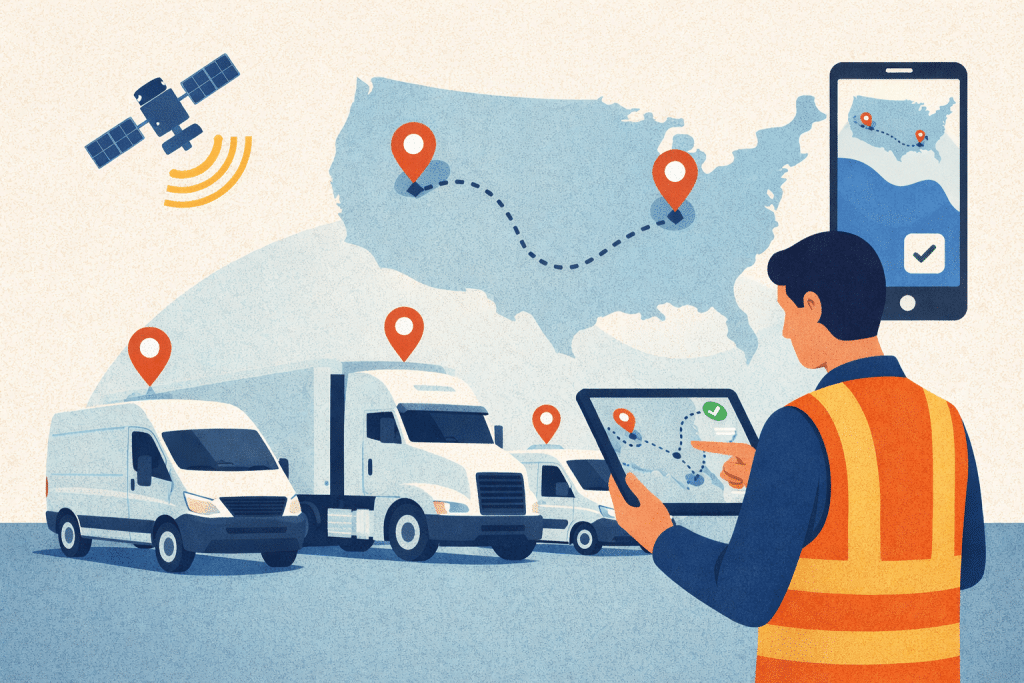
At its simplest, a vehicle tracking system records where a vehicle is. In modern fleets it is a data pipeline. Devices on the vehicle feed GPS, engine data, driver hours, and even dashcam video back to a cloud platform. Managers see routes, idling, fault codes, speed events, and time-on-site details. That data gets turned into rules, alerts, and reports. If you have older mental image of a blinking dot, toss it. Today’s systems are streaming sensors and decisions.
Why US fleets are investing, now
Fuel keeps rising. Labor availability is tight. Regulators insist on electronic logs and stricter compliance. These are blunt levers that push managers toward telematics. Surveys by large providers show most fleets have adopted at least one tracking or telematics tool, and many report clear benefits in efficiency and safety. For many operators the math stops being theoretical: the platform pays back in months, not years.
What the system actually contains
Picture a handful of building blocks: a vehicle-mounted device or OEM integration, a cellular link, cloud storage and dashboards, and optional video or sensor add-ons. The CANbus and OBD feeds give engine metrics. ELD integrations cover hours-of-service. Cameras add context to incidents. And APIs let you tie telematics into route planners, CRM, or maintenance shops. Take any one component away and the picture is weaker. Put them together and you have a tool that nudges human behavior and fixes mechanical problems before they break.
Tangible benefits fleets report
Fuel. Telematics spots idling, route inefficiencies, and hard accelerations. Fix those and fuel falls. Several industry reports and vendor case studies show double-digit fuel reductions for fleets that use active monitoring and coaching.
Safety. When you can see speeding and harsh braking, you can coach drivers. Large surveys link telematics to fewer accidents and lower accident costs. One fleet tech study found accident costs and harsh driving events drop after adoption.
Maintenance and uptime. Telematics flags engine trouble codes and schedules maintenance based on real usage, not calendar days. That reduces emergency repairs and avoids downtime. The result is a steadier schedule and less overtime chasing broken trucks.
Compliance. Electronic logging and HOS integration keep carriers honest and reduce paperwork. Government studies comparing trucks with and without ELDs show better record quality and, in some analyses, safety benefits.
Real-world proof and ROI
This is not just sales talk. The FMCSA and related research projects have run field operational tests that show telematics can improve fuel efficiency and safe driving when implemented correctly. Vendor trend reports support that fleets often see ROI within a year, sometimes in months, depending on fleet size and use case. Market analysis also show the sector is large and growing fast, reflecting both demand and the pace of technology change.
Hurdles you will see in the field
Data overload is real. Teams buy tech, then drown in alerts. Integration headaches also bite – payroll, dispatch, and warranty systems do not all speak the same language. Driver acceptance matters. If drivers think tracking equals punishment, they will push back. The successful fleets design policies first, then pick tech that fits those policies. Train humans. Tune alerts. Start small. Scale what works.
Looking ahead
Expect two big shifts. One, OEMs and vehicle manufacturers will ship more built-in telematics, making deployments simpler but also raising questions on data control. Two, electrification will change what you measure. Battery state, charging cycles, and range predictors will join RPM and fuel maps as mission critical metrics. Companies from the traditional telematics vendors to automakers are already racing to own the software layer that will sit on top of all that vehicle data.
Final note
If you run a fleet in the US, vehicle tracking is no longer a nice-to-have. It is where operations and data meet. The trick is to treat it like a people project as much as a tech install. Put rules around the data. Coach drivers with evidence, not blame. Measure results, and iterate. Do that and the tracking becomes less about surveillance and more about steady, measurable improvement.