

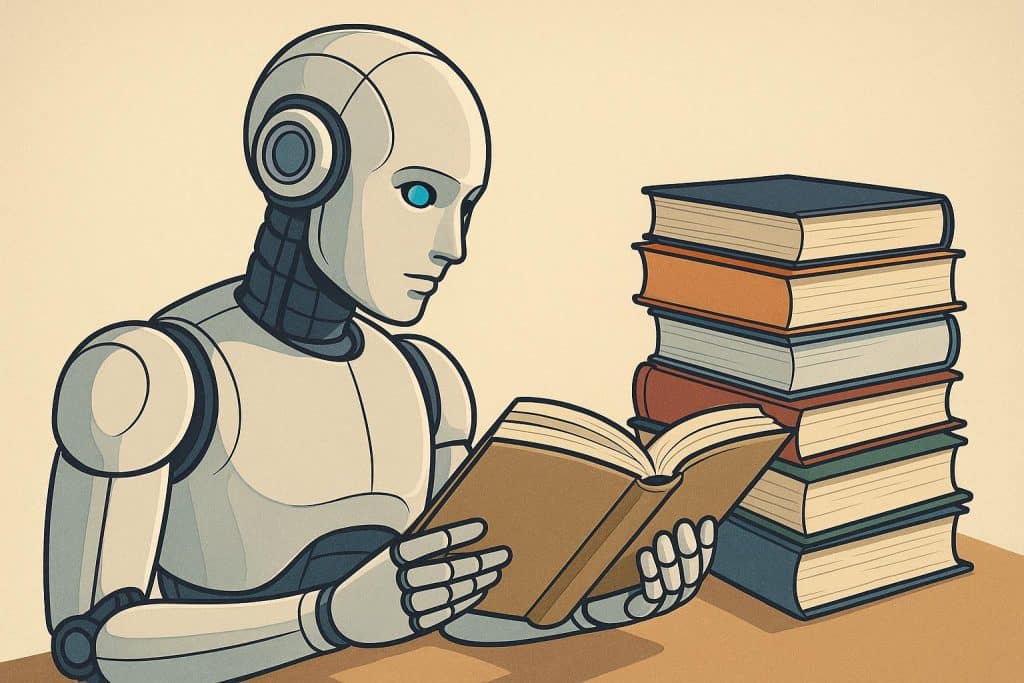
With AI now able to summarize, explain, and connect ideas instantly, a natural question appears:
If AI knows almost everything, do humans still need to read books the old way?
The honest answer is: not in the same way as before.
For most non-fiction books — especially in technology, management, productivity, and the social sciences — reading cover to cover is no longer the most efficient path. What really matters today is not finishing a book, but understanding its core ideas quickly and knowing how to apply them.
That is where short audio summaries become powerful.
Instead of spending weeks finishing one book, you can listen to two or three books a day during your commute. In about fifteen minutes, you can capture the main frameworks, arguments, and insights from today’s most popular technology, business, and humanities titles.
This does not mean books have lost their value.
Literary classics, novels, and deeply philosophical works still deserve slow and careful reading. They develop language, emotional awareness, and imagination — experiences that short summaries cannot replace.
But for most knowledge-driven books, speed and accessibility now matter more than reading every chapter.
The real shift happens when short audio learning is combined with AI.
You no longer need to remember every detail of every book. You only need to remember which book contains which idea, and then let AI help you turn that idea into action.
For example, you might tell an AI assistant:
“I am preparing a presentation for our leadership team about why we should focus on strategic prioritization over feature proliferation this quarter. In previous quarters we have tried to do too many things at once and ended up diluting impact. I recently listened to The 48 Laws of Power which includes the idea that you should ‘Concentrate Your Forces’ — focus your energy and resources where you have the greatest advantage, not spread them thin. Based on this core principle from The 48 Laws of Power, please help me draft a presentation outline with specific slides and key talking points that will persuade the leadership team to adopt a more focused strategy.”
In this situation, AI is not replacing the book. It is helping you activate what you already learned in a short listening session.
You listen first.
You store the key concept.
Then you ask AI to help you apply it in a real project.
This learning model fits modern life perfectly.
Commutes, workouts, and daily routines create natural listening time. During these short moments, fifteen-minute audio summaries allow you to continuously absorb the latest ideas in technology, leadership, and social thinking — without sacrificing your work or family time.
Platforms like AudiobookHub make this approach practical by helping you discover books quickly and consume their essential ideas in audio form.
So, do we still need to read?
Yes — but we no longer need to read the way we used to.
In the age of AI, the real advantage is not finishing more books.
It is learning faster, remembering smarter, and using knowledge more effectively.