

Spamhaus commands a mixture of respect and fear among email administrators and marketing professionals. Although there are hundreds of blacklists (DNSBLs) patrolling the internet, Spamhaus is considered the industry standard and the “gold” level of protection used by most Internet Service Providers (ISPs), government networks, and corporate email servers worldwide.
At the heart of their defense infrastructure lies Spamhaus Zen, a powerful tool that decides which emails are delivered and which are rejected.
Understanding Spamhaus Zen, how it operates, and how to recover, specifically through the strategic use of email warm up, is essential for maintaining the lifeline of modern business communication.
What is Spamhaus Zen?
Spamhaus Zen is not a single list, but rather a “composite” blocklist. Think of it as a master database that combines several threat intelligence feeds into one real-time query service. When an ISP queries Zen, they are simultaneously checking three critical datasets maintained by the Spamhaus Project.
- The SBL (Spamhaus Block List): This database contains verified spam sources. Listings here are not accidental; they are usually the result of a direct investigation by the Spamhaus team and point to a server known for sending unsolicited bulk email or hosting spam operations.
- The XBL (Exploits Block List): This list focuses on security breaches. It targets illegal third-party exploits, including open proxies, worms/viruses with built-in spam engines, and infected PCs controlled by botnets. If your IP address appears on this list, it usually means that your infrastructure has been compromised by malware.
- The PBL (Policy Block List): Perhaps the most common pitfall for legitimate businesses, the PBL lists IP address ranges that should not send email directly to an MX server, such as dynamic residential IP addresses. The PBL doesn't accuse you of being a spammer; rather, it accuses you of using an unauthenticated or insecure “pipe” to send your mail.
Proactive Defense: Why Email Warm-up is Your Best Shield
Before diving into the technical traps of blocklists, it’s vital to understand that email deliverability is a proactive game. Navigating the complexities of Spamhaus Zen requires more than just reactive recovery; it demands a solid reputation from day one.
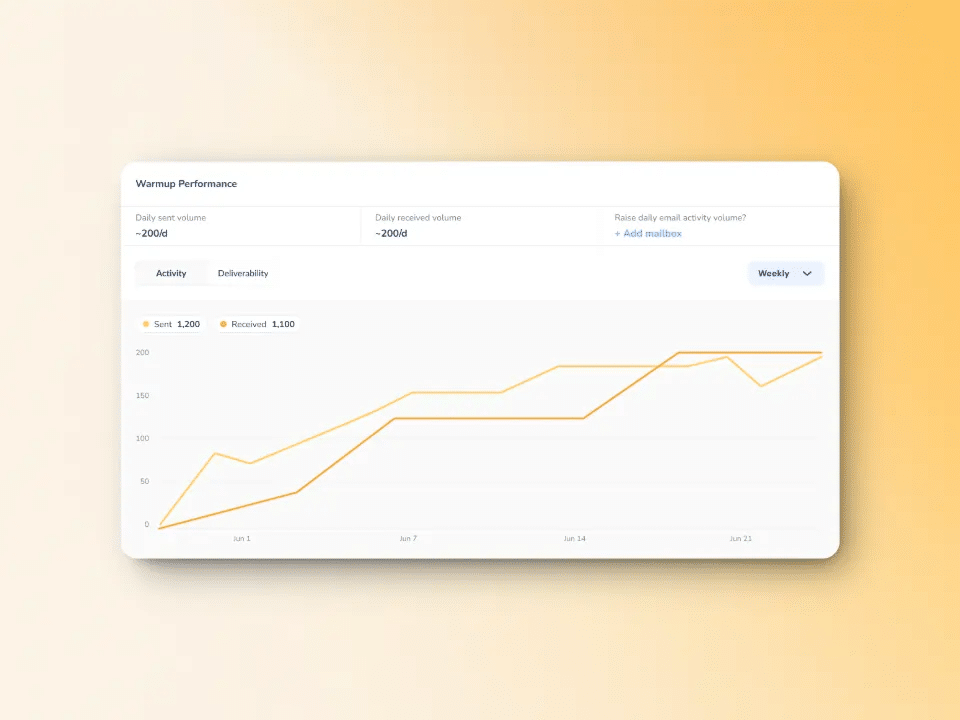
By leveraging automated email warm-up solutions like Warmy.io, businesses can solidify their sender identity at scale. This process gradually increases your sending volume while generating real engagement, ensuring you stay off blocklists and protect your essential communication channels before a crisis even occurs.
Establishing this “trust signal” is the most effective way to neutralize the strict filters of Spamhaus Zen through three core pillars:
- Volume Throttling: Rather than triggering “spam spikes,” automated tools start by sending a very small number of emails daily. This mimics natural human behavior, staying well under the radar of aggressive ISP filters.
- Positive Engagement: The most sophisticated warm-up networks don't just send emails; they interact with them. By opening messages, marking them as “important,” and retrieving them from spam folders, they signal to Spamhaus and ISPs that your content is wanted by users.
- Predictable Consistency: While spammers are erratic and high-volume, legitimate businesses are consistent. A warm-up strategy establishes a stable traffic pattern that reassures algorithms of your domain’s reliability.
How Spamhaus Zen actually works
How does Zen actually stop your email? It happens in milliseconds during the SMTP handshake, which is the initial “greeting” between the sending and receiving servers.
When your server attempts to deliver an email to a recipient, such as a Gmail user, the recipient's server notes your IP address. Before accepting the message, the server queries the Spamhaus Zen database.
If your IP address is listed in Zen, the query will return a specific code. Consequently, the recipient's server immediately terminates the connection. Your email does not go to the spam folder in this case; it is “bounced” or rejected outright with a 550 error code.
This “reject-at-connection” methodology is why Spamhaus is so effective. It saves ISPs massive amounts of bandwidth by blocking threats before data is transmitted. For the sender, however, the result is total silence.
The Impact: Business Paralysis
The consequences of being listed at Spamhaus Zen are immediate and severe:
- Near-Zero Deliverability: Since major providers (Microsoft, Yahoo, and countless private enterprise filters) rely on Zen, your ability to communicate externally effectively ceases.
- Reputation Damage: Frequent bounces damage your domain's reputation with other ISPs that might not use Spamhaus directly but monitor error rates.
- Operational Stalls: Transactional emails, password resets, invoices, and shipping confirmations, fail alongside marketing emails, grinding business processes to a halt.
How to solve being listed in Zen
If you find yourself on the list, the first step is remediation. Identify the root cause, such as patching a security hole, removing a malware infection, or stopping a rogue marketing campaign, and then apply for delisting via the Spamhaus checker.
However, businesses often make the mistake of assuming that, once delisted, they can immediately resume sending at full volume. This is a fatal mistake.
After a Spamhaus listing, your IP reputation is fragile. ISPs are skeptical. They have seen your IP behave poorly, and even if Spamhaus gives the “all clear,” the ISPs' internal algorithms remain wary.
If you send 50,000 emails the next day, it looks like you're just cleaning up your act temporarily. You risk being relisted or filtered by providers like Google and Outlook.
Conclusion
Recovering from Spamhaus Zen listing requires a two-pronged approach: technical remediation to solve the security issue, followed by a disciplined email warm up period to rebuild reputation. In this scenario, treating your email sender reputation as a vital corporate asset is the only way to ensure your message is heard.