

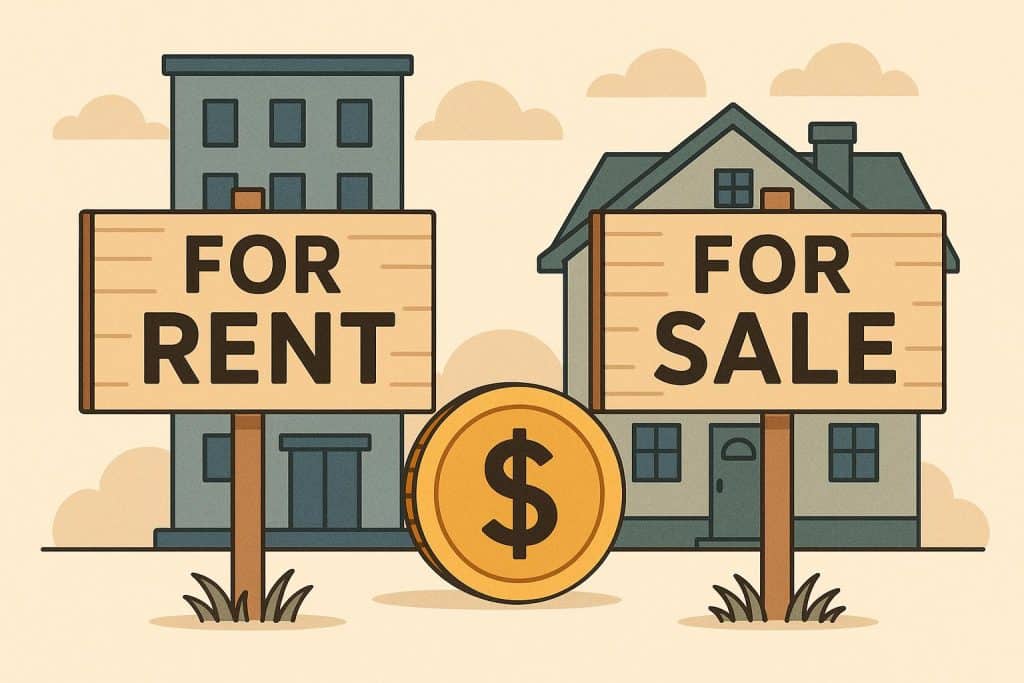
For decades, buying a home was treated as a financial milestone, something you were “supposed” to do as soon as you could afford it. But in today’s housing market, that assumption is being challenged. With mortgage rates higher than they were just a few years ago, home prices still elevated in many regions, and rents climbing at uneven rates, the rent-versus-buy decision has become far more complex and far more personal.
At the same time, lifestyles are changing. Remote work has altered where people choose to live, job mobility has increased, and financial priorities now extend beyond homeownership alone. Some households are focused on flexibility and cash flow, while others are still drawn to the stability and long-term wealth potential of owning. As a result, there’s growing uncertainty around what the “smart” move actually looks like right now.
By comparing upfront costs, monthly expenses, long-term equity, flexibility, and current market conditions alongside lifestyle goals and risk tolerance, this discussion aims to help readers evaluate which option aligns best with their financial reality today.
Upfront Costs and Immediate Financial Impact
The first major difference between renting and buying shows up before you even move in. Renting generally requires far less cash upfront, typically a security deposit and the first month’s rent. Buying, on the other hand, often involves a down payment, closing costs, inspections, and other fees that can quickly add up.
Buying can still make financial sense even in a higher-rate environment. Many buyers today are offsetting upfront costs through builder incentives, credits, or reduced fees, while locking in predictable monthly payments with a fixed-rate mortgage. Renters benefit from simplicity and lower entry costs, but buyers gain an immediate ownership stake that can start building value right away.
Monthly Expenses and Cash Flow Predictability
Monthly housing costs extend far beyond a rent check or mortgage payment. Renters usually enjoy predictable expenses, since landlords cover maintenance, repairs, and many surprise costs. This predictability makes budgeting easier and reduces financial stress, especially when unexpected repairs could otherwise derail savings plans.
Homeowners, however, face additional expenses such as property taxes, insurance, utilities, and upkeep. These “hidden” ownership costs can significantly raise the true price of owning over time. While monthly ownership costs can be higher, buyers gain control over their space and are no longer exposed to annual rent increases.
Long-Term Equity, Wealth, and Opportunity Cost
One of the strongest arguments for buying is the long-term equity premium. Monthly mortgage payments gradually convert housing costs into ownership, potentially benefiting from appreciation, tax advantages, and protection against inflation. Buyers who purchase now can begin building equity immediately and may refinance later if rates decline.
However, renting offers a different financial advantage: liquidity. Renters often have lower monthly housing costs and no maintenance expenses, allowing them to invest the difference in stocks, retirement accounts, or passive investments. In some markets, these returns can rival or exceed home appreciation.
This perspective argues that in high-cost cities, renting near work can drastically reduce commuting expenses, car ownership, and lost time, freeing up significant money to invest elsewhere. The takeaway: equity matters, but so does opportunity cost.
Flexibility, Lifestyle, and Market Risk
Lifestyle considerations often matter just as much as the numbers. Renting offers unmatched flexibility, making it easier to relocate for work, explore different neighborhoods, or adapt to changing life circumstances. Renting is increasingly viewed as a long-term lifestyle choice rather than a temporary phase.
Renters also avoid housing market risk. If home values decline, renters are largely unaffected, while homeowners may feel financially stuck. Renting can be the smarter option for people who expect to move within a few years, live in areas where home prices far exceed rents, or prefer reduced risk.
Buying tends to make more sense for those seeking long-term stability, customization, and the emotional security of ownership, especially if they plan to stay put for 5 to 7 years.
Choosing What Makes Sense for You Right Now
Ultimately, the rent-versus-buy decision is personal. Buyers should evaluate affordability, interest rates, how long they plan to stay, and whether ownership aligns with their financial goals. Renters should consider how flexibility, predictable costs, and investment freedom support their broader plans.
For homeowners weighing alternatives, such as renting out a property, relocating temporarily, or comparing options like house buying companies, understanding rental value is key. Determining how much my home will rent for requires combining local rental comps, market demand, financial needs, and expert insight. Using multiple pricing methods helps ensure rents remain competitive while supporting long-term plans.
A Practical Framework to Decide: Rent or Buy?
If you’re still on the fence, stepping back and using a simple decision framework can bring clarity. Rather than asking whether renting or buying is “better,” the more useful question is which option best supports your next five to ten years.
Start with the time horizon. Buying tends to favor those who plan to stay put long enough to absorb upfront costs and ride out market fluctuations. Renting works better for shorter timelines, uncertain job paths, or life transitions where flexibility has real value.
Next, look at cash reserves and risk tolerance. Homeownership concentrates both risk and reward in a single asset, while renting keeps capital liquid. If an unexpected repair or market dip would cause financial strain, renting may offer more peace of mind. If you’re comfortable managing maintenance, variability, and long-term exposure, buying may be a better fit.
Then consider local math, not national averages. In some areas, owning costs significantly more per month than renting a comparable home; in others, the gap is narrow or even reversed. Running realistic numbers including taxes, insurance, repairs, and opportunity cost often reveals which option is financially efficient in your specific market.
Finally, factor in strategy, not just shelter. Some buyers plan to live in a home temporarily before renting it out later, while others explore alternatives such as downsizing, relocating, or working with house-buying companies to simplify a move. In those cases, understanding future rental potential, resale flexibility, and exit options matters just as much as today’s payment.
Bottom Line: The Smarter Move Is the One That Fits Your Reality
There’s no universal winner in the rent-versus-buy debate, especially in today’s market. Buying can be a powerful wealth-building strategy when you have financial stability, plan to stay long enough to build equity, and are comfortable with maintenance, market swings, and long-term commitment. Locking in a fixed payment, building ownership over time, and protecting yourself from rising rents can make homeownership a smart move under the right conditions.
Renting, however, is no longer just a stopgap. It offers flexibility, predictable costs, and freedom from market risk, advantages that matter more than ever in an environment of high prices and elevated interest rates. For many households, renting creates breathing room to invest elsewhere, pursue career opportunities, or wait for a clearer moment to buy without financial strain.
Ultimately, the smartest choice right now is the one that aligns with your timeline, cash flow, risk tolerance, and lifestyle priorities, not external pressure or outdated assumptions. Whether you choose to rent, buy, or shift strategies over time, understanding the full financial picture puts you in control of your next move.