

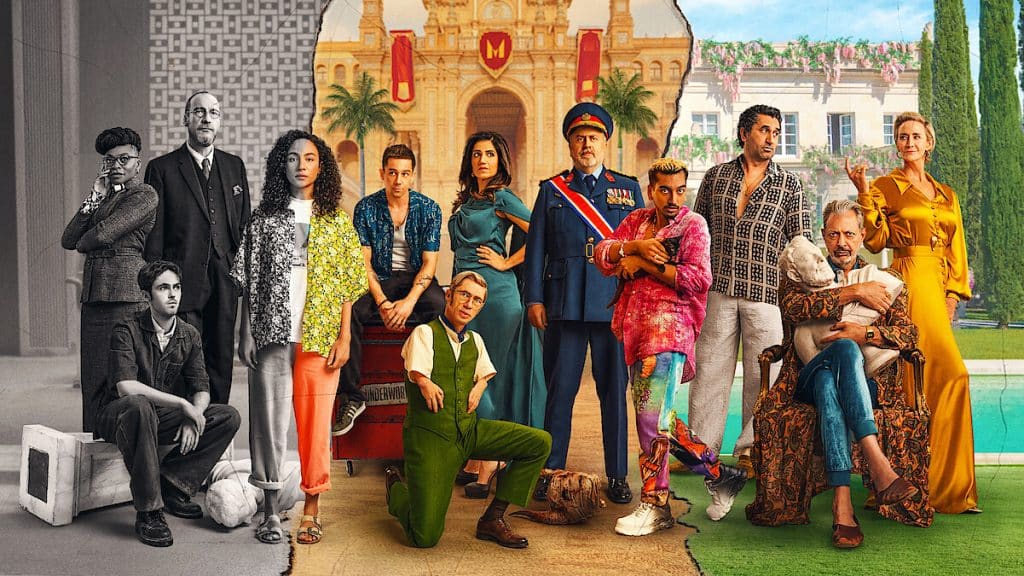
We were promised a neon-soaked revolution starring Jeff Goldblum as a tracksuit-wearing king of Olympus. Common knowledge dictates that Greek myths should deliver epic tragedy, but in practice, this retelling clips its own wings. Unfortunately, rampant pacing and plot issues turn divine retribution into a mid-level corporate dispute, mostly revealing the Almighty acting like a toxic CEO.
The ‘Toxic CEO’ Trap: Why Jeff Goldblum’s Zeus Undermines the Stakes
Casting the famously eccentric actor as the King of the Gods seems like a brilliant hook. Yet, KAOS leans too hard into his quirky persona, reimagining him as an insecure, tracksuit-wearing executive. Instead of hurling lightning to command respect, this modern deity obsesses over a single forehead wrinkle.
This “relatable” choice fundamentally breaks the story’s underlying tension. Grounding the portrayal of Hera and Zeus in modern TV tropes—making them bicker like an out-of-touch, wealthy couple on Succession—causes the mythic stakes to evaporate completely. A ruler who is worried about his aging skin might feel delightfully human, but he rarely feels genuinely dangerous.
To test this yourself, watch how other characters respond to his temper tantrums. Notice whether they treat him with paralyzing fear, or simply roll their eyes like he is an exhausting nuisance. Shrinking divine terror into everyday frustration doesn’t stop at Mount Olympus, unfortunately; it leads directly to the bureaucracy in Hades, revealing how forced relatability causes severe tonal whiplash.
Bureaucracy in Hades: How Relatability Causes Tonal Whiplash
Stepping away from Mount Olympus, the series drags us into Hades, reimagined as a soulless corporate office. We’ve seen the Bureaucratic Underworld trope before, but comparisons to better shows fall short here. While other series use modern settings to highlight divine power, KAOS reduces the afterlife to a literal DMV waiting room, turning a clever remix into an exhausting mundane slog.
This subversion strips away the mystery of death, anchoring the world-building in everyday annoyances that completely stall the narrative momentum. To define its version of mythology, the series relies on three frustratingly ordinary mechanics:
- Trapping souls in endless, gray processing queues.
- Reducing the terrifying Fates to petty middle management.
- Treating the River Styx like a delayed subway commute.
Plunging legendary heroes into a tedious grind creates the jarring feeling of slamming the brakes on epic tragedy to deliver a goofy workplace joke. With the emotional stakes vanishing, the narrative foundation crumbles well before the finale.
Final Verdict: Does KAOS Deserve an 8-Hour Sacrifice?
The required time investment simply doesn’t justify the emotional payoff. Turning legendary gods into bored bureaucrats ultimately clips their mythological wings, making the series feel tedious rather than epic. Skip this mundane apocalypse. Instead, invest your television hours into Succession for genuinely sharp power dynamics or The Good Place for clever, engaging afterlife world-building.