

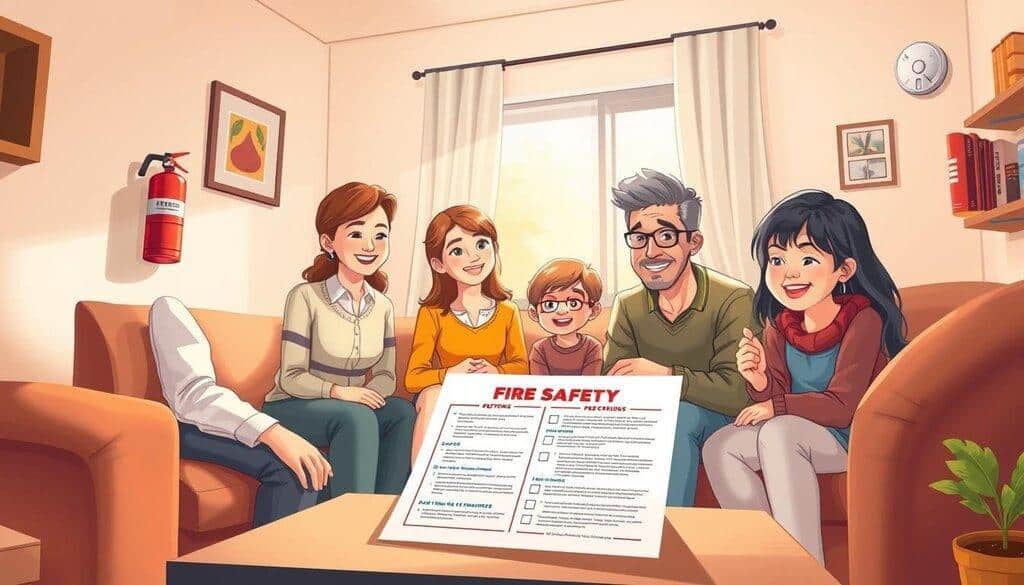
It’s easy to overlook dangers in our homes as we go about our day. But being ready and taking action can prevent disasters. Making sure we have fire prevention in place is key for our family’s safety.
Understanding Fire Risks in the Home
Fires in our homes can start without warning and spread fast. This puts our lives and property at risk.
Common Causes of Residential Fires
Most home fires are caused by things we can prevent. Two big reasons are cooking accidents and problems with heating equipment.
High-Risk Areas in Your Home
- The kitchen, due to cooking-related incidents
- Heating equipment areas, such as near furnaces or space heaters
- Living areas with fireplaces or candles
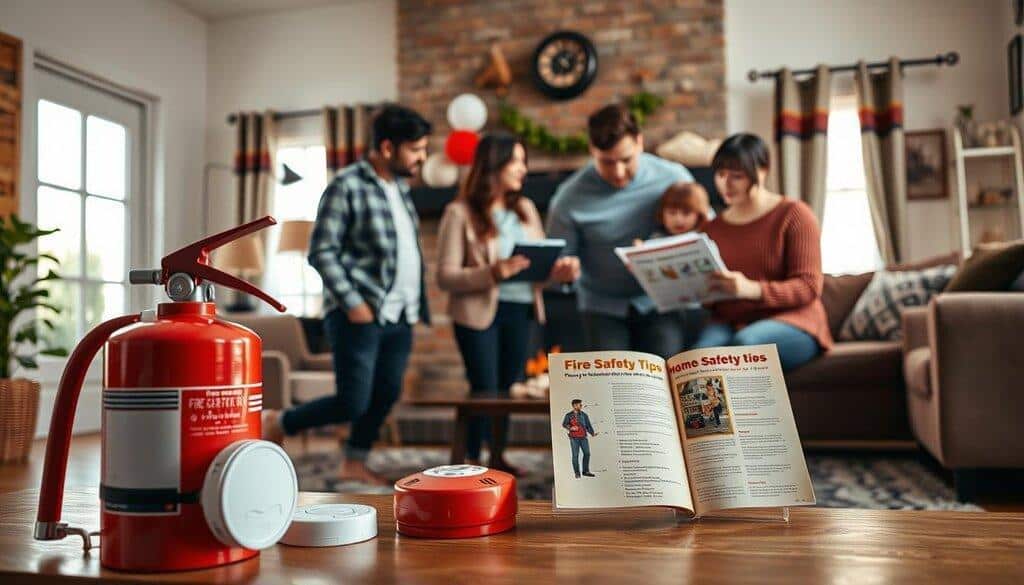
Seasonal Fire Hazards
Seasonal changes bring their own fire dangers. Holiday lights can be a risk in winter. Dry weather in summer can start outdoor fires.
Proper Placement Throughout Your Home
To work best, smoke alarms need to be placed:
- On every level of your home
- Inside and outside each sleeping area
- In each bedroom
Testing and Maintenance Schedule
Make sure to test smoke alarms every month. Change the batteries once a year. Also, swap out smoke alarms every 10 years.
Different Types for Different Fires
There are many types of fire extinguishers, like:
- Class A for ordinary combustibles
- Class B for flammable liquids
- Class C for electrical fires
The PASS Technique
To use a fire extinguisher right, follow the PASS method:
- P – Pull the safety pin
- A – Aim the nozzle at the base of the fire
- S – Squeeze the handle to release the extinguishing agent
- S – Sweep the nozzle from side to side, covering the entire area of the fire
Carbon Monoxide Detectors
Carbon monoxide detectors are crucial for safety. They should be near sleeping areas and on every floor of your home.
Mapping Out Multiple Exit Routes
We need at least two ways out of each room. This includes windows and doors as backup routes.
Considerations for Children and the Elderly
When planning, think about children and the elderly. Choose routes that are easy for them to follow.
Designating a Meeting Point
After escaping, we need a meeting spot. It should be safe and outside the home.
Conducting Regular Fire Drills
Fire drills are key to knowing what to do in a fire. Practice your plan at different times.
Daytime vs. Nighttime Drills
Drills during the day and at night prepare us for all scenarios. Night drills help us practice escaping in the dark.
Timing Your Evacuation
Time your exit to leave quickly. Aim to be out of the house in two minutes.
Kitchen Fire Prevention Strategies
Keeping your kitchen safe is key. By following safe practices and watching out for dangers, we can lower the risk of fires.
Safe Cooking Practices
Safe cooking is the first step in preventing fires. Always stay alert while cooking and keep flammable things away from heat.
Handling Grease Fires
Grease fires are very dangerous. It’s important to know how to handle them.
Kitchen Appliance Safety
Keeping your appliances in good shape is vital. Regular checks can spot problems before they cause fires.
Preventing Electrical Fires
Electrical fires are common in homes. We must spot overloaded circuits and use extension cords wisely—don’t connect too many together or hide them under rugs.
Heating Equipment Safety
Heating gear like space heaters and fireplaces needs extra care to avoid fires.
Space Heaters and Fireplaces
Make sure space heaters are far from anything that can catch fire. Also, keep fireplaces clean and well-maintained.
Smoking and Candle Safety
Smoking and candle safety are very important. Never leave candles burning alone. Make sure smokers put out their cigarettes completely.
Teaching Children About Fire Safety
Teaching kids about fire safety is key to keeping them safe. It’s important to teach them about fire safety in a way they can understand. This way, they’ll know what to do in an emergency.
Age-Appropriate Fire Safety Education
Fire safety lessons should match a child’s age. For young kids (3-5 years), it’s important to teach them simple rules. Like not touching fire or hot things.
For Preschoolers (3-5 years)
Preschoolers need to learn basic fire safety rules. This includes not touching fire or hot objects.
For School-Age Children (6-12 years)
Older kids can learn more. They can understand the role of fire alarms and how to get out safely.
The Stop, Drop, and Roll Technique
Teaching kids the “stop, drop, and roll” method is crucial. It helps put out small fires on their clothes.
Recognizing Fire Alarms and What to Do
Teach kids to recognize fire alarms. They should know how to react, like getting out fast and meeting at a spot.
Seasonal Fire Safety Maintenance Checklist
To keep our families safe, we must adopt a seasonal fire safety maintenance checklist. This proactive approach ensures our homes remain protected against fire hazards throughout the year.
Monthly Safety Checks
Regular monthly checks are crucial for maintaining fire safety. These checks involve testing smoke and CO detectors, inspecting fire extinguishers, and ensuring all safety equipment is functioning correctly.
Testing Smoke and CO Detectors
Test smoke and carbon monoxide detectors monthly by pressing the test button. Replace batteries annually or as recommended by the manufacturer.
Inspecting Fire Extinguishers
Check fire extinguishers monthly to ensure they are fully charged and easily accessible. Inspect for any signs of wear or damage.
Seasonal Maintenance Tasks
Different seasons bring unique fire hazards. Adjust your maintenance tasks accordingly.
Spring and Fall Safety Preparations
In spring and fall, inspect your home’s heating and cooling systems. Clean chimneys and vents to prevent fires caused by debris buildup.
Professional Inspections
While regular checks are essential, some tasks require professional expertise.
When to Call in the Experts
Call a professional for fire safety inspections if you’re unsure about any aspect of your home’s fire safety equipment or if you’ve experienced a recent change, such as a new heating system.
Conclusion: Building a Fire-Safe Household Culture
Creating a fire-safe home is key to keeping our families and homes safe from fires. We can do this by understanding fire risks, installing fire safety gear, and having a family escape plan. This way, we can lower the chance of fires happening.
It’s also important to prevent fires in the kitchen, keep up with fire safety, and teach kids about fire safety. Regular checks for fire safety help keep our homes safe all year.
By following these steps and making fire safety a part of our lives, we can make our homes safer. Let’s all work together to make our homes fire-safe. This way, we can keep our loved ones and homes safe.