

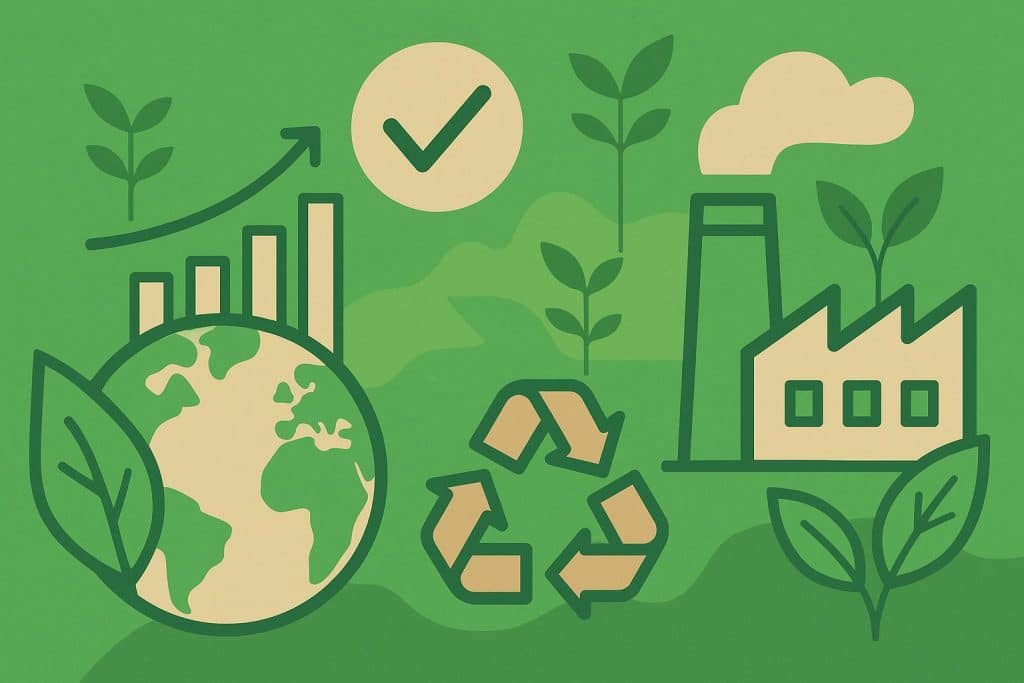
As the world faces increasingly complex global problems, there has become a growing necessity for sustainable solutions and Industry 4.0 adaptation. Sustainability in Industry 4.0 is far more than relying on old concepts such as Corporate Social Responsibility (CSR) or offering separate green initiatives; it is a strategic change in the manner in which enterprises respond to new, profound influences that affect the environmental spectrum.
A company’s capacity to adapt to this change with solutions to sustainability and better manage its impact on the environment can gain a competitive advantage. While the potential is clear, the method to lead a successful sustainability shift and impact management is less obvious. Companies need to have clear strategies for achieving sustainable transformation and better impact management. They need to apply an environmental, social, and governance (ESG) view to every area of the company and take hold of the value this change produces.
Sustainable Transformation Strategies
Sustainable business change involves integrating sustainability in a company’s strategy, day-to-day operations, and leadership. By co-developing sustainable solutions and embracing the sustainability industry 4.0, companies can reduce their carbon footprints, improve resource efficiency, and spur innovation, all leading to a more sustainable economy. Below are some approaches that enable companies to achieve sustainable transformation:
1. Adopting Circular Economy Systems
Companies can follow a circular economy approach to achieve sustainability in Industry 4.0. In this setup, companies focus on using a product for a long period, saving both natural resources and costs. Sustainable solutions can help in this by assisting companies to build goods that last longer or are easy to fix. Companies can also create return or recycling plans for used items and reuse leftover materials.
2. Developing a Green Supply Network
A green supply chain has a crucial role in the sustainability industry 4.0. It helps to shrink environmental damage at every step, from production to delivery. Organizations can achieve this by picking suppliers with sustainable habits, using solutions to sustainability to refine transportation and cut pollution, and reducing waste wherever possible.
3. Using Digital Tools to Strengthen Sustainability
Digital advancements in sustainable solutions allow enterprises to track, review, and optimize their resource utilization. For example, an enterprise can monitor water and energy consumption and identify areas for improvement by employing Internet of Things (IoT) devices and real-time information.
4. Committing to Carbon Neutrality Targets
Sustainable Industry 4.0 can reach carbon neutrality by reducing greenhouse gas emissions and investing in projects that sequester carbon, such as afforestation. Businesses can achieve neutrality by switching to efficient solutions to sustainability, adopting renewable energy sources, and investing in projects that sequester emissions that are unavoidable.
5. Involving Staff in Sustainability Efforts
Team members are central to any strong green program and achieving sustainability in Industry 4.0. Companies can teach teams about eco-friendly practices, launch green campaigns, and reward employee efforts to get their employees involved in sustainability efforts.
Impact Management Strategies
Impact management is all about recognition, tracking, and execution of plans aimed at enhancing the positive effect an organization has on the planet. At the same time, it involves reducing any possible negative outcomes. In a time of rising public awareness of environmental impact, it’s essential for companies to apply strong impact management practices. Some of them include:
1. Setting Impact Objectives
The key is identifying impact targets that match both the company’s end goal and the interests of everyone involved. Performance benchmarks of each process and its impact on the environment can be measured around these goals, helping the team to improve their overall efficiency.
2. Updating Impact Evaluation Methods and Tools
Companies need to add new indicators and sustainable solutions to understand the level of impact beyond standard project measures like budget, timeline, and scope. These could involve social elements like community benefits or environmental consequences. Applying sustainability industry 4.0 measures will let companies oversee and adjust progress in a complete and balanced way.
3. Incorporating Impact Management into Every Stage
Embedding impact management into every stage of the project is a method that guarantees steady attention to outcomes from start to finish. This means going further than tracking and adjusting, and instead planning ahead with impact in mind. This approach enables the team to shape results with purpose from the beginning, rather than reacting late in the process.
4. Ongoing Refinement
The strength of employing impact management strategies lies in the cycle of learning to which they are reliant—the more they are employed, the more experienced the team becomes at producing meaningful outcomes. Enterprises should begin evaluating impact information before, during, and after the initial pilot project term. The iterative evaluation will produce a holistic picture that describes the project’s outcomes, identifying not only adaptations to the project but also where successes can be combined.
Bottom Line
Sustainable business change is no longer an optional add-on to strategy; it stands as a core component of long-term business strength, market edge, and achievement. It is not just about meeting compliances; it’s about unlocking new paths for growth.
Having an effective change strategy aligns with social welfare, national interest, and shareholder priorities by providing value beyond profits. Incorporating the sustainability industry 4.0 into every aspect of business enables companies to be poised for future trends, adhere to policies, and create enduring value. Companies that actively leap into sustainability will lead with purpose, relevancy, and adaptability.