

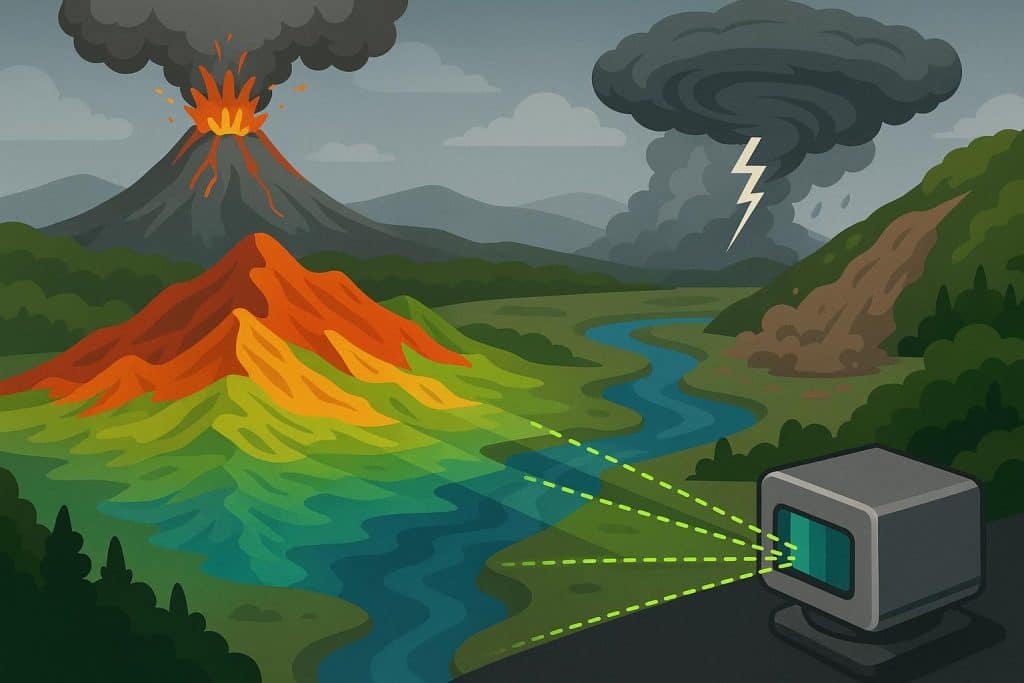
Natural disasters are becoming increasingly frequent and severe across the globe. From bushfires and floods to landslides and cyclones, the ability to monitor environmental changes in real time has never been more important. Governments, emergency services, and scientists are continually seeking better tools to understand how disasters unfold and how communities can respond more effectively.
One of the most powerful technologies helping in this effort is LiDAR. By using laser-based remote sensing, LiDAR systems can create incredibly detailed maps of terrain, vegetation, and built environments. Modern LiDAR Solutions are now playing a critical role in monitoring natural disasters, improving preparedness, and assisting recovery efforts.
What Is LiDAR and How Does It Work?
LiDAR stands for Light Detection and Ranging. The technology works by emitting laser pulses from an airborne platform such as a drone, helicopter, or aircraft. These pulses travel to the ground and bounce back to a sensor, allowing the system to measure the exact distance between the sensor and the Earth’s surface.
By collecting millions of these measurements every second, LiDAR generates extremely detailed three-dimensional maps. These maps can reveal:
- Precise terrain elevations
- Vegetation density and canopy height
- Changes in landforms over time
- Structural details of buildings and infrastructure
Because LiDAR can penetrate vegetation and measure ground elevation beneath forests, it offers insights that traditional aerial photography cannot provide.
Detecting and Predicting Flood Risks
Flooding is one of the most common and damaging natural disasters worldwide. Accurate terrain modelling is essential for predicting where water will flow and which communities may be at risk. LiDAR enables the creation of high-resolution digital elevation models (DEMs), which are used by hydrologists and disaster planners to simulate flood scenarios.
These models allow experts to:
- Identify floodplains and drainage pathways
- Analyse how stormwater will move through landscapes
- Plan infrastructure such as levees and drainage systems
- Improve evacuation planning in vulnerable regions
In Australia, LiDAR-based flood modelling is increasingly used to improve floodplain mapping in coastal areas and river catchments, helping local councils and emergency services prepare for extreme weather events.
Monitoring Bushfire Risk and Impact
Bushfires present an ongoing challenge across Australia, particularly during hot and dry seasons. LiDAR technology can assist both in preparation for fires and in assessing damage afterwards.
Vegetation Mapping
LiDAR can measure vegetation structure in extraordinary detail. This allows researchers to analyse fuel loads, canopy density, and vegetation height. By identifying areas with high concentrations of combustible material, authorities can prioritise controlled burns and vegetation management.
Fire Behaviour Modelling
Accurate terrain and vegetation data allow fire behaviour models to simulate how fires might spread across landscapes. Variables such as slope, wind direction, and fuel density all influence how quickly fires move. LiDAR provides the precise environmental data needed to make these models far more accurate.
Post-Fire Damage Assessment
After a bushfire, LiDAR surveys can help measure the extent of burned areas and identify structural damage. The technology can also detect changes in terrain caused by erosion or fallen vegetation, which may increase the risk of landslides or flooding in the months following a fire.
Landslide Detection and Early Warning
Landslides often occur in mountainous or heavily saturated terrain following heavy rainfall or earthquakes. Monitoring subtle changes in slope stability can provide early warning of potential landslide events.
LiDAR excels at detecting small changes in topography that may not be visible to the human eye. By comparing LiDAR scans taken at different times, scientists can observe gradual shifts in land surfaces and identify areas at risk.
This time-series analysis allows authorities to:
- Detect ground movement early
- Monitor unstable slopes
- Plan mitigation measures such as drainage improvements or retaining structures
In regions prone to landslides, LiDAR mapping is becoming a key component of disaster risk management strategies.
Tracking Coastal Erosion and Storm Impacts
Coastal environments are constantly changing due to tides, storms, and rising sea levels. Severe storms and cyclones can dramatically reshape shorelines within a short period.
LiDAR mapping allows coastal scientists to track these changes with remarkable precision.
After major storms, LiDAR surveys can measure:
- Beach erosion and sand movement
- Damage to coastal infrastructure
- Changes to dunes and protective barriers
By analysing these datasets over time, planners can develop strategies to protect vulnerable coastal communities and ecosystems.
Supporting Emergency Response Operations
During a natural disaster, having access to accurate, up-to-date information can significantly improve response efforts. LiDAR data collected by drones or aircraft can be rapidly processed to create detailed maps of affected areas. Emergency responders can then use these maps to:
- Identify blocked roads and damaged infrastructure
- Locate safe access routes for rescue teams
- Assess flood extents and evacuation zones
- Plan recovery and rebuilding efforts
The speed and accuracy of LiDAR mapping make it particularly valuable in situations where conditions are changing rapidly.
Improving Disaster Preparedness
Beyond responding to disasters, LiDAR also plays a vital role in preparing for future events. By building comprehensive terrain and environmental datasets, authorities can better understand the vulnerabilities of specific regions. This information can inform:
- Urban planning decisions
- Infrastructure design
- Flood mitigation projects
- Land-use regulations
When communities understand the landscape risks they face, they can take proactive steps to reduce potential damage.
The Future of LiDAR in Disaster Monitoring
LiDAR technology continues to evolve rapidly. Advances in drone-based systems, real-time data processing, and artificial intelligence are making LiDAR even more powerful and accessible. In the future, we can expect LiDAR to play an even greater role in disaster management through:
- Continuous environmental monitoring
- Real-time hazard detection
- Improved predictive modelling
- Faster disaster response and recovery planning
As climate change increases the frequency and severity of natural disasters, technologies like LiDAR will become essential tools for protecting communities and infrastructure.
Final Thoughts
Natural disasters pose complex challenges that require accurate data and rapid decision-making. LiDAR technology provides an unprecedented level of detail about the landscapes we live in, helping scientists, governments, and emergency services better understand how disasters develop and how they can be managed.
From predicting floods and modelling bushfire behaviour to monitoring landslides and coastal erosion, LiDAR has become a critical component of modern disaster monitoring systems. As the technology continues to advance, its role in safeguarding communities and improving disaster preparedness will only continue to grow.