

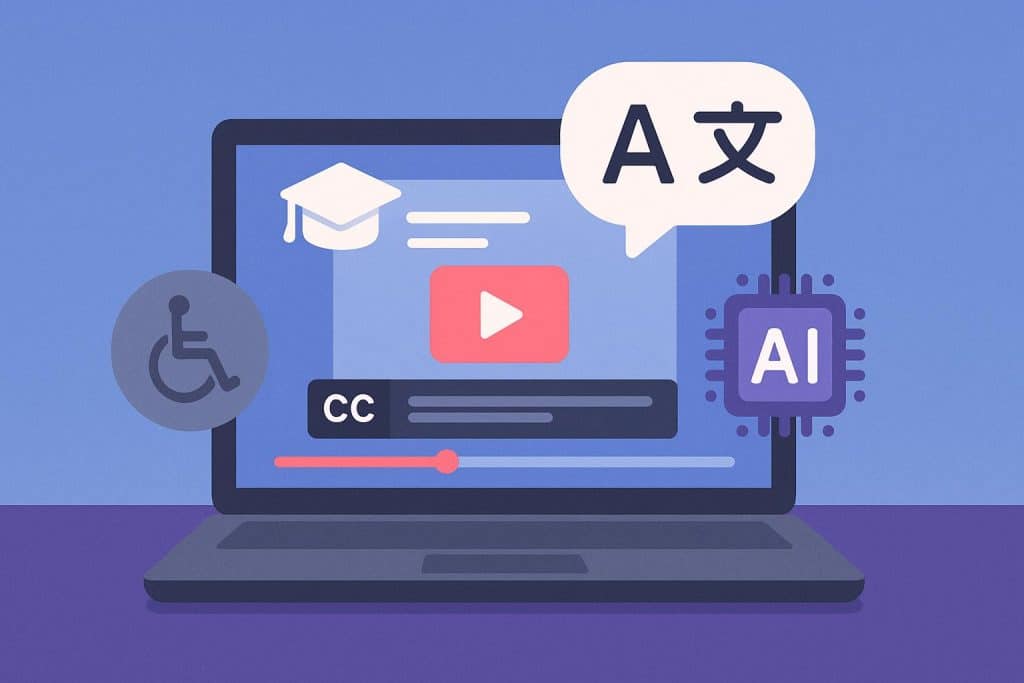
Educational videos are key in online learning. They make learning fun and help explain complex ideas. But, language barriers can stop them from reaching everyone.
is changing this. It lets teachers share videos in many languages. This way, students all over the world can learn in their own language.
This makes learning better and more welcoming for everyone. As more people want to learn, AI’s role in translating videos is getting bigger.
The Growing Need for Accessible Educational Content
Online learning is becoming more popular. This makes it clear that educational content needs to be available to everyone. Different learners have various backgrounds, languages, and abilities. So, we need to make learning materials more inclusive.
Global Education Challenges and Language Barriers
Language barriers are a big problem in global education. They limit how far and well educational content can reach. AI video translation software helps by making content available in many languages.
The Accessibility Gap in Online Learning
The accessibility gap in online learning is a big issue. It’s the difference between how much educational content is out there and how much learners can access. AI translation technology helps by providing instant translations. This makes learning better for students from all backgrounds.
Using AI video translation software, teachers can make sure their content is both accessible and interesting to learners around the world. This helps create a more inclusive and effective learning space.
How AI Video Translation Software Works
AI video translation software uses advanced tech like speech recognition and natural language processing. It’s not just about translating text. It’s about catching the subtleties of human language in videos.
Core Technologies Behind AI Translation
The heart of AI video translation is its ability to grasp and process human speech. It uses smart algorithms to spot spoken words, figure out the language, and translate it into the desired language.
- Advanced speech recognition
- Natural language processing capabilities
- Machine learning algorithms for improved accuracy
Speech Recognition and Natural Language Processing
Speech recognition turns spoken words into text. Natural language processing (NLP) then understands and interprets this text. Together, they are the foundation of AI translation, making sure translations are accurate and relevant.
Real-time vs. Post-production Translation Options
AI video translation software offers both real-time and post-production translation. Real-time is great for live events. Post-production is better for videos that have been recorded beforehand. Each option has its own benefits, depending on the educational content’s needs.
- Real-time translation for live lectures and events
- Post-production translation for pre-recorded videos, allowing for editing and review
In conclusion, AI video translation software is a powerful tool for making educational content more accessible. By understanding its core technologies and capabilities, educators can better use this technology to reach more people.
Benefits of AI Translation for Educational Videos
Educational videos are now more accessible than ever. This is thanks to AI translation technology. It’s not just breaking language barriers. It’s also making learning better for students all over the world.
Expanding Global Reach and Inclusivity
AI video translation software lets schools reach more people. It removes language barriers. Now, educational content can be enjoyed by those from different cultures and languages, making education more inclusive.
- Increased accessibility for non-native English speakers
- Broader dissemination of knowledge across geographical boundaries
- Enhanced collaboration among international students and educators
Cost and Time Efficiency Compared to Traditional Methods
Old ways of translating are slow and expensive. AI translation is faster and cheaper. It’s a great choice for those making educational content.
- Reduced translation time due to automated processes
- Lower costs compared to human translation services
- Faster turnaround times for educational content
Improving Learning Outcomes Through Native Language Instruction
Studies show students learn better in their own language. AI translation helps by offering content in the viewer’s preferred language. This boosts understanding and keeps information in their minds longer.
Supporting Diverse Learning Needs and Styles
AI translation meets different learning needs by offering content in various languages. It caters to different learning styles and preferences. This is key in today’s diverse classrooms.
- Personalized learning experiences through language preferences
- Support for learners with different linguistic backgrounds
- Enhanced engagement through native language content
Implementing AI Translation in Your Educational Content Strategy
As schools reach out to more students worldwide, using AI translation is key. This tech helps make educational videos available to a wider audience. It breaks language barriers and improves learning for everyone.
Selecting the Right AI Translation Tools
Finding the right AI translation tool is vital. Look for tools that accurately recognize speech and understand language. Google Cloud Translation API, Microsoft Azure Translator, and IBM Watson Language Translator are good options.
When picking a tool, think about the languages it supports, how you can customize it, and if it works with your current systems.
- Check if the tool can handle educational content well.
- Look at the level of customer support offered.
- See if the tool can grow with your needs.
Best Practices for Preparing Videos for AI Translation
To get the best from AI translation, prepare your videos right. Use top-notch audio, keep background noise down, and make sure the speaker’s voice is clear. Also, adding a transcript or subtitles can help the translation.
- Invest in good recording gear.
- Give context about the content.
- Test the translation with a small sample first.
Quality Control and Human Review Processes
Even with AI’s progress, human checks are crucial for quality and accuracy. Schools should have a process to review translations for cultural fit, accuracy, and relevance.
Getting feedback from users can also help improve the translations.
Case Studies: Successful Implementation in Educational Institutions
Many schools have successfully used AI translation. For example, an online university made its courses available in many languages. This led to more students from around the world.
Another school provided real-time captions for students with hearing issues. This greatly improved their learning experience.
These examples show how AI translation can make education more accessible and inclusive.
Conclusion
The world is getting more connected, and we need educational content that everyone can access. AI video translation software is changing how we learn. It removes language barriers, making learning materials available to more people.
AI translation helps schools reach more students worldwide. It makes learning inclusive and improves results. The advantages of AI video translation are many, from saving time and money to meeting different learning needs.
To build a better global education system, we must use AI translation. This technology makes learning easier for everyone. As we go forward, AI video translation will be key in making education accessible. It will help us become a more informed and connected world.