

Michael Henry is a communications expert and former Department of Defense technical director with extensive experience in military and enterprise network systems. Based in Virginia Beach, he currently serves as chief executive officer of Industrial Communications Group, where he leads efforts to deliver integrated data, voice, and video solutions across complex environments. Michael Henry spent 29 years in the US Army as a special operations communicator officer, developing and managing mission-critical communication systems in challenging conditions. He later served 16 years with the Department of Defense, overseeing global communications initiatives and transitioning emerging technologies into broader use. His background in designing and implementing reliable communication infrastructure provides a practical lens for understanding private LTE networks and their role in supporting secure, high-performance connectivity for organizations.
Understanding Private LTE Networks for Modern Connectivity
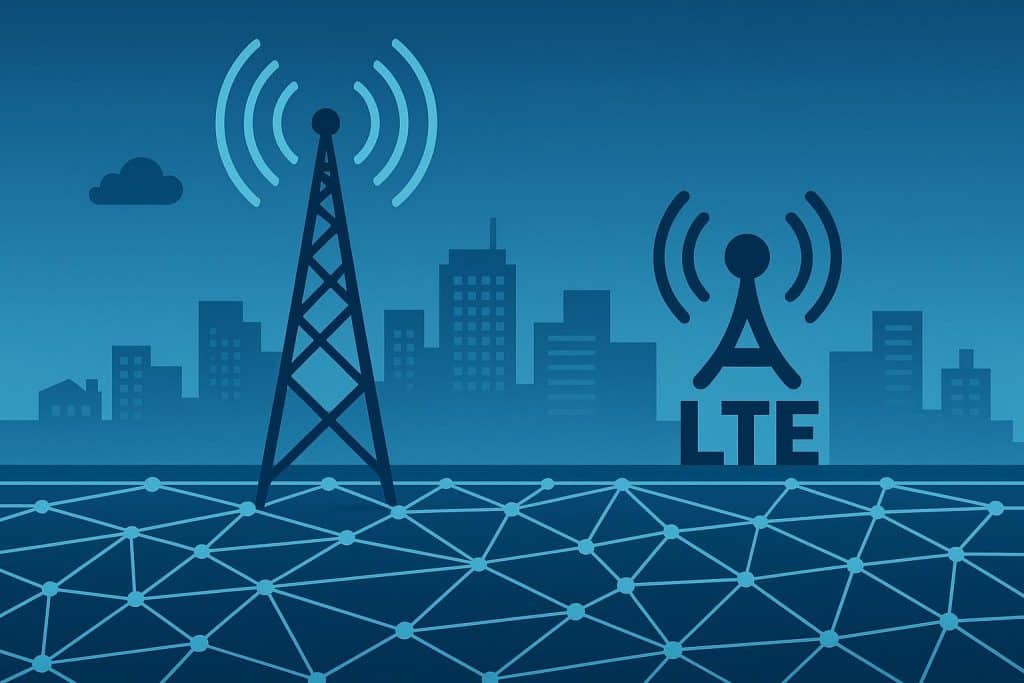
Long-Term Evolution (LTE) is a wireless broadband standard for mobile devices that builds on second-generation (2G) and third-generation (3G) cellular technologies. It is often viewed as a transitional step between 3G and 4G (fourth-generation) cellular technologies.
Building on this infrastructure, private LTE (PLTE) provides dedicated LTE networks to individual organizations. Operating independently from public cellular networks, an enterprise fully manages this framework, providing a secure communication environment for its users.
Global spending on PLTE infrastructure is expected to reach $6.4 billion by the end of 2026. This growth highlights how organizations are now prioritizing high-performance connectivity as a fundamental and critical strategic business asset.
Specific hardware and software in a PLTE network include an evolved packet core (EPC), the radio access network (RAN), and subscriber identity module (SIM) cards. EPC is the network’s “brain.” It manages data traffic, mobility, and security. It includes the mobility management entity (MME), serving gateway (SGW), packet data network gateway (PGW), and home subscriber server (HSS).
MME handles mobility and session management signaling, while SGW handles user data forwarding and routing. PGW connects the LTE network to external networks, and HSS stores subscriber and authentication data.
RAN comprises computers that send signals to remote radio transmitters to ensure wide coverage. Lastly, pre-programmed SIM cards are a user’s primary credentials for device registration and network authentication.
Compared to Wi-Fi (wireless fidelity), which technically serves the same functions, PLTE handles large industrial sites’ demands and mission-critical applications, while Wi-Fi is only suited for small-scale environments. PLTE also uses licensed spectrum, helping avoid congestion characteristic of unlicensed bands like Wi-Fi.
Furthermore, PLTE provides superior coverage over vast geographic areas, reaching distances up to 25 miles. This reliability makes PLTE more effective for warehouses and large campuses than Wi-Fi with its low-range access points.
PLTE has several benefits. It offers enhanced security protocols and predictable performance. By employing SIM-based authentication and end-to-end encryption, PLTE safeguards sensitive data within a closed infrastructure. Its quality of service (QoS) management allows organizations to prioritize mission-critical traffic, such as industrial machinery control, over less urgent data.
Enterprises also gain full network ownership, including its configuration and data sovereignty. There is also no interference from public traffic, resulting in high latency for real-time applications. This allows businesses to manage high-volume data efficiently.
Among its applications, PLTE is a top choice for sectors relying on advanced automations, such as manufacturing industries. These entities use PLTE for robotic control and predictive maintenance due to its low latency.
Public safety agencies and large venues, such as stadiums and airports, use PLTE to ensure personnel remain connected during peak usage. Additionally, remote work sites like mines and oil fields utilize PLTE to track assets and monitor operations in areas with poor public network coverage.
The United States benefits from the Citizens Broadband Radio Service (CBRS), a shared 3.5 GHz midband spectrum available without individual licenses. This framework allows users different access and priority levels and supports LTE networks, making PLTE deployments simpler for US organizations.
A PLTE network acts as a functional anchor that businesses can upgrade to fifth-generation (5G) technology when they require higher speeds. By adopting LTE today, enterprises establish a robust infrastructure that ensures long-term agility and a competitive edge. That said, transitioning to advanced networks like 5G requires organizations to collaborate with telecom and IT service providers to conduct cost-benefit analyses and design bespoke networks.
About Michael Henry
Michael Henry is the chief executive officer of Industrial Communications Group and a former Department of Defense technical director. He served 29 years in the US Army as a special operations communicator officer, followed by 16 years leading complex communications initiatives within the Department of Defense. His work has focused on implementing secure and reliable global communication systems. He holds a bachelor’s degree from the University of California, Davis, and an MBA from Embry Riddle University.