

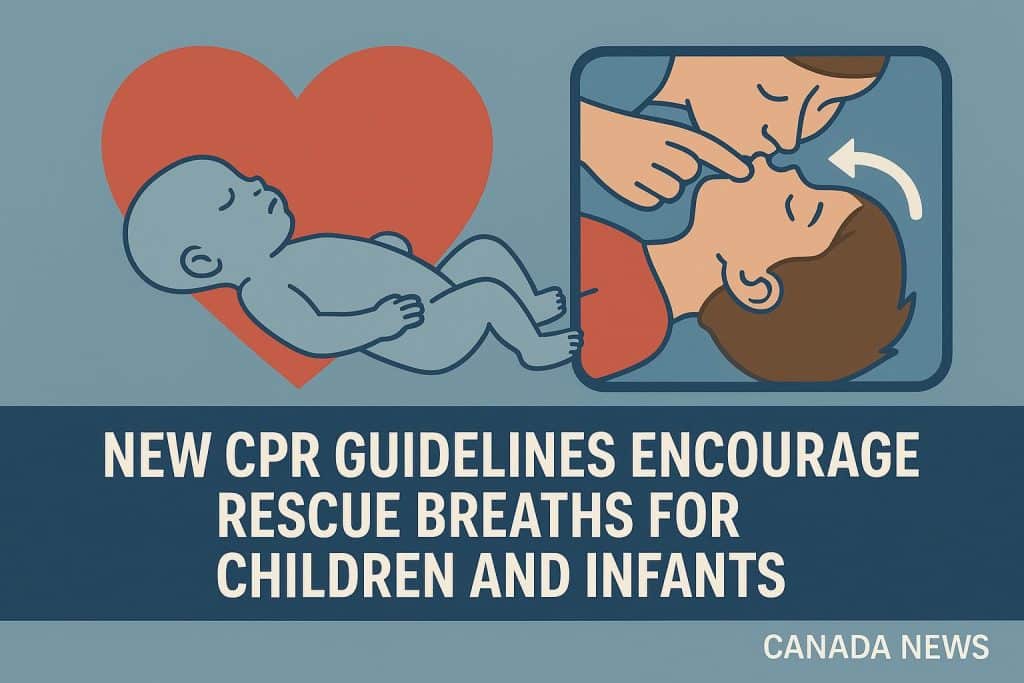
Starting in the year 2025, guidelines for cardiopulmonary resuscitation (CPR) for cardiopulmonary resuscitation (CPR) in Canada and other countries will be considered for the first time. Most branches and units have moved to a model without resuscitation and aid. Most non-trained bystanders are encouraged to forgo rescue breaths. The July 2020 guidelines support the inclusion of rescue breaths for children and infants to increase their chances of survival and full recovery from cardiac arrest. Yahoo Finance
These changes support the growing body of evidence differentiating pediatric from adult cardiac arrest causes and outcomes. In a significant proportion of children and infants, cardiac arrest occurs due to respiratory failure, not as a primary event. This makes the respiratory component of lifesaving interventions critical in ongoing efforts to deliver oxygen. cpr.heartandstroke.ca
Why the Update Matters
For many years, CPR guidelines for out of hospital adult cardiac arrest situations have recommended ‘hands only’ CPR particularly by bystanders. The hands only strategy for compressions was introduced to minimize the chances of inaction due to hesitancy. This to ensure bystanders act, as it has been shown to increase survival rates for adults in cardiac arrest.
Emergency situations with infants and children are different than with adults because their cardiac arrests are usually from respiratory issues because of choking, drowning, or severe asthma attacks.
In 2025, Canadian Resuscitation Guidelines states that any rescuer, health care professional, trained volunteers, or bystanders that perform CPR, and are children or infants, breathe into the children and infants because it is not a medical emergency and it is a life-threatening situation when they are not breathing.
Yahoo Finance
Understanding Pediatric Cardiac Arrest
There are many huge differences between pediatric cardiac arrest and adults cardiac arrest.
Main Cause: Most children and infants do not experience cardiac arrests because of a primary heart rhythm problem. Rather, it is usually because of a secondary event from respiratory failure or shock.
Dependable on Oxygen: Younger children and infants have a higher metabolic rate and lower oxygen reserve than adults. Because of this, oxygen deprivation can lead to cardiac arrest very quickly unless breaths are provided.
Depend Outcome: The oxygen can often be the restoration that is needed in blood for the person to WebMD Survivability be able to achieve a return of spontaneous circulation (ROSC) and to prevent permanent brain injury.
Breaths are very important for infants and children, especially when the collapse is respiratory in nature, along with the chest compressions that are critical for ongoing circulation. Due to these reasons, both breaths and compressions are very necessary for children and infants.
Main Points of the New Guidelines
According to the updates of 2025 in Canada:
1. Rescue Breaths Are Recommended for Children and Infants
CPR rescuers should include rescue breaths when providing CPR to unresponsive children and infants who are not breathing. Rescue breaths should be paired with high-quality chest compressions given to vital organs to support survival.
Yahoo Finance
2. High-Quality CPR Should Be Prioritized
There are high-quality chest compressions that are required to be given with minimal interruptions, and the proper depth and rate. However, adjunctive rescue breaths do address the need for the respiratory component in some pediatric cardiac arrest.
3. Drowning and Other Respiratory Emergencies
When drowning or other respiratory emergencies follow it, there is a focus on the need for rescue breaths as it is not enough to compress the chest without ventilating the blood, so your compressing does not supply oxygen to the blood.
Yahoo Finance
4. Training and Preparedness
These guidelines stress the importance of training in CPR for infants and children, and the need to ventilate. This training allows both lay responders and professionals to perform the complete sequence of steps in a confident and effective manner.
What Canadian CPR Training Looks Like Now
All CPR training programs across Canada are updating their courses to include the recently published recommendations concerning the importance of rescue breath training for infants and children for basic, advanced, and pediatric courses. In the past, many CPR training programs taught something known as compression CPR exclusively for all age groups, but now, they are starting to teach different techniques based on the age groups and the probable reasons for the cardiac arrest.
New Skills In Demand
Current CPR training now includes
Recognizing unresponsiveness and abnormal respiration
Proper head tilting for rescue breath positioning
Using barrier devices or mouth-to-mask techniques for ventilation
Age-specific compression of the chest for different depths and rates
Completing an accredited course is the best way to learn and master these skills. To illustrate, many people in Saskatchewan and other surrounding areas are enrolling in CPR Certification Regina programs which teach pediatric resuscitation to learn and master techniques of rescue breathing. This certification course includes teaching and training, which are aimed to prepare graduates for an emergency situation.
Benefits of Rescue Breaths for Children and Infants
When giving CPR and doing chest compressions, blood is moved throughout the body, but the lungs don’t get any oxygen. For adults, the main concern is to keep blood flowing. But in kids, where there is no oxygen and that’s why the heart stopped, giving oxygen is very needed.
Rescue Breaths
– get oxygen into the lungs
– increase the amount of oxygen in the blood
– help get oxygen levels back to normal
– reduce the chances of bad brain damage
Because of these needs, rescuers can dramatically improve the chances of the child surviving with the proper help of doing chest compressions and giving rescue breaths.
Rescue Breaths Problems and Solutions
Most people find rescue breaths difficult to do for the first time. Mouth to mouth can be uncomfortable, and people might be hygiene freaks or just feel confused about the whole thing.
Here is the solution:
1. Learn to Use Barrier Devices
CPR training these days includes masks or barriers that let rescuers do rescue breaths without mouth contact.
3. Regular Refreshers
Because skills can deteriorate, rescuer confidence and capability can also fade. Regular refresher training helps ensure that rescuers remain confident and capable. Correct technique, sharpening skills, and technique reinforcement comes with renewing or recertifying through programs like First Aid Training.
4. Campaigns for Public Awareness
CPR can be made less intimidating and more people can be encouraged to perform rescue and breathing help through community centre and school educational outreach.
The Real Impact
Each year in Canada, thousands of children go through cardiac or respiratory events and are not in a hospital. The difference in life and death outcomes often depends on swift action that includes rescue breaths. The lives of people rescued through early and often bystander intervention remind us of the importance of knowing CPR.
Pediatric CPR and AED
When it comes to children and babies, rescue breathing is more emphasized. However, the updated guidelines highlight the importance of early defib as with any cardiac event. AEDs remain of great importance with cardiac emergencies and should be grabbed and used with CPR as soon as possible.
Lifesaving Society
In schools, community centers, sports venues, and public spaces, the installation of public access AEDs is a worthy investment that significantly increases the chance of prompt and effective care for people suffering from cardiac arrest.
Who Should Learn Pediatric CPR?
Any adult interacting with a child should be worn to know basic CPR and rescue breaths for a child despite first responders and healthcare professionals receiving full coverage training. Parents and grandparents, child care workers, teachers, coaches, and other community volunteers are some of the many people who are likely to come across children in emergencies and can be the difference in the outcome.
The Canadian Red Cross and many smaller community training providers offer infact and child CPR courses along with other lifesaving skills.
Conclusion: A Lifesaving Shift in Emphasis
The change to guidelines for Canadian CPR, the first to adopt breaths for children and infants, demonstrates the change in thinking in emergency care. These changes are due to the recognition of the respiratory component in almost all pediatric cardiac arrests and that ventilation must be provided.
Canada bolsters the emergency care system for children with CPR training and recognition programs. Practicing with community organizations has ensured that a large number of Canadians are trained and ready for emergencies.