

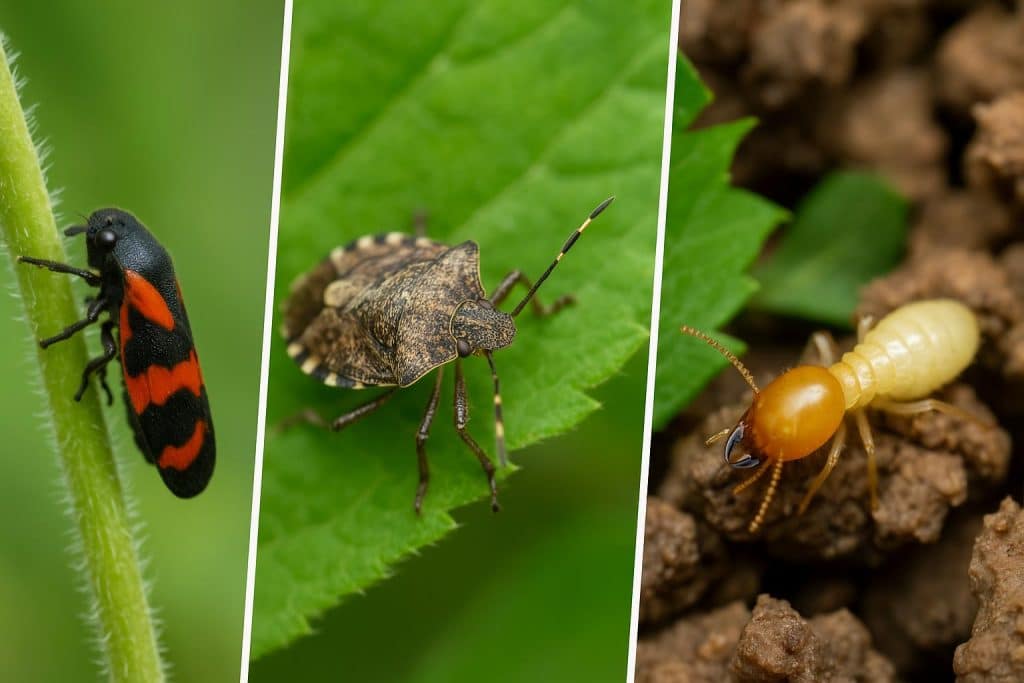
The pest landscape in the United States is changing in ways that go beyond seasonal fluctuation. New species are establishing in regions where they have not previously been recorded. Existing pests are expanding their ranges. And several of the threats documented in 2025 and early 2026 are directly relevant to homeowners in Ohio, Georgia, and Florida, the three states where residential pest control provider Mira Home currently operates.
What follows is a state-by-state breakdown of the most significant emerging threats, drawn from 2026 pest trend reporting by Rentokil Terminix and Aptive, and what homeowners in each region should be watching for.
University of Florida Confirms Hybrid Termite Colonies Established and They’re Harder to Kill
In 2025, pest researchers confirmed what entomologists had been monitoring for several years: the Formosan termite and the Asian termite had interbred in Florida, producing a hybrid species. Rentokil Terminix entomologist Thomas Chouvenc, cited in the company’s 2026 pest predictions report, described the result as “a super bad species that is hardier and more prolific termites” than either parent.
The practical implications for Florida homeowners are significant. The hybrid reproduces faster than the Formosan termite and is more difficult to control using standard treatment methods calibrated for either parent species. Structural damage timelines are compressed compared to traditional termite infestations.
Common pest threats in Florida homes already include American cockroaches, fire ants, rodents, and multiple spider species year-round. The climate does not give pest populations the winter suppression that northern states experience. Adding a harder-to-treat termite species to that mix raises the stakes for professional inspection. Companies like Mira Home operating in Orlando, Tampa, Gainesville, Davenport, and Ocala are among the providers being asked to identify and treat an unfamiliar species.
The key point for Florida homeowners: if you have not had a termite inspection recently, or if a previous inspection predates 2025, it is worth scheduling one. Identifying hybrid termite activity early makes a material difference to treatment outcomes.
Invasive Species Establishing in Georgia
Georgia is seeing two invasive species spread more aggressively in 2026 than in prior years.
The Joro spider, originally from East Asia, has established populations across Georgia, North Carolina, South Carolina, and surrounding states. Rentokil Terminix pest experts flagged the species in their 2026 predictions as one homeowners should learn to identify. Joro spiders are large, visually striking, and unfamiliar to most Georgia homeowners who encounter them. They are not considered dangerous to humans, but their presence often signals a broader insect population, since spiders establish where prey is abundant.
The Asian needle ant is a more pressing concern. Active across the Southeast, including Georgia, these ants are aggressive when disturbed, deliver a painful sting, and are difficult to remove once they have established a colony. Rentokil Terminix’s Southeast specialists noted in early 2026 that populations are spreading into suburban areas “where they haven’t been seen before.” Standard ant control approaches used for common species are less effective.
Mira Home’s Georgia service footprint covers Atlanta, Marietta, Decatur, Avondale Estates, and Scottdale, communities that fall within the documented expansion zones for both species. Homeowners in these areas noticing unfamiliar spider activity or encountering unusually aggressive ants should treat that as a professional identification situation rather than a DIY one. Misidentifying an invasive species leads to the wrong treatment.
Expanding Tick and Mosquito Ranges in Ohio
Ohio is not typically where residents think about year-round tick and mosquito pressure. That is changing.
Rentokil Terminix’s 2026 pest trends report documents that warming temperatures are allowing ticks to “expand their range and be active for longer periods, well into the fall and winter.” In practical terms, for Ohio homeowners, tick activity that historically peaked between May and October is now extending earlier in spring and later into autumn. First encounters are showing up in March in some parts of the state.
Mosquito breeding seasons are also lengthening. Aptive’s Spring Pest Intelligence Report notes that milder winters leave mosquito populations more active coming out of winter, which translates to earlier establishment of breeding sites in spring. Standing water (clogged gutters, flowerpot saucers, low spots in lawns) becomes a risk earlier in the season than it has historically been.
Mira Home services Ohio homeowners across Cleveland, Columbus, Cincinnati, and Akron, among other cities. Regular professional pest inspections help identify the early signs of tick harborage and mosquito breeding conditions before populations peak; with extended seasons, that means the inspection window has effectively widened.
When to Call a Professional
The thread connecting all three of these emerging threats is the same: they are harder to identify and treat correctly without professional experience. A homeowner encountering a Joro spider for the first time has no baseline for it. The hybrid termite looks similar to other termite species and requires professional identification to confirm. Tick pressure extending into November is easy to underestimate if expectations are based on historical seasonal patterns.
Professional pest control services offer targeted treatment based on correct species identification, which is the starting point for effective outcomes. For homeowners in Ohio, Georgia, and Florida facing an expanding and more complex threat landscape, that distinction matters more in 2026 than it has in previous years. The combination of new species, shifting ranges, and harder-to-treat hybrids makes professional identification the sensible first step rather than a last resort.
Mira Home’s inspection process begins with a property-specific assessment that identifies what is present, where entry points are, and what conditions on the property are supporting pest activity. Free quotes are available across all three operating states.