

Meta Title: Organic Pistachios vs Regular Pistachios: What Buyers Should Know
Meta Description: Confused between organic pistachios and regular pistachios? Learn the real differences in quality, farming, nutrition, taste, safety, and price before buying.
Slug: organic-vs-regular-pistachios
Pistachios have become one of the most popular nuts in India and globally, appreciated for their rich flavor, healthy fats, protein content, and versatility in both sweet and savory dishes. But when you start shopping for pistachios—whether online, in supermarkets, or gourmet stores—one question always arises: should you buy organic pistachios or regular pistachios? The choice isn’t always straightforward, because the difference goes beyond just a label. It includes farming practices, chemical usage, quality, taste, nutritional impact, price, and long-term health effects. Understanding these differences helps you make a smarter purchase and ensures you know exactly what you’re paying for.
This detailed guide breaks down everything buyers should know before choosing between organic and regular pistachios.
What Are Organic Pistachios?
Organic pistachios come from farms that follow certified organic farming standards. These standards vary slightly by region but mostly share common requirements. The most important rule is that farmers are not allowed to use synthetic pesticides, herbicides, fungicides, or chemical fertilizers. Instead, they rely on natural alternatives like compost, manure, neem extracts, biological pest control, and ecosystem-friendly farming techniques.
The soil is also monitored to ensure it is free from harmful residues, and farms must undergo regular audits to maintain their organic certification. This makes organic pistachios a cleaner, more natural product for consumers who prefer food grown without chemicals or artificial additives.
What Are Regular Pistachios?
Regular pistachios, sometimes also labeled as conventional pistachios, are grown using standard agricultural practices. This typically includes chemical fertilizers, synthetic pesticides, fungicides, and growth boosters to maximize yield and protect the crop from pests and diseases. This method helps farmers produce larger volumes at lower cost, which is why regular pistachios are more widely available and usually much cheaper than their organic counterparts.
While regular pistachios are still nutritious and widely consumed, the presence of chemical residues and the use of aggressive farming practices create concerns for health-conscious consumers.
Key Differences Between Organic and Regular Pistachios
To understand which option is better for you, it helps to compare them across major factors such as purity, farming methods, taste, safety, nutrition, and cost. Here are the most important distinctions.
1. Farming Practices
Organic farming prioritizes long-term soil health, biodiversity, and natural pest control. No synthetic inputs are allowed. This means organic pistachios grow slower, depend on natural rainfall or controlled irrigation, and require more manual intervention. Regular pistachios rely on synthetic chemicals to boost growth and yield, making production easier and faster. This approach keeps costs lower but also increases chemical exposure during cultivation.
2. Chemical Use and Safety
One of the primary reasons buyers choose organic pistachios is to avoid pesticide residues. Conventional pistachio farming uses several chemical sprays that may leave trace amounts on the nuts even after processing. Although food safety authorities regulate usage, some consumers prefer zero exposure. Organic pistachios eliminate this risk by following 100% chemical-free farming practices. For infants, pregnant women, and individuals with allergies, organic pistachios are often a safer choice.
3. Taste and Flavor Differences
Many consumers notice that organic pistachios have a richer, earthier, and more natural flavor. Because they grow more slowly and without chemical boosters, they often retain a more authentic nutty taste. Regular pistachios may taste slightly sharper or saltier, depending on how they are processed and stored. However, the taste difference is not always dramatic and may vary depending on brand, storage, and origin of the nuts.
4. Nutritional Value
Both organic and regular pistachios offer excellent nutritional value, including healthy fats, plant-based protein, dietary fiber, vitamins B6 and E, magnesium, potassium, antioxidants, and carotenoids. The overall nutrient profile remains largely similar regardless of whether the pistachios are grown organically or conventionally.
However, some research indicates that organically grown nuts may contain slightly higher antioxidant levels because they develop naturally without synthetic growth boosters. While this difference is small, many health-focused consumers prefer opting for premium, naturally grown pistachios to get the best possible quality.
If you’re looking for a reliable option that delivers both purity and nutrient density, Krishival’s 1kg Pista pack is a great choice. It offers premium-grade pistachios that are fresh, naturally flavorful, and ideal for daily snacking or family consumption.
5. Appearance and Size
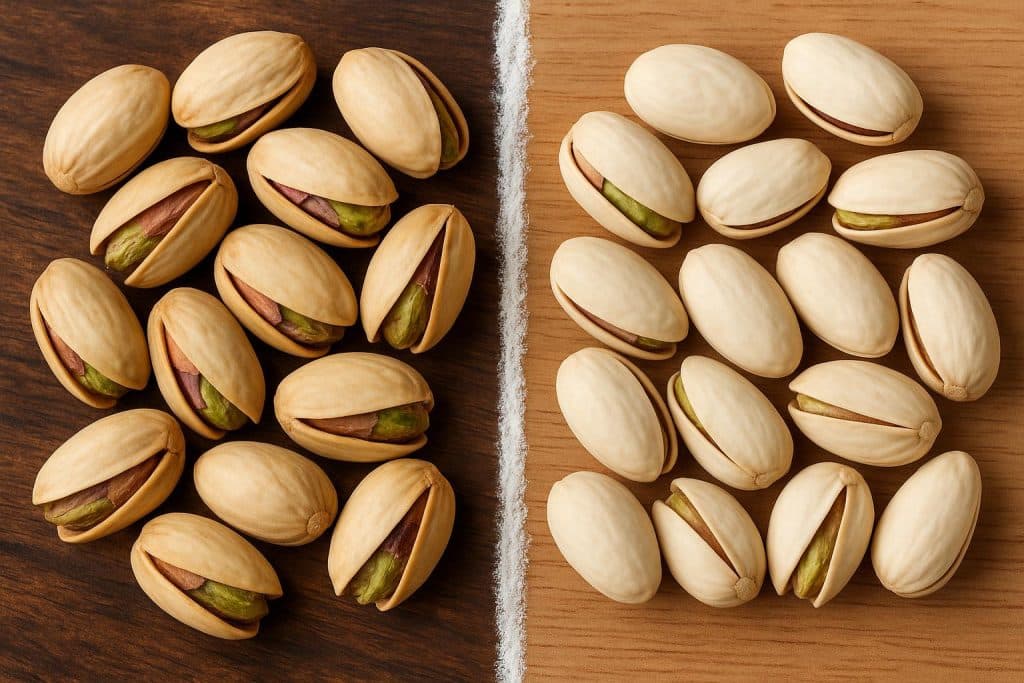
Organic pistachios may look slightly less uniform in size and color because they are grown without chemical growth regulators or polishing agents. Regular pistachios often look cleaner, more polished, and more standardized because they undergo more intensive processing. This is why regular pistachios tend to look “perfect” on supermarket shelves, whereas organic pistachios may appear more rustic or naturally varied.
6. Shelf Life and Storage
Organic pistachios generally have a shorter shelf life because they do not undergo heavy fumigation or chemical preservation. They must be stored carefully in airtight containers to avoid moisture or insect exposure. Regular pistachios have a longer shelf life because they may undergo chemical treatments or preservatives that slow spoilage. If you prefer long-term storage, conventional pistachios may be easier to maintain.
7. Environmental Impact
Organic farming supports soil regeneration, cleaner groundwater, reduced carbon emissions, and better biodiversity. Regular pistachio farming may heavily rely on synthetic inputs that can degrade soil quality over time. If environmental sustainability matters to you, organic pistachios are the superior choice.
8. Price Difference
Price is one of the biggest deciding factors for most buyers. Organic pistachios typically cost 30% to 70% more than regular pistachios. This is due to higher farming labor, certification costs, lower yield, and limited availability. Regular pistachios are more affordable and accessible. If budget is your top concern, conventional pistachios offer good value, but if purity and quality matter more, organic pistachios justify the higher cost.
Which Type Should You Buy?
The choice between organic and regular pistachios depends on your priorities. Buy organic pistachios if you prefer chemical-free food, natural taste, and sustainable farming. They are ideal for families with children, individuals with allergies, and anyone who likes premium-quality food. Buy regular pistachios if affordability, convenience, and longer shelf life matter to you. Regular pistachios are still healthy and nutritious, especially if you purchase from trusted suppliers.
For most buyers, a practical approach is to use organic pistachios for daily raw consumption and regular pistachios for cooking, baking, or garnishing where the difference in purity matters less.
Conclusion
Both organic and regular pistachios offer significant health benefits and are excellent additions to a balanced diet. The main differences lie in farming practices, chemical exposure, taste, price, and environmental impact. Organic pistachios provide a natural, chemical-free, and eco-friendly option, while regular pistachios offer affordability and convenience. Understanding these differences helps you make the right purchase based on your budget, lifestyle, and health priorities. Whether organic or regular, pistachios remain one of the healthiest nuts you can enjoy when bought from reliable and quality-focused brands.