

Running a small business in 2026 is a bit like being a short-order cook during the lunch rush, you’re juggling a dozen different tasks, trying to keep everyone happy, and hoping you don’t burn the metaphorical toast. If you’re still using a “dumb” till that just pops open and goes cha-ching, you’re likely working a lot harder than you need to.
The modern point of sale system for small businesses has shed its skin as a mere cash box. It is now the digital nerve centre of your entire operation. By 2026, the real “moolah” isn’t made just in the transaction; it’s made in the data that flows after the customer taps their card.
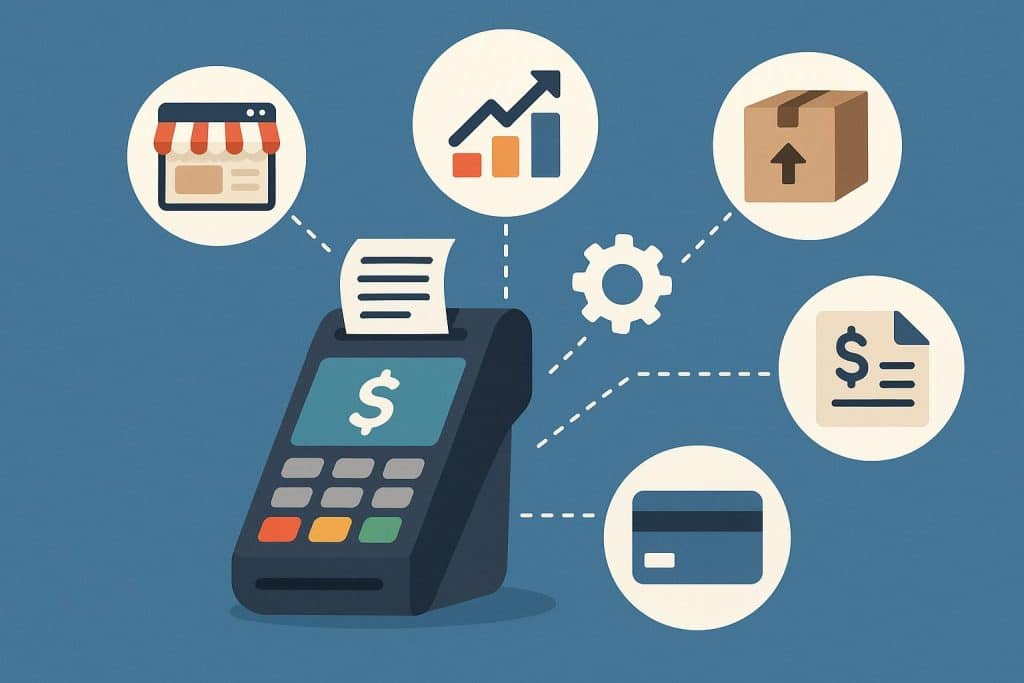
If you want to move from “just surviving” to “sweet as” growth, your POS needs to play nice with the rest of your tech stack. Here are the five essential integrations that will turn your POS into a growth-hacking machine.
1. Cloud Accounting: The Death of Shoebox Bookkeeping
Now, tell the truth: no one opens a business because they love reconciling bank statements at 11 PM on a Sunday. The final hard yakka saver is integrating your POS with a cloud-based accounting system such as Xero or QuickBooks.
When your point of sale system for small business is synced with your ledger, every sale, tax component, and surcharge is automatically coded and pushed through in real-time. No longer can one write down something manually, no longer can they make a mistake with fat fingers, no longer can they lose a receipt somewhere. Panic comes with tax time.
- Financial Visibility: You receive a real-time health check of your margins rather than a sum awarding of the day’s takings.
- Compliance: Tax regulations have increased in 2026. Automatic GST and tax mapping help you to never be on the wrong side of the law without ever raising a finger.
2. E-Commerce: How to Play the Omni-Channel Game
By 2026, there will be no distinction between brick-and-mortar and a digital storefront. When you have two systems operating your physical store and your online store that are on two different systems, you are essentially operating two businesses- and that is setting you up to burn out.
An e-commerce integration (like Shopify or WooCommerce) allows your point of sale system for a small business to act as a single source of truth.
- Inventory Sync: When a customer purchases the final boutique candle in-store, the website should reflect it as out of stock immediately.
- Unified Customer Profiles: You can observe that Dave purchased a shirt online last month and just entered the store today to buy the corresponding trousers. That is strong information on the individualised upsell.
The Growth Reality: 76% of small businesses that adopt innovative, integrated technology are seeing consistent growth compared to those stuck with legacy systems. Source: Salesforce Small Business Trends Report 2026
3. Inventory Management: Protecting Your Profit
Dead stock is just cash sitting on a shelf gathering dust. Integrated inventory management is perhaps the most underrated tool in the 2026 toolkit. A smart POS doesn’t just count items; it predicts their future.
- Low-Stock Alerts: Get a ping on your phone when your best-selling “flat white” beans are running low.
- Predictive Ordering: Using AI-driven insights, your system can suggest order volumes based on upcoming holidays, local events, or seasonal shifts.
| Feature | Why It Matters for Growth |
| Real-Time Sync | Prevents overselling and customer disappointment. |
| Cost of Goods Sold (COGS) | Automatically calculates your real profit per item. |
| Multi-Location Support | Manage three shops as easily as one. |
4. Marketing & CRM: Turning “One-Offs” into “Whānau”
It costs significantly more to find a new customer than to keep an old one. By integrating a CRM (Customer Relationship Management) and marketing tool like Klaviyo or Mailchimp, your point of sale system for small business becomes your best salesperson.
Every time a customer opts for a digital receipt, they’re inviting you into their world.
- Loyalty Programs: Instead of a coffee card that gets lost in a wallet, the system tracks points automatically.
- Automated “We Miss You” Emails: If a regular hasn’t been in for 30 days, the system can automatically send a cheeky “First round is on us” voucher to bring them back.
5. Staff Management & Payroll: The Team Tamer
Your staff are your greatest asset, but managing rosters and payroll can be a real headache. Integrating tools like Homebase or Deputy directly into your POS simplifies the entire lifecycle of an employee.
- Clock-In on the Tablet: Staff can clock in directly at the terminal, ensuring their hours are tied to the actual sales periods.
- Labour Cost Tracking: Modern systems can show you your “Labour vs. Sales” ratio in real-time. If the shop is quiet and labour costs are spiking, you can make the call to send someone home early and save the margin.
- Commission Tracking: Automatically calculate bonuses based on who sold the most high-margin items.
Summary: Why Integration is the 2026 Standard
The days of siloed software are over. In 2026, a point of sale system for small business is only as good as the apps it talks to. By connecting your accounting, e-commerce, inventory, marketing, and staff management, you aren’t just “digitizing” your business, you’re automating the boring bits so you can focus on the choice parts of being an owner.
The ROI of Efficiency: Small businesses utilising AI and automated integrations report an average of 15-20% improvement in margins due to reduced errors and smarter labour allocation. Source: StartUs Insights Business Trends 2026
The Verdict: Choice Tech, Choice Results
If your current setup feels like a bit of a “she’ll be right” patchwork of spreadsheets and sticky notes, it might be time for an upgrade. A connected system doesn’t just save time; it provides the clarity you need to make the big calls.
Whether you’re selling artisan sourdough or high-end fashion, getting your POS integrations sorted is the fastest way to ensure your business is around to see 2030.