

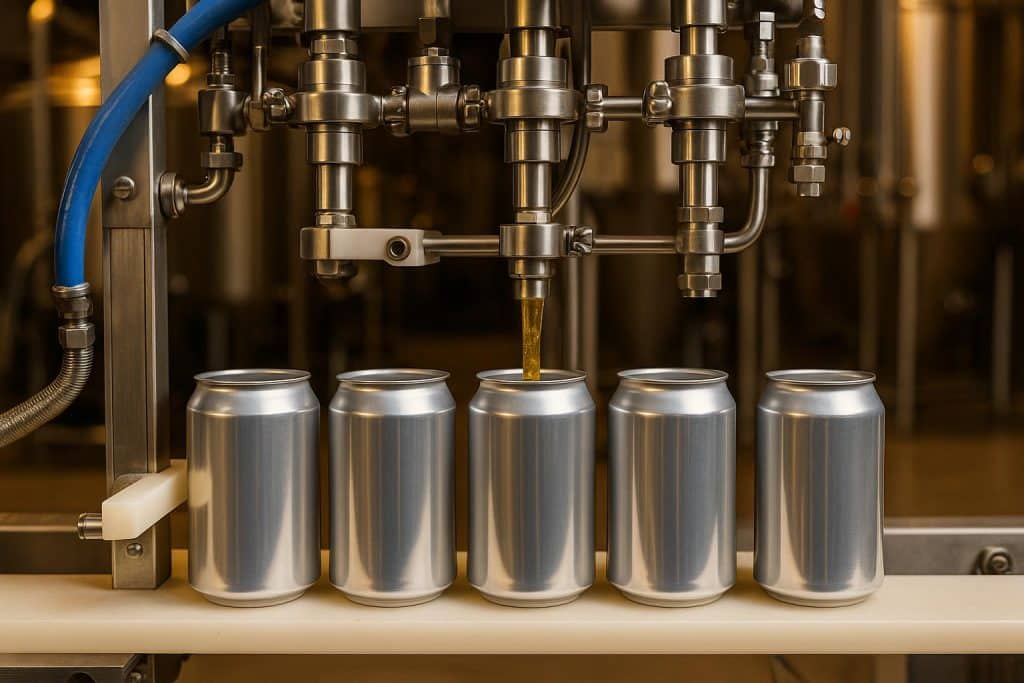
The craft beverage industry has experienced remarkable growth over the past decade, with independent producers of beer, cider, kombucha, and artisan soft drinks carving out significant market share. Yet for many founders, the transition from small-batch production to commercial-scale operations presents a critical inflection point. Knowing when to invest in professional bottling machinery can mean the difference between sustainable growth and operational bottlenecks that stifle a promising brand.
Recognising the Signs That Manual Processes Have Reached Their Limits
Most craft beverage businesses begin with modest equipment—gravity fillers, hand-operated cappers, and manual labelling. This approach makes sound financial sense during the early stages when volumes are low and capital is scarce. However, several indicators suggest when these methods have become a constraint rather than a cost-saving measure.
- Inconsistent fill levels: Manual filling inevitably produces variation between containers, leading to product giveaway, customer complaints, and potential compliance issues with weights and measures regulations.
- Production bottlenecks: When filling and packaging consume disproportionate labour hours compared to brewing or blending, the operation has become unbalanced.
- Quality control concerns: Manual processes increase the risk of contamination, oxidation, and inconsistent carbonation levels—all of which can damage brand reputation.
- Missed opportunities: Declining orders from retailers or distributors due to insufficient production capacity represents lost revenue and market positioning.
When two or more of these factors become persistent challenges, it typically signals that the business has outgrown its initial equipment investment.
Understanding the Economics of Professional Filling Systems
The decision to invest in professional filling equipment requires careful financial analysis beyond the initial purchase price. A comprehensive assessment should consider total cost of ownership, including installation, training, maintenance, and consumables.
Professional filling lines typically range from semi-automatic systems suitable for producers filling several thousand units per week to fully automated lines capable of handling tens of thousands of containers per hour. For most scaling craft producers, semi-automatic or entry-level automatic systems offer the optimal balance between capability and capital expenditure.
The return on investment calculation should factor in labour savings, reduced product waste, improved consistency, and the ability to fulfil larger orders. Many producers find that professional equipment pays for itself within eighteen to thirty-six months through operational efficiencies alone, before accounting for revenue growth enabled by increased capacity.
European manufacturers have established themselves as leaders in this sector, offering equipment that combines precision engineering with durability. German, Italian, and Dutch producers in particular have developed strong reputations for filling technology that delivers consistent performance over extended operational lifespans, making them worthy of consideration despite potentially higher upfront costs compared to alternatives from other regions.
Selecting the Right Technology for Your Product and Packaging
Professional filling equipment is not a one-size-fits-all proposition. The optimal system depends on several product-specific and operational factors that require careful evaluation.
Carbonated beverages demand counter-pressure filling technology to maintain dissolved CO2 levels and prevent foaming. Still products may utilise gravity, pump, or overflow filling methods depending on viscosity and foaming characteristics. Products with particulates, such as fruit pieces or pulp, require specialised valve designs to prevent blockages.
Packaging format also influences equipment selection. Producers working with glass bottles face different requirements than those filling aluminium cans, PET bottles, or kegs. Many scaling businesses benefit from modular systems that can accommodate multiple container types, providing flexibility as product lines and market demands evolve.
- Throughput requirements: Match equipment capacity to realistic production targets, allowing headroom for growth.
- Changeover flexibility: Consider how frequently you switch between products or container sizes and select equipment with efficient changeover procedures.
- Integration potential: Evaluate how filling equipment will connect with upstream and downstream processes, including rinsing, capping, labelling, and packaging.
Planning for Implementation and Operational Integration
Acquiring professional filling equipment represents only part of the scaling challenge. Successful implementation requires attention to facility requirements, staff training, and process redesign.
Space planning must account for the equipment footprint, operator access, maintenance clearances, and material flow. Utility requirements—including electrical supply, compressed air, and water—may necessitate facility upgrades. Many producers underestimate these ancillary costs during initial budgeting.
Staff training deserves particular emphasis. Professional equipment delivers optimal results only when operated by personnel who understand both routine operation and basic troubleshooting. Reputable equipment suppliers provide comprehensive training programmes, and this support should factor into vendor selection decisions.
Building a Foundation for Sustainable Growth
Investment in professional filling equipment represents a strategic commitment to growth rather than merely a tactical response to current constraints. The most successful scaling businesses approach this decision with a three-to-five-year perspective, selecting equipment that accommodates projected volumes rather than simply addressing immediate needs.
This forward-looking approach, combined with thorough due diligence on equipment options and realistic implementation planning, positions craft beverage producers to capitalise on market opportunities whilst maintaining the product quality that established their brand. In an increasingly competitive marketplace, professional filling capability has become not merely an operational advantage but a fundamental requirement for businesses with serious growth ambitions.