

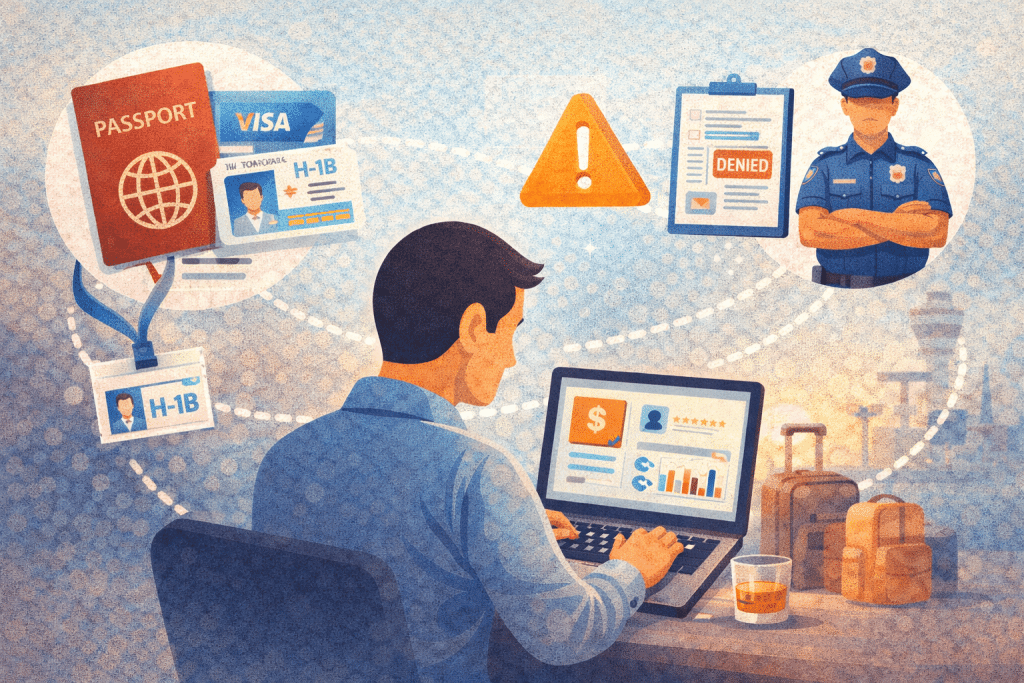
Work visas can come with strict limits on what “work” means, even when your side hustle feels small or informal. Many gig platforms treat what you do as independent contracting, not casual help, and that can create a paper trail that shows up in future immigration filings.
U.S. work visa rules, visa status work restrictions, and outcomes can vary based on your exact status and your facts. This article shares educational information, not legal advice.
If you are supporting a family, a weekend gig can create questions about nonimmigrant status compliance. The goal is to help you protect your status before a small mistake becomes a big problem. You deserve clear guidance before you act.
What immigration agencies usually mean by “work”
Immigration agencies focus on 2 questions: what service did you perform, and were you authorized to do it in the United States?
That’s why visa work status work restrictions can matter even when a work gig calls you an “independent contractor.” For a baseline, see USCIS guidance on working in the United States.
“Paid abroad” ≠ automatically safe
Payment from outside the United States does not automatically make a side job ‘safe’ under US immigration rules.
Many people assume that if the client is overseas or the money is deposited from a foreign bank, then it cannot be considered work in the United States. However, immigration rules typically consider what is being done and where it is being done.
That is why it is important to avoid relying on the idea that ‘foreign payment equals permission.’ What protects you is not the source of the money, but whether your specific status authorises that type of work.
Myth-buster: Remote freelance work for an overseas client can still count as “work” while you’re physically in the U.S. it depends on your immigration status and the specific facts.
“1099” and “gig income” create receipts
Temporary work platforms may treat you as a freelancer and issue forms.
This documentation may raise suspicions that you are working without authorization or that you are exceeding the work authorization limits of your visa. The IRS Gig Economy Tax Centre explains why this may occur.
Visa-by-visa: where side hustles go wrong fast
A ‘secondary job with a visa’ may vary depending on the category. Focus on employment authorization rather than visa labels: what you are permitted to do in the United States.
Visitors (B-1/B-2/ESTA): the strictest lane
If you are in the U.S. as a visitor, whether on a B-1/B-2 visa or through the Visa Waiver Program (ESTA), you’re in the strictest category (temporary visits) when it comes to side hustles.
The United States Department of State explicitly stipulates that individuals with visitor visas may not accept employment or work in the United States.
F-1 students: limited, rules-based work only
F-1 status is primarily for studying, and any work must fit specific, pre-defined categories.
USCIS explains that F-1 students may work on-campus (subject to conditions) and may be eligible for off-campus employment only through authorized options such as CPT (Curricular Practical Training) or OPT (Optional Practical Training), depending on timing and eligibility.
H-1B: job-specific and petition-driven
H-1B status is typically tied to a specific employer and a specific role described in the petition. USCIS describes H-1B as a nonimmigrant classification for people who will perform services in a specialty occupation.
That employer-and-petition structure is where side hustles can create problems. Even if you have strong skills and extra free time, a side gig can look like work outside the scope of what was petitioned.
EAD holders (some categories): broader flexibility, but still time-limited
If you have an Employment Authorization Document (EAD), you often have more flexibility than many visa categories, including the ability to work for different employers and, in many cases, to do independent contracting.
However, an EAD is not a blanket permission forever. USCIS describes the EAD (Form I-766) as a way to prove you are authorized to work in the U.S. for a specific time period.
Investors/entrepreneurs: the “right vehicle” matters
If you are building a business, the cleanest approach is usually a status that is designed for owning, developing, and directing a business, rather than trying to piece together side gigs that do not match your immigration category.
The E-2 treaty investor classification is for a national of a treaty country who is coming to the U.S. in connection with investing in and operating a business (with specific eligibility requirements).
If your long-term plan is business ownership, it is usually smarter to choose an immigration strategy that matches that plan from the beginning, rather than mixing in gigs that could raise status-compliance questions.
Real-world side hustle scenarios (and the “red flag” checklist)
Side hustles become risky because they create “evidence.” Under U.S. work visa rules, an officer may look at what you did repeatedly, not what you meant to do.
Gig work immigration risk often rises when there is a public profile, deposits, and reviews that show you offer services. Those details can appear in future renewals or interviews.
Mini-scenarios to watch:
- Driving or delivery apps: even if the app labels you an independent contractor, you are still providing paid transportation or delivery services and can be easy for an officer to view as unauthorized employment if your status does not allow it.
- Freelancing on Upwork/Fiverr: marketing, invoices, and repeat projects generate invoices, payment confirmations, and detailed work histories within the platform. Over time, regular clients and recurring monthly work may resemble ongoing self-employment rather than a one-off favour.
- Selling on Etsy/eBay: ongoing operations and order fulfillment. The platforms store sales records, reviews, payment statements, and performance metrics that can make your activity appear to be an ongoing business operating from within the United States.
- Monetized content: paid sponsorship deliverables or affiliate campaigns, those agreements and payout histories can make it clear that you are providing paid advertising or promotional services while you are in the U.S.
Red-flag checklist (if these apply, pause):
- You provide a service to U.S. customers while physically in the U.S.
- You receive a 1099 or report self-employment income (paper trail).
- You advertise, invoice, sign contracts, or post rates publicly.
- Your status is employer- or role-specific, which can tighten visa status work restrictions.
- You rely on gig income to cover bills, which can pressure you to keep working even when you feel unsure.
If several red flags apply, pause, save your records, and get clarity before you continue.
What to do instead (practical, non-panicky)
It is important that you do not be afraid; their goal is to protect their status and that of their family. A brief pause now can save you stress later on.
A safe-first decision flow (simple)
- Name your status and your authorization. Identify what gives you permission to work: status rules, an employer petition, or an EAD.
- If the activity looks like “work,” pause. Don’t rely on “small money” as a safety test.
- If you already did gigs, do not hide it. Future filings can ask about working without authorization. Keep a timeline of dates, platforms, and payments, so you can answer questions accurately later.
Where tailored guidance helps
If you would like a quick legal check before you take gigs, Las Abogadas RVA™ can review your facts in Spanish and explain safer options.
For founders/investors: Consider structuring a compliant business move so your plan matches your status from the start.
Conclusion
Work visas and side hustles can be a risky mix when your authorization is narrow or tied to one employer. A small gig can create consequences if it falls outside your visa status work restrictions.
Work visas are easiest to protect when you check authorization first. Before you accept money, confirm what you can do, then earn peace of mind.