

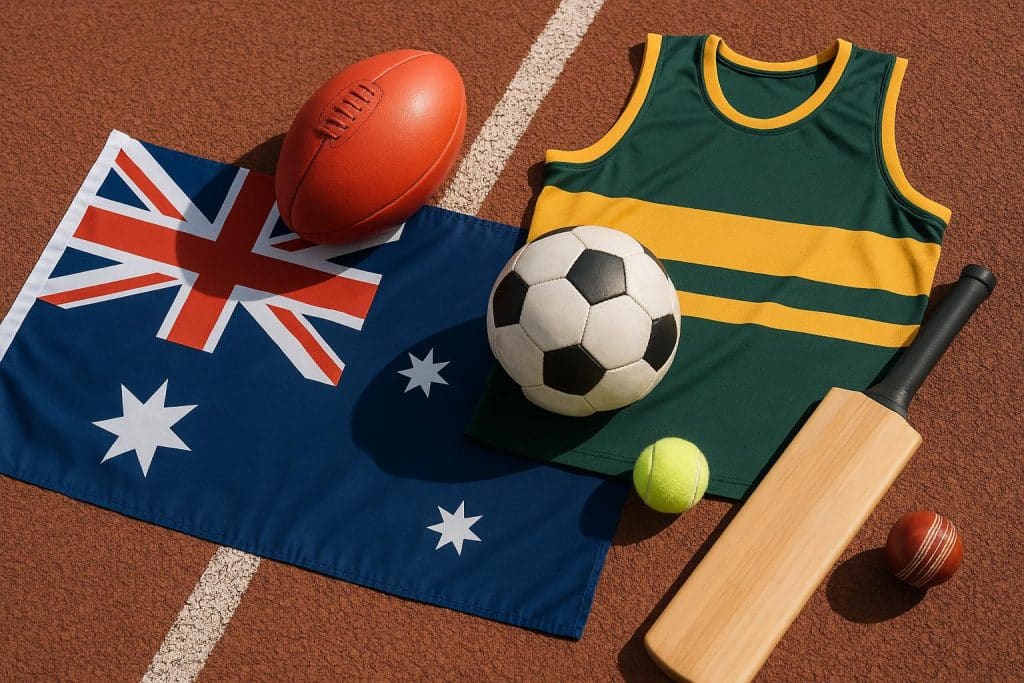
In Australia, sport has very little to do with being ‘out of reach’ or ‘exclusive’; it is part of everyday life, such as the football match of a child, or a friendly game of basketball on a Tuesday evening and watching your friends play a sport from the sidelines. There is no ticket required and no television schedule needed to have sport in your week; they are already there.
How people have access and opportunity to participate in sport is an everyday connection for Australians and provides a basis for establishing the culture of sport in Australia. Although sports leagues are also a focal point of attention, in Australia, the local sporting fields, school basketball courts and local community health centres are the initial stages of having experience in sport, before having the opportunity to compete at an elite level in sport.
Social Sport Culture and Local Leagues
Understanding the structure of community leagues will help you to see how successfully these leagues hold up to adults’ working schedules, family lives and changing schedules. For most people who participate in adult leagues, game results and league standings are not an issue. The reason for joining is very simple; to get exercise, have fun with people you know, and have a social connection with other participants of your league.
Although football, cricket, netball and basketball are still the dominant sports in community leagues, many of the locally available leagues do not follow traditional rules as closely as they once did. In recent years, social versions of football, basketball, cricket and netball have become more informal in terms of how teams are set up, games are conducted and seasons are scheduled. Most councils and clubs now understand that people will be able to continue their involvement in sport if the sport appears to be manageable rather than demanding.
For many adults who participate in community leagues, their participation is their substitute for attending the gym. For other adults, community leagues provide an opportunity to catch up with friends after work during the week. In either case, community leagues are significant in demonstrating that sport does not need to be taken seriously to be meaningful.
How Fans Spend Time Between Games
Following sport doesn’t end when a match finishes. For Australian fans, downtime often includes checking scores, watching highlights, or scrolling through team news. Sport fills small gaps in the day rather than demanding full attention.
This is also where sport-themed digital entertainment has quietly found its place. Some people move from watching a game to engaging with content that feels familiar in look and rhythm. Pokies designed around sports themes are part of that pattern, especially when they mirror elements fans already recognise.
Platforms such as Royal Reels Australia offer pokies that use sports-style visuals, including scoreboard layouts, timed rounds similar to quarters or halves, and symbols inspired by team-based competition. For fans, these pokies don’t feel disconnected from sport culture. They resemble the same visual language used in broadcasts and match graphics, just adapted for casual play.
Rather than being a separate activity, sport-themed pokies often sit alongside other routine habits — watching a replay, chatting in a group thread, or winding down at home after a long day.
Investing in shared spaces, courts and fields
As people continue their digital lifestyle, having physical places for participation is still important. Many councils have prioritized keeping their community facilities usable and accessible by implementing state programs. Making access easier to light, resurfacing basketball courts and signing shared use agreements with schools are just some of the ways community facilities are becoming more accessible to extend the hours in which they can be used and reduce crowding.
Facilities will not often receive a high amount of publicity but will have an immediate impact on participation rates. A lighted basketball court allows safe access to games after dark. A resurfaced oval allows for fewer injuries and cancellations. A school with a shared use agreement provides a place for junior players to play when weighted down by the shortage of clubs wishing to take on the juniors.
| Region | Main Use | Recent Improvement |
|---|---|---|
| Western Sydney | Social football | Court resurfacing |
| Regional Victoria | Basketball | Indoor lighting |
| South East Queensland | Cricket | Practice nets |
| Northern Tasmania | Community sport | Shared facilities |
These improvements are where most of the people in Australia experience the day-to-day sport.
Why Sport Remains Constant
Sports in Australia will not draw attention for its relevance. Sports will continue to be relevant by adapting to everyday life in which people participate during times that work best for them, watch when they want and connect into sport related entertainment in a way that is most natural for them.Sports through local leagues and community courts, through gaming machines that play sports and through digital media are more flexible than ever. Sports will show itself at different times of the day, depending on the mood, time of day and the routine of the individual.
Conclusion
Australian sport culture is built on habit rather than spectacle. It lives in local leagues, shared facilities, quiet evenings at home, and the familiar routines that surround game day. Whether someone is playing, watching, or engaging with sport-inspired entertainment through platforms like Royal Reels Australia, the connection feels natural because sport has always been part of everyday life.
That consistency is what keeps sport relevant across generations – not as an event, but as something that simply fits.