

Key Takeaway
- Urban trucking poses unique hazards that require specialized solutions.
- Technology, infrastructure, and policy reform are critical for safety.
- Legal experts like Boesen Law guide accident victims and promote accountability.
- Community engagement supports awareness and safer urban roadways.
Table of Contents
- Understanding Urban Trucking Challenges
- Leveraging Technology to Improve Safety
- Policy and Infrastructure Upgrades
- Driver Education and Awareness
- Public and Community Involvement
- Legal Support and Advocacy
- Conclusion
Truck accidents in metropolitan areas are a growing public safety concern, driven by dense traffic, complex roadways, and numerous vulnerable road users. Effective strategies to minimize these incidents require a combination of forward-looking policies, driver-focused training, and technological advances. When serious collisions occur, having proper legal guidance is critical for those affected. In particular, trucking accident lawyer Denver from Boesen Law can help navigate these challenging situations. Boesen Law is a highly respected Denver-based legal firm specializing in commercial and trucking accidents. Their expertise lies in understanding both the unique legal landscape and the practical realities faced by victims and families after serious truck-related incidents. Serving Denver and surrounding Colorado communities, Boesen Law combines a deep knowledge of state and federal regulations with a commitment to personalized client advocacy. Their team has a strong track record of helping accident victims secure fair compensation and hold at-fault parties accountable.
Recognizing the scope of urban trucking risks, cities and advocacy groups are investing in new approaches to reduce preventable injuries and fatalities. This strategy involves combining smarter technology, improving infrastructure, reforming traffic policy, and raising public awareness about large trucks operating in city settings.
These efforts not only protect the public and truck operators but also help shift public perception about trucking’s role in urban mobility. By understanding the driving factors behind urban truck accidents, city leaders, transportation planners, and legal professionals are better positioned to implement sustainable safety initiatives.
In more severe and complex crash cases that frequently involve large commercial vehicles, retaining a specialized attorney can make a significant difference for injured parties. For those seeking experienced guidance on major incidents involving 18-wheelers, connecting with a Denver 18 wheeler accident lawyer can ensure a thorough legal review and strong representation through the claims process.
Understanding Urban Trucking Challenges
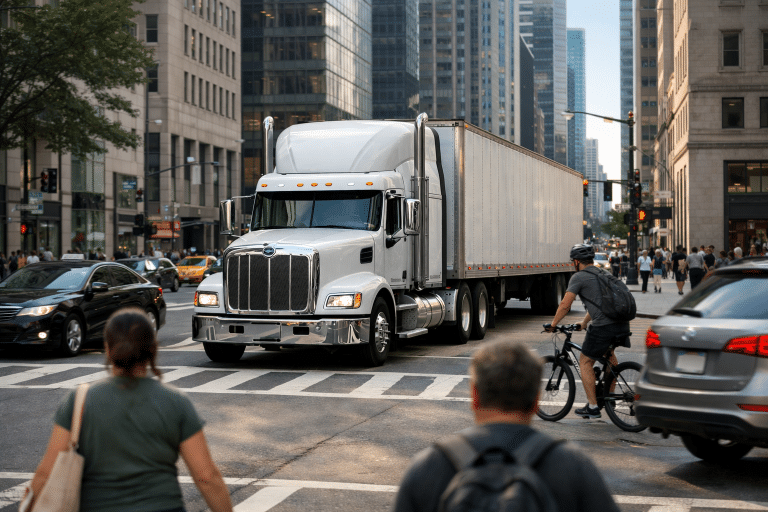
Urban environments present a blend of risks rarely encountered on rural highways. The increased concentration of vehicles creates persistent congestion that demands heightened attention and precision from large-truck drivers. Intersections, roundabouts, and construction detours further compound this risk, increasing the likelihood of collisions or close calls. Additionally, high pedestrian and cyclist numbers require constant vigilance due to their proximity and unpredictable movements.
- Congested Traffic: Limited space and frequent stops mean less margin for error, making minor misjudgments potentially catastrophic for large vehicles.
- Complex Roadways: Urban layouts often feature narrow streets, tight turns, and varied signage, increasing the risk of navigation errors or slow reactions.
- Vulnerable Road Users: Pedestrians, cyclists, and scooter riders are often overlooked in a truck’s larger blind spots, raising the risk of severe injury in a collision.
Leveraging Technology to Improve Safety
With urban crash rates rising, the trucking industry and city planners are adopting new tools. Direct vision trucks provide drivers with an expanded view, reducing blind spots and improving the detection of nearby road users, thus decreasing sideswipe and turning accidents. AI and sensor tech, like dashcams, collision alerts, and pedestrian detection, help drivers react to hidden hazards, reducing the frequency and severity of accidents. Research by the FMCSA shows these systems lead to safer traffic conditions.
Policy and Infrastructure Upgrades
Cities are updating their policies to meet the needs of pedestrians, cyclists, motorists, and truck drivers alike. Implementing mandatory side guards on large vehicles, which help prevent vulnerable road users from being caught under the chassis in the event of a crash, is gaining momentum in places like Boston and New York City. Dedicated truck parking areas are similarly effective, reducing illegal parking while easing loading and unloading headaches for delivery drivers.
According to the National Safety Council, redesigning high-risk intersections and establishing separated bike lanes also contribute substantially to overall urban road safety. These institutional investments set a new standard for how streets are shared among diverse transportation modes.
Driver Education and Awareness
Truck drivers navigating dense urban environments require advanced skills and knowledge. Intensive training programs that focus on hazard anticipation, safe maneuvering, and speed management can empower drivers to avoid common mistakes. Ongoing professional development helps them adapt to evolving city layouts, new technology, and best practices in defensive driving.
Employers are increasingly emphasizing the importance of skill certification and regular safety assessments, ensuring that each driver is well-prepared to operate responsibly around bikeways, school zones, and busy downtown corridors.
Public and Community Involvement
Urban trucking safety cannot rely solely on policy or technology; informed communities are essential. Public awareness campaigns that teach residents about the blind spots and turning radius of large trucks encourage safer interactions. Schools, local governments, and advocacy organizations are distributing free resources and leading hands-on demonstrations that highlight how to safely navigate alongside trucks.
Collaborative traffic safety efforts, including educational events, open communication with fleet operators, and support for Vision Zero initiatives (which aim to eliminate traffic fatalities), help foster a sense of shared responsibility on busy city streets.
Legal Support and Advocacy
Despite preventative efforts, accidents involving large trucks do occur and often result in life-changing consequences. Legal professionals provide essential support by helping victims navigate insurance claims, medical documentation, negotiations with trucking firms, and litigation if needed. Law firms specializing in trucking and 18-wheeler accidents, such as Boesen Law, not only secure fair compensation for injured individuals but also work to hold negligent operators and companies accountable. This legal advocacy plays a vital role in prompting further safety reforms and protecting the interests of affected families.
Those impacted by urban trucking accidents are encouraged to seek immediate legal consultation to preserve evidence and protect their rights. The expertise available from established lawyers ensures a comprehensive approach to recovery and justice.
Conclusion
Preventing truck accidents in urban areas is a complex task that relies on technological innovation, data-driven policy changes, targeted driver education, and community participation. By identifying high-risk factors and implementing meaningful strategies, city stakeholders and legal professionals can collectively reduce preventable tragedies on urban roads. When incidents arise, experienced advocates such as Boesen Law provide critical guidance and advocacy for those affected, paving the way for safer, more equitable city transportation networks.