

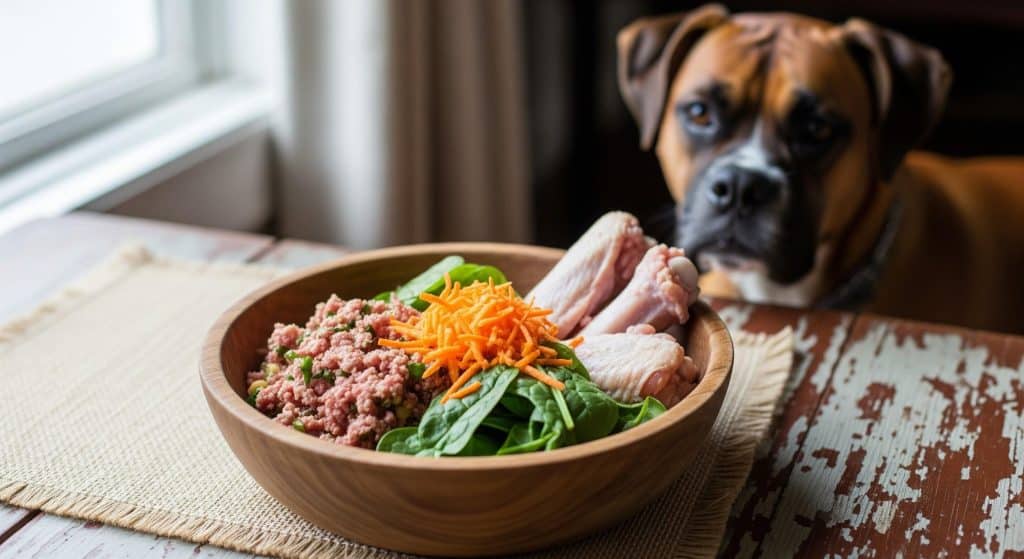
A 7–10 day transition schedule and everyday food-safety steps that reduce GI upsets and household risk.
Changing a dog’s diet is when most problems show up—not because the food is “wrong,” but because the switch is too fast or handling is inconsistent. This guide outlines a clear, low-stress plan for moving to raw while keeping your home routines safe and simple.
Why transitions matter more than you think
Dogs digest differently from people, and even high-quality recipes can cause GI upset if introduced abruptly. A structured switch protects the gut, reduces waste, and makes it easier to spot what’s working. The goal is not speed—it’s consistency.
Your 7–10 day ramp (copy/paste ready)
Use this schedule as a default, then slow down if stools soften or appetite dips:
- Days 1–3: 25% new / 75% current
- Days 4–6: 50% new / 50% current
- Days 7–9: 75% new / 25% current
- Day 10+: 100% new
Tips to improve tolerance: keep mealtimes consistent, avoid adding many new toppers, and introduce single-protein recipes first so you can read your dog’s response.
Start portions sensibly—then verify with BCS
A smooth transition pairs timing with practical portions. Many owners begin adults around 2%–3% of body weight per day (split into two meals) and increase for very active or lean dogs and decrease for sedentary or heavier dogs. Puppies start higher and taper as they mature. Whatever baseline you choose, confirm progress using Body Condition Scoring (BCS) and adjust by 5%–10% increments as needed.
Prefer to generate a plan in minutes? Use a calculator to set a defensible baseline and create a shareable note for caregivers. Here’s a reference that aligns with the approach above: how much raw food to feed a dog.
Safety first: simple hygiene that sticks
Good habits protect both people and pets. Follow authoritative food-safety guidance every time you prep or store pet food:
- Wash hands before/after handling pet food.
- Sanitize prep surfaces and utensils.
- Refrigerate or freeze per directions; thaw in the refrigerator, not on the counter.
- Separate pet items from ready-to-eat human foods.
These steps come straight from public-health style recommendations and are easy to document in your household routine.
Troubleshooting the switch
- Soft stool or gas? Hold at the current step for 48–72 hours before advancing. If needed, roll back one step and re-introduce more slowly.
- Picky eating? Keep proteins familiar at first and avoid frequent last-minute changes; consistency helps appetite stabilize.
- Low energy? Confirm total calories and portion accuracy. Very active dogs may need the upper end of the range (or an extra small meal).
- Allergy/sensitivity concerns? Keep the first 2–4 weeks single-protein and track observations (stool, coat, itch, energy) so patterns are easy to discuss with your veterinary team.
Set yourself up with a simple tracking loop
A lightweight log turns guesswork into decisions:
- Weigh weekly during the first month of the transition.
- Score BCS every 2–3 weeks (aim for 4–5/9 for most adults).
- Adjust portions 5%–10% based on trend and behavior.
- Note recipe changes (new protein, new topper) so you can tie outcomes to inputs.
This loop is quick, repeatable, and keeps everyone in the household on the same page.
Common myths—briefly addressed
- “If stools change, the food is bad.” Not necessarily. Speed is the usual culprit; slow down the ramp and monitor.
- “More variety is better on day one.” Early variety can blur the signal. Start simple, then expand.
- “Safety is only a raw issue.” Safe handling matters for all pet foods. Make it a habit, not a special occasion.
Takeaway
A careful transition, sensible starting portions, and everyday hygiene solve most problems owners encounter when moving to raw. Keep the plan simple, track progress, and make small, deliberate adjustments.