

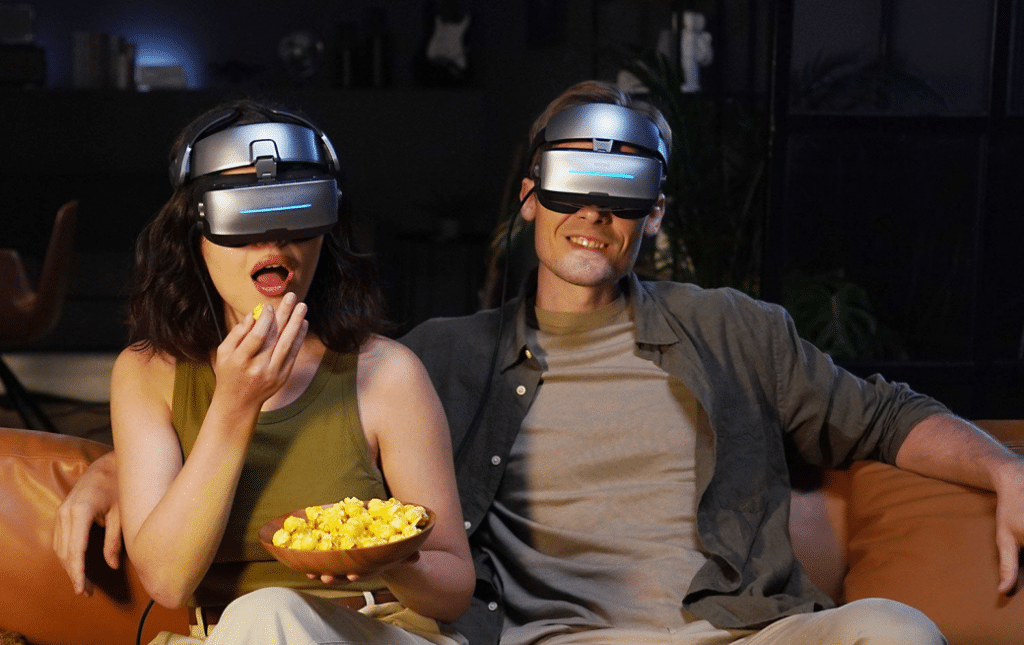
3D movies are making a comeback as viewers seek immersive, cinema-like experiences at home.
Over the years, technologies like 3D TVs and monitors have tried to bring cinematic depth into everyday viewing. But in practice, limitations in image clarity, depth stability, and viewing comfort have kept the experience from feeling truly convincing.
Now, a new generation of personal 3D viewing technology is beginning to change that.
GOOVIS G3 Max Brings a New Level of 3D Movie Experience
The GOOVIS G3 Max introduces a fundamentally different approach to 3D viewing — one that aligns with how human vision perceives depth.
Instead of relying on resolution-sharing or brightness-compromised methods, the G3 Max delivers high-quality imagery separately to each eye. As each eye receives its corresponding view, the visual system naturally fuses them into a 3D image that feels solid, stable, and convincingly real. Depth remains well-defined, while visual strain stays low even during extended viewing.
This binocular imaging approach provides a direct and reliable way to reproduce true stereoscopic depth, resulting in a 3D image that remains consistent throughout the entire viewing process.
Beyond its core imaging approach, the G3 Max delivers a complete 3D experience across multiple dimensions:
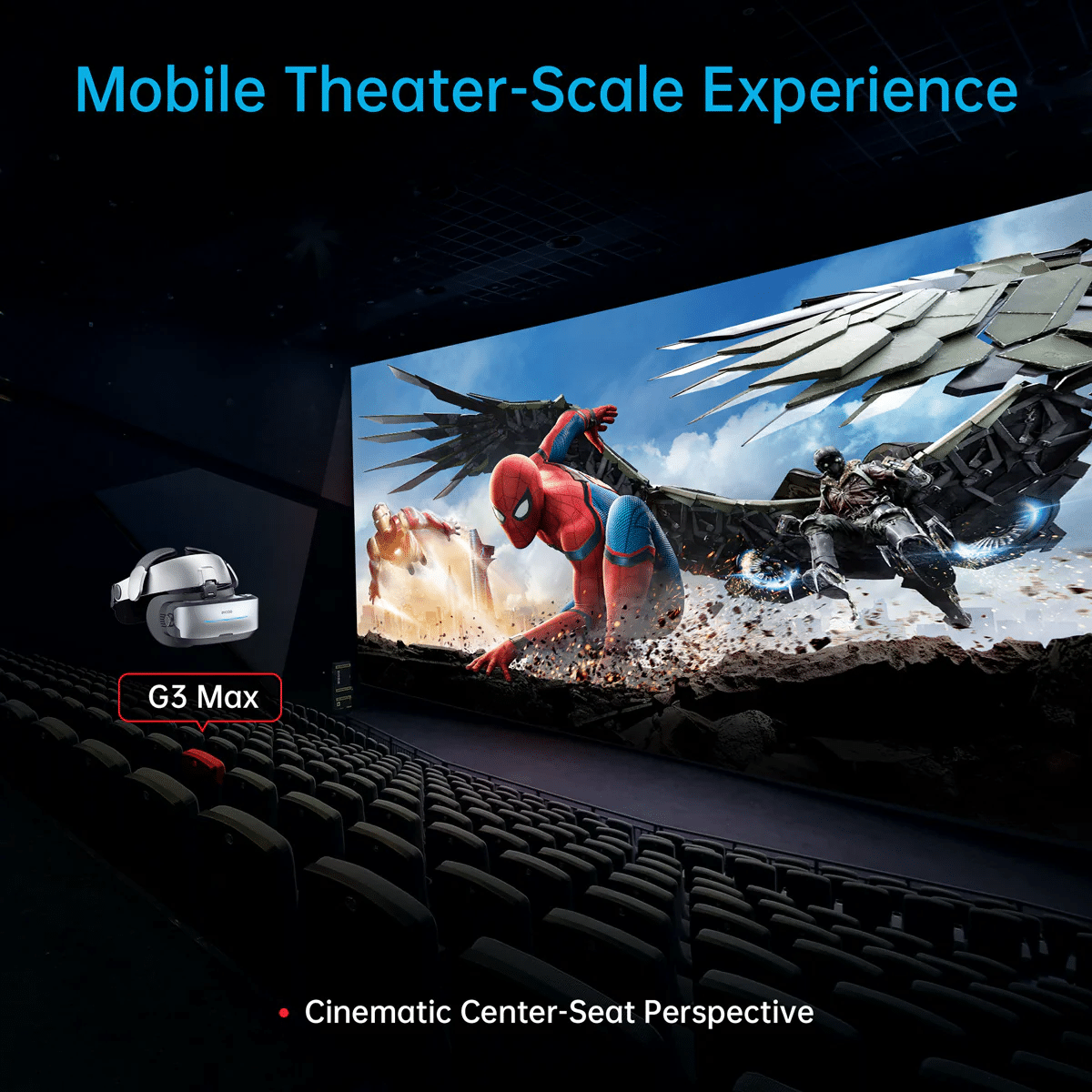
- IMAX-Scale Viewing Experience: Dual 2.5K Micro-OLED displays with SLR-grade optics deliver high pixel density, vivid colors, and deep blacks, creating a large-scale viewing experience equivalent to a 1000-inch screen at a 20-meter viewing distance — delivering the scale and presence of an IMAX theater.
- Stable and Consistent 3D Depth: Depth stays solid and well-defined at all times, holding its structure without shifting or collapsing — unlike traditional 3D displays, where the effect often breaks under changing viewing conditions.
- Uninterrupted Immersion: The viewing experience remains immersive and uninterrupted across different environments, without being affected by surrounding light or external distractions.
- Comfort for Extended Viewing: Optimized for both visual alignment and ergonomic wear, the G3 Max maintains a natural and comfortable viewing state, keeping both eyes and head relaxed even during extended 3D viewing sessions.
Other 3D Viewing Options — Why You Might Skip Them
While searching for 3D devices for movies, you will likely encounter several older or alternative technologies.
Traditional 3D TVs
Early 3D televisions used passive or active glasses. Passive 3D cut vertical resolution for each eye, reducing image detail, while active shutter glasses required synchronized batteries and could cause flicker-induced eye strain. With most 3D TVs no longer in production, replacement hardware and support are difficult to find.
3D Monitors
Many desktop 3D monitors rely on specialized glasses or lenticular lenses to separate images. While capable of displaying 3D content, these monitors often suffer from limited viewing angles, reduced brightness, and visible ghosting, which diminishes immersion and depth perception.
Smartphone 3D Attachments
Clip-on lenses or plastic shells split a smartphone display into two halves, producing pixelated images with weak depth perception. Without precise optical alignment, edges may appear blurry, and extended viewing can cause visual discomfort.
VR and AR Headsets
VR headsets are typically designed for interactive experiences rather than movie viewing. Their optical structures, often involving magnification lenses, can reduce overall image clarity and introduce edge distortion. In addition, an excessively wide field of view may spread pixels over a larger visual area, lowering perceived sharpness.
AR glasses, by contrast, rely on optical see-through systems, where the displayed image is influenced by ambient light conditions, making it difficult to maintain consistent contrast and clarity.
Across these approaches, common limitations include reduced image fidelity, unstable depth presentation, and compromised viewing comfort. These trade-offs highlight the need for a purpose-built 3D viewing system that delivers consistent image quality, stable depth, and long-duration comfort for cinematic use.
Taking a Closer Look at GOOVIS G3 Max
When searching for the highest quality 3D device for 3D movies, the GOOVIS G3 Max stands out as a specialized personal cinema.
Unlike traditional 3D display solutions that adapt standard screens for stereoscopic viewing, the G3 Max is built as a dedicated 3D viewing system, where the display and optical design are optimized together to deliver a consistent and controlled visual experience.
Cinematic Visual Performance
GOOVIS G3 Max utilizes advanced Micro-OLED displays, delivering a resolution of 2560×1440 pixels per eye. Combined with SLR-grade optics, this creates a large-scale virtual viewing experience equivalent to a 1000-inch screen at a 20-meter viewing distance.
With a pixel density of up to 45 pixels per degree (PPD), the image remains sharp and clean, minimizing visible pixel structure and screen door effect. A refresh rate of up to 120Hz ensures smooth and continuous motion, maintaining clarity even in fast-moving scenes.
Covering 95% of the DCI-P3 color gamut, it preserves accurate color reproduction and maintains the intended visual appearance of cinematic content.
3D Playback and Format Support
The G3 Max supports both Blu-ray 3D and Side-by-Side (SBS) 3D formats, enabling playback across a wide range of 3D media sources. A dedicated control allows quick switching between 2D and 3D modes, supporting flexible viewing across different content types.
This compatibility ensures that users can access both legacy 3D libraries and modern digital formats without additional setup or conversion.
Comfort and Customization
The G3 Max incorporates an integrated vision adjustment system designed to accommodate a wide range of users. Diopter adjustment from +2.0D to -7.0D allows most users to view content clearly without additional corrective lenses, while interpupillary distance (IPD) adjustment from 58 mm to 74 mm ensures proper alignment for accurate image fusion.
With a main headset weight of approximately 300 grams, the ergonomic structure distributes pressure evenly across the head, supporting stable and comfortable wear during extended viewing sessions.
Versatile Connectivity
The G3 Max is designed to integrate with a wide range of devices. A USB-C interface supporting DisplayPort Alt Mode enables direct connection to compatible smartphones, tablets, and laptops, allowing seamless access to streaming and local content.
For traditional home setups, HDMI sources are supported via an included adapter, enabling connection to media players, gaming consoles, and other video devices.
Conclusion
Choosing the right equipment for 3D viewing ultimately comes down to how well it preserves image integrity, depth stability, and long-term comfort.
The GOOVIS G3 Max is built around these fundamentals, delivering a dedicated 3D viewing system designed for consistent visual performance and immersive cinematic experiences.