

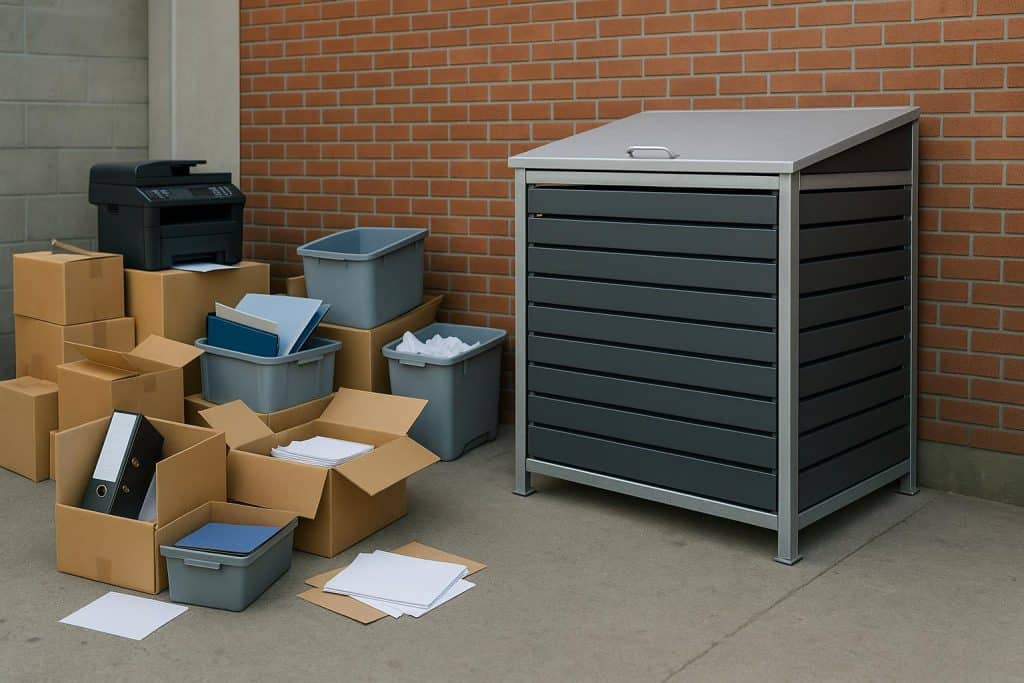
Ever walked into an office where bins are scattered randomly around corners, overflowing onto walkways, or just generally creating that “something’s not quite right” feeling? You’re not imagining it. That visual mess is costing businesses more than they realize.
The thing is, most workplace efficiency discussions focus on the obvious stuff. Better software, streamlined processes, upgraded equipment. But nobody really talks about the psychological drag that comes from working in cluttered environments. Turns out, our brains are pretty sensitive to visual chaos.
When Bins Become the Office Eyesore
Here’s what happens in most commercial spaces: bins get placed wherever there’s room, which usually means they end up as afterthoughts. They’re tucked behind desks, shoved into corners, or worse, left out in the open where they collect not just waste but also that general “untidy office” vibe.
The research on this is actually fascinating. Studies show that cluttered environments can increase cortisol levels and reduce focus by up to 32%. That’s not just about messy desks either. It includes anything that creates visual noise in peripheral vision.
But here’s where it gets interesting. Most facilities managers don’t connect the dots between bin placement and productivity. They see waste management as purely functional. Get the rubbish from point A to point B. Job done.
The Real Cost of Visual Distraction
Picture this: you’re trying to concentrate on a complex task, but there’s always something slightly off in your peripheral vision. Maybe it’s an overflowing bin, or just the general sense that the office looks… messy. Your brain keeps getting pulled away from what you’re doing.
Multiply that tiny distraction across an entire workforce, day after day. The productivity loss starts adding up pretty quickly.
Then there’s the client perception angle. Nothing says “unprofessional” quite like visible waste management issues. First impressions matter, and unfortunately, bins are often the first thing visitors notice when something’s not quite right with an office environment.
The Hidden Maintenance Drain
Here’s something most people don’t consider: poorly placed bins create more work for cleaning staff. When waste containers are scattered around randomly, cleaning takes longer. Routes become inefficient. Some bins get missed during busy periods.
That inefficiency flows through to costs. More cleaning time means higher labor expenses. Missed collections mean hygiene issues. The whole system becomes more expensive to maintain.
Smart Enclosure Solutions Change Everything
The solution is actually pretty straightforward, but it requires thinking about bins differently. Instead of treating them as necessary evils, what if they became part of the office design?
Quality bin enclosures solve multiple problems at once. They hide the visual clutter while keeping waste management functional. The right enclosures can actually enhance office aesthetics rather than detract from them.
Felton bin enclosures, for example, are designed with this dual purpose in mind. They contain the mess while looking intentional and professional. It’s amazing how much difference this makes to overall office ambiance.
The Psychology of Organized Spaces
Here’s the thing about human psychology: we perform better in environments that feel controlled and intentional. When everything has its place and looks purposeful, our brains can focus on actual work instead of processing background chaos.
This isn’t about being obsessive or overly neat. It’s about removing unnecessary cognitive load. Every small distraction your brain doesn’t have to process is mental energy that can go toward productive tasks instead.
Smart bin placement and enclosure creates that sense of intentional design. Visitors notice that everything looks considered. Staff work in an environment that feels more professional and organized.
The investment in proper waste management infrastructure pays for itself through improved productivity, better client impressions, and reduced maintenance hassles. Sometimes the best efficiency improvements come from fixing the things nobody talks about.