

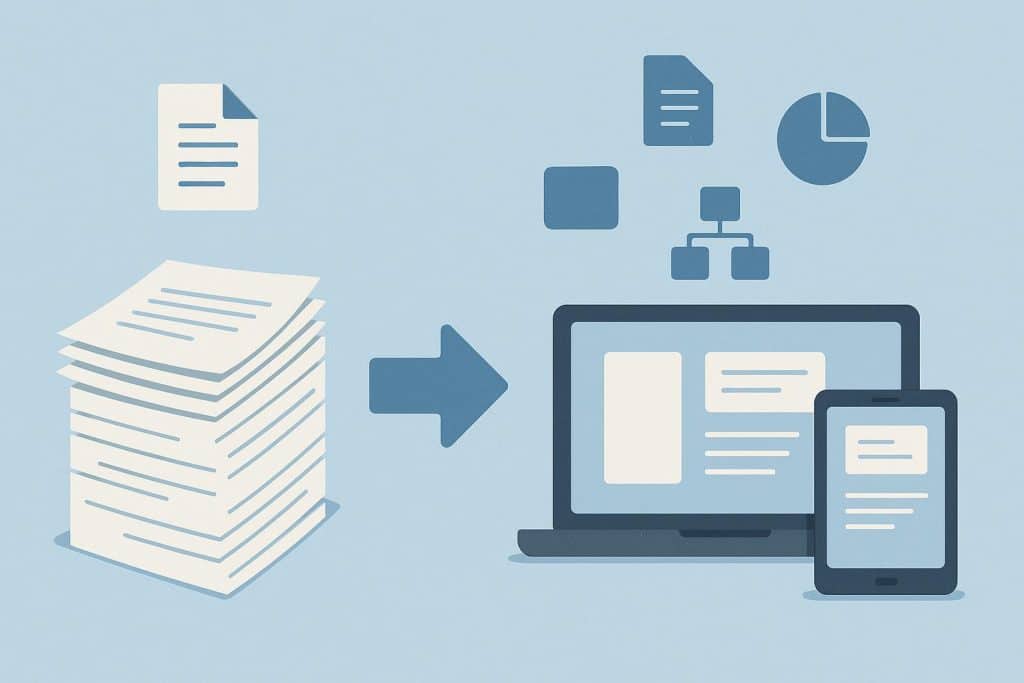
Remember when important documents lived in filing cabinets? Those beige metal fortresses that guarded everything from contracts to employee records behind lock and key. Well, those days are pretty much gone. The shift toward digital information management isn’t just happening anymore – it’s already here, and it’s changing how businesses operate in ways we’re only just beginning to understand.
The Great Office Transformation
Picture this: someone walks into an office from 20 years ago and sees rows of filing cabinets, stacks of paper on every desk, and employees spending half their day hunting for that one crucial document. Fast forward to today, and that same office might have clean desks, multiple monitors, and workers accessing thousands of files with just a few clicks.
The transformation didn’t happen overnight, but it picked up serious speed recently. Companies that once resisted going digital found themselves scrambling to adapt when remote work became the norm. Suddenly, that filing cabinet in the corner wasn’t doing anyone any favors when employees were working from their kitchen tables.
What Digital Information Management Actually Means
Here’s the thing about digital information management – it sounds fancy, but it’s really just a smart way of organizing and storing information electronically. Instead of physical files, everything lives in digital formats that can be searched, shared, and accessed from anywhere.
But it’s not just about scanning old documents and calling it a day. Modern digital systems can automatically categorize information, track changes, and even remind you when certain documents need updating. It’s like having a super-organized assistant who never forgets where anything is.
The Real Benefits (Beyond Just Saving Trees)
Sure, going digital is better for the environment, but that’s not why most businesses make the switch. The real benefits are more practical:
Storage space becomes unlimited. Well, practically unlimited. One small server can hold what would have filled entire rooms with filing cabinets.
Finding information becomes instant. Ever tried searching for a specific contract from three years ago in a filing system? Now imagine typing a few keywords and having it appear in seconds.
Collaboration gets easier. Multiple people can work on the same document simultaneously, and everyone always has the most current version.
The Challenges Nobody Talks About
To be honest, the switch to digital isn’t always smooth sailing. Some employees resist change, especially those who’ve spent decades perfecting their paper-based systems. There’s also the learning curve with new software and the ongoing concern about data security.
Then there’s the migration process itself. Converting years or decades of paper documents into digital formats takes time, planning, and often significant investment. Companies like Konica Minolta have built entire service divisions around helping businesses make this transition because, frankly, it can be overwhelming to tackle alone.
Where Workflows Actually Change
The most interesting part isn’t the technology itself but how it changes daily routines. Approval processes that once required documents to physically move from desk to desk now happen electronically. New employees can access training materials instantly instead of waiting for someone to find and deliver physical copies.
Decision-making speeds up too. When managers can access real-time data and historical documents immediately, they don’t need to schedule separate meetings just to gather information.
Looking Ahead
Digital information management keeps getting smarter. Artificial intelligence now helps categorize documents automatically, and cloud storage means information is accessible from anywhere with internet access.
The businesses adapting now are setting themselves up for whatever comes next. Those still clinging to paper systems? They’re finding it harder to compete with companies that can respond faster and operate more efficiently.
The paperless office might have seemed like a distant dream a decade ago, but it’s becoming the reality for more businesses every day. The question isn’t whether to make the switch anymore – it’s how quickly you can adapt to stay competitive.