

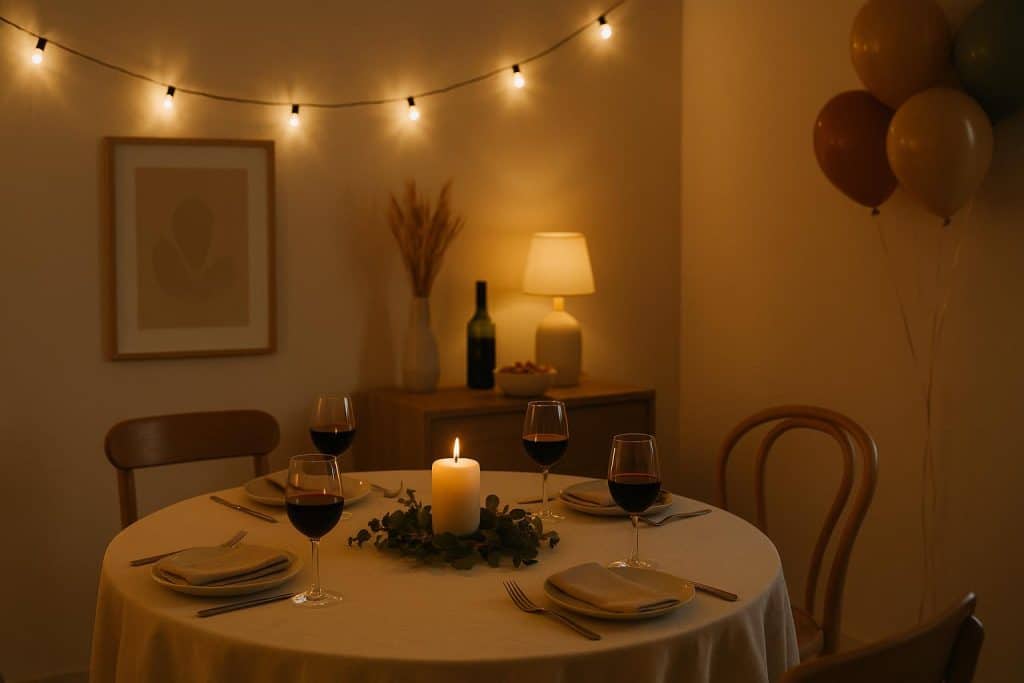
A few years ago the default celebration was big. Rent a space, invite everyone you’d ever met, blow the budget on a bar tab nobody remembers. That version of hosting is fading, at least among the people I know. The party that’s taking its place is smaller, more deliberate, and honestly a lot more fun to plan.
You see it in the way people talk about their weekends now. Less “I’m throwing a huge thing, you should come,” more “a few of us are doing dinner Saturday, can you make it.” Eight people instead of eighty. A housewarming where you actually get to talk to the host. A milestone birthday handled as a long lunch rather than a club night. The scale came down, and somewhere in that shift the planning got more personal.
Why smaller stuck
Part of it is money, sure. A tight guest list costs less, and after a few years of everything getting more expensive, that matters. But I don’t think cost is the whole story.
The bigger reason is that big events stopped delivering. You’d spend weeks organizing something for fifty people and walk away having had three real conversations. The math never worked. A smaller gathering flips that. Fewer guests means more attention per guest, and that’s the thing people actually wanted from a party in the first place.
There’s also a generational piece. Younger hosts — late twenties, early thirties, the people figuring out how to entertain in apartments rather than houses with backyards — never really bought into the idea that bigger equals better. They grew up watching the blowout party and quietly decided it wasn’t for them. Intimate gatherings fit the spaces they live in and the lives they’re actually living.
The invitation became the interesting part
Here’s what surprised me. As parties got smaller, the invitation got more important, not less.
That sounds backwards. You’d think a dinner for eight needs less ceremony than a wedding-sized event. But the opposite happened. When you’re only inviting a handful of people, the invitation sets the entire tone. It tells your guests what kind of evening this is — casual, dressy, themed, whatever. A group text saying “come over Friday” works, but it doesn’t do that tone-setting work. A real invitation does.
So hosts started caring about invitations again. Not the stiff, formal kind your grandparents mailed. Something in between — designed enough to feel intentional, easy enough that making one doesn’t eat your whole Tuesday night.
The problem used to be that this middle ground didn’t really exist. Your options were a generic template that looked like everyone else’s, or hiring a designer for a dinner party, which nobody is doing. Most people just gave up and sent the group text.
What changed the math
The tools caught up. That’s the short version.
What used to require design software and an afternoon now takes a sentence and a minute. You describe the event — a backyard housewarming, a low-key 30th, a Sunday baby shower with a garden theme — and you get back something that looks like a person made it on purpose. Platforms like party invitation ai handle the design and the RSVP tracking in one place, which means the part that used to feel like a chore now takes less effort than choosing a stock card at the drugstore. The host gets to spend their energy on the food and the guest list instead of fighting with layout grids.
And once the invitation is easy, hosts send more of them. That’s the quiet effect here. When making something nice stops being a project, people throw more of these small gatherings, because the friction that used to talk them out of it is gone.
The RSVP problem nobody talks about
Small parties have one logistical headache that big ones don’t, weirdly. With fifty guests, a few no-shows don’t matter. With eight, two people flaking changes the whole evening. You bought food for eight. You set a table for eight. Suddenly it’s six and the seating feels off.
This is why RSVP tracking quietly became the feature people care about most. Not the design — the knowing. Knowing who’s actually coming, who’s a maybe, who hasn’t opened the thing yet. For a dinner party that’s the difference between a smooth night and a kitchen full of leftover salmon.
The better hosts I know set the RSVP deadline early, too. Not the day before. A week out, so there’s time to adjust the plan if the numbers move. It’s a small habit and it saves a surprising amount of stress.
Where this is heading
I don’t think the big party is dead. There’s still a place for the wedding, the milestone anniversary, the company holiday thing. But the everyday celebration — the part of social life that happens most often — has moved toward smaller and more thoughtful, and I don’t see that reversing.
What’s interesting is how much of the experience now lives in the planning. The invitation, the RSVP, the little touches that tell people you actually thought about them. Those used to be afterthoughts. For this style of hosting they’re closer to the main event.
If you’re someone who’s drifted away from hosting because it felt like too much work, this is the part worth knowing. The reason it felt like too much was mostly the logistics, not the gathering itself. Take the logistics down to a few minutes and the whole thing becomes something you’d actually want to do on a regular Saturday.
That’s the version of entertaining that’s winning right now. Smaller table, better night, far less hassle than the old way of doing it.