

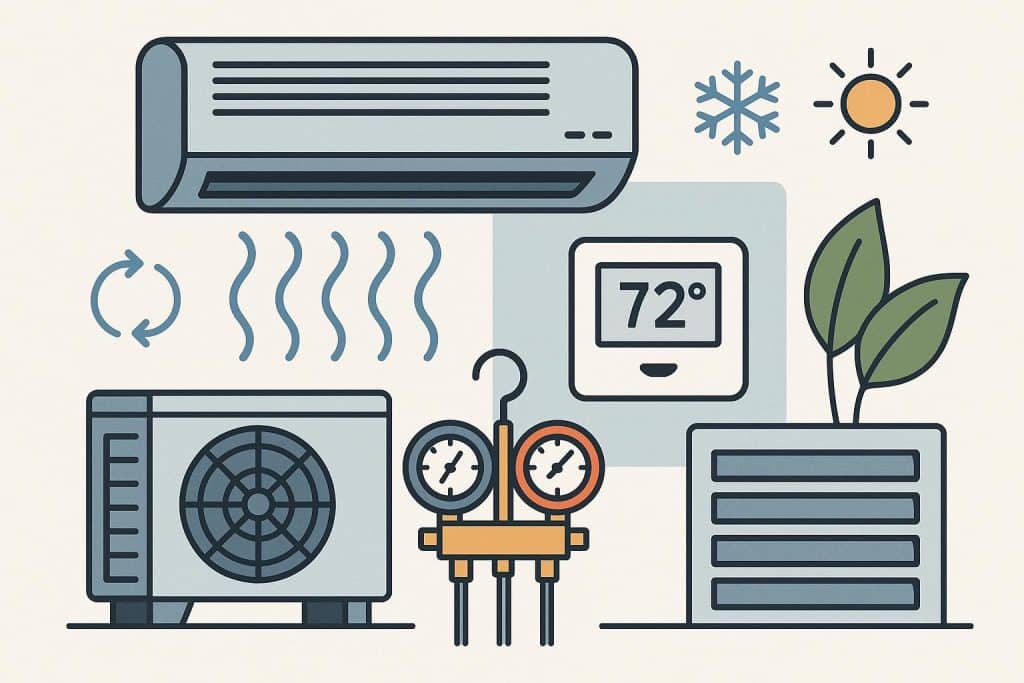
A stable indoor environment is not just about feeling warm in winter or cool in summer. Stability means temperatures that don’t swing room to room, humidity that stays within a comfortable range, airflow that feels consistent, and indoor air that doesn’t turn stale or dusty after a few days. Many homes and small commercial buildings struggle with stability even when the HVAC system “works,” because stability depends on calibration, airflow balance, control settings, and maintenance habits that keep the entire system operating smoothly over time. HVAC contractors support stable environments by diagnosing causes of fluctuations, tuning equipment and duct systems, and establishing routines to prevent drift. Their work helps buildings feel more predictable, rather than constantly changing with weather, occupancy, and daily usage patterns.
Keeping Comfort Consistent Daily
- Preventing Temperature Swings Through System Balancing
Temperature stability depends heavily on how air is delivered, not just on the equipment’s capacity. HVAC contractors maintain stable indoor environments by balancing airflow so each room receives an appropriate share of conditioned air. This involves checking register delivery, inspecting dampers, and measuring static pressure to confirm the blower is not fighting unnecessary resistance. When airflow is uneven, some rooms heat quickly and overshoot while others lag behind, prompting longer run times and creating noticeable swings. Contractors also verify that return air pathways are clear, because restricted returns can cause rooms to pressurize and reduce supply flow, making comfort unpredictable when doors close. Many stability problems appear after small changes, such as new furniture, remodeled spaces, or filter upgrades that alter airflow more than expected. By restoring proper balance and reducing restrictions, contractors help the system cycle in a smoother pattern that holds setpoint without constant overcorrection.
- Maintaining Reliable Heating Performance in Cold Weather
Heating stability often breaks down when components begin operating at the edge of their intended range. A furnace can still run while producing uneven heat if burners are dirty, airflow is low, or safety limits are being triggered intermittently. HVAC contractors inspect ignition systems, burners, heat exchangers, and blower operation to ensure consistent heat generation and distribution. During Furnace repair service visits, they often find that a minor fault, such as a weak flame sensor or a partially clogged filter, causes short cycles that make indoor temperatures bounce up and down. Contractors correct these issues by cleaning, adjusting, and verifying proper airflow, so the furnace runs in steady cycles rather than repeated starts and stops. They also confirm thermostat accuracy and placement, because a thermostat influenced by drafts or direct heat can misread conditions and shut the system down early. These steps turn heating from reactive bursts into consistent, controlled operation.
- Managing Humidity for Comfort and Building Protection
Humidity stability is a major factor in how an indoor space feels, especially during humid summers and dry winters. HVAC contractors address humidity by ensuring cooling equipment operates to remove moisture effectively, which requires proper airflow across the coil and a proper refrigerant charge. If airflow is too high, the coil may not dehumidify well; if airflow is too low, the coil can get too cold, risking freezing. Contractors also evaluate short cycling, because systems that respond quickly to the thermostat often remove less moisture, leaving the home feeling clammy even at cooler temperatures. In winter, contractors may recommend humidification strategies when indoor air becomes overly dry, which can cause discomfort, static, and wood shrinkage. They also consider ventilation balance, since excessive outdoor air infiltration can add moisture in summer or strip moisture in winter. By treating humidity as a control target rather than a side effect, contractors help homes feel steady and protect finishes and furnishings from moisture-related damage.
- Controlling Air Quality Through Filtration and Clean Airflow
A stable indoor environment includes air that feels clean day after day, not dusty one week and stale the next. HVAC contractors support this stability by matching filtration to the system’s airflow capacity and maintaining clean internal components. Filters that are too restrictive can reduce airflow and cause comfort swings, while neglected filters allow debris to coat coils and blowers, reducing efficiency and creating odor issues. Contractors check coil cleanliness, drain performance, and blower condition, as contamination within the system can recirculate particles and create uneven airflow. They also inspect duct integrity, since leaks can pull dusty attic or crawlspace air into the system, making air quality inconsistent even when filtration is adequate. In homes with sensitivities, contractors may suggest improved filtration media, properly installed air cleaners, or controlled ventilation that refreshes indoor air without destabilizing temperature and humidity. The goal is steady, breathable air that supports comfort without straining the system’s airflow.
- Using Controls and Settings to Smooth Daily Operation
Controls determine how the HVAC system behaves throughout the day, and small settings can make a big difference in stability. HVAC contractors evaluate thermostat programming, staging configuration, fan settings, and system response time to prevent rapid cycling and temperature overshoot. For multi-stage or variable systems, proper control logic allows the equipment to run longer at lower output, often maintaining more stable temperatures and better humidity control. Contractors also confirm that sensors are reading representative areas of the home, because a thermostat placed near a sunny window, a kitchen heat source, or a drafty hallway can drive unstable cycling patterns. They may recommend remote sensors or zoning adjustments when the layout creates persistent differences in room conditions. By tuning controls to the building’s behavior, contractors help the system respond gradually rather than aggressively, creating an indoor environment that feels steady instead of constantly adjusting.
HVAC contractors maintain stable indoor environments by focusing on consistency rather than just basic operation. They balance airflow to reduce room-to-room swings, ensure heating components run steady cycles, and manage humidity so comfort feels reliable across seasons. They also support air quality stability through filtration choices, clean system components, and duct integrity, while fine-tuning controls to reduce short cycling and overcorrection. Stability is what makes a home feel comfortable throughout the day, even when weather shifts or occupancy changes. When contractors address the system as a whole—equipment, ducts, controls, and maintenance—indoor environments become more predictable, healthier, and easier to live in year-round.