

Curiosity is one of the most powerful forces in childhood learning. It’s the instinct that makes kids ask endless questions, peer closely at unfamiliar objects, and imagine what lies beyond the next hill. Neuroscience and educational research increasingly show that curiosity is not just a personality trait—it’s a catalyst for deeper understanding, stronger memory, and long-term academic success. Two of the most effective ways to spark and sustain curiosity in children are travel and storytelling, especially when they work together.
When kids explore new places and engage with meaningful stories, learning becomes experiential rather than abstract. Concepts leap off the page and into the real world, helping children connect ideas across science, history, culture, and everyday life. This blend of exploration and narrative doesn’t just teach facts—it trains young minds to love learning itself.
Why Curiosity Is The Engine Of Learning
From a scientific perspective, curiosity activates the brain’s reward system. Studies in cognitive neuroscience have shown that when children are curious, their brains release dopamine, the same neurotransmitter associated with motivation and pleasure. This chemical boost enhances focus and makes information more memorable.
Curiosity also encourages self-directed learning. Instead of passively absorbing information, curious kids seek answers, test ideas, and engage in critical thinking. This kind of active learning strengthens neural pathways and builds cognitive resilience, skills that remain valuable well into adulthood.
Travel and stories are uniquely suited to stimulate this process because they naturally introduce novelty, uncertainty, and wonder—key ingredients for curiosity to thrive.
Travel As A Living Classroom
Travel transforms the world into an interactive textbook. Whether it’s a family road trip, a visit to a science museum, or exploring a nearby national park, new environments bombard kids with unfamiliar sights, sounds, and systems to figure out.
A walk through a coastal town can become a lesson in marine biology. A subway ride opens discussions about engineering, physics, and urban planning. Visiting historical landmarks brings timelines and civilizations to life in ways no worksheet can replicate.
Importantly, travel encourages observational learning. Children notice patterns, compare cultures, and ask “why” questions that naturally cross academic boundaries. This multidisciplinary exposure mirrors how the brain actually processes information—holistically rather than in isolated subjects.
Stories Give Meaning To Experience
While travel provides stimulation, stories provide structure. Narratives help children organize new information into coherent mental models. Through stories, abstract ideas gain emotional weight and personal relevance.
Research in developmental psychology shows that storytelling improves comprehension and empathy by allowing kids to see the world through different perspectives. Stories also support causal reasoning—understanding how actions lead to consequences—which is essential for scientific thinking.
When children read or hear stories related to places they visit, learning deepens. A tale about inventors pairs perfectly with a science center visit. A historical adventure novel enhances a trip to an old city or monument. Stories turn experiences into memories and memories into meaning.
The Powerful Combination Of Travel And Storytelling
When travel and storytelling intersect, curiosity compounds. A child who reads about space exploration before visiting a planetarium arrives primed with questions. A story about ecosystems makes a hike through a forest feel like a treasure hunt for real-world examples.
This approach aligns with inquiry-based learning, an educational method backed by research showing that students retain more information when they actively investigate topics that interest them. Travel sparks the questions; stories help answer them.
Even families who homeschool or supplement traditional schooling can use this combination to create flexible, curiosity-driven learning. For example, reading age-appropriate educational stories from Tuttle Twins can provide context for discussions about economics, science, or history encountered during family trips, without requiring formal lesson plans.
Building Scientific Thinking Through Exploration
Curiosity-driven travel encourages kids to think like scientists. They observe phenomena, form hypotheses, and test ideas through experience. Why does the tide move differently at this beach? How does altitude affect breathing in the mountains? Why do certain animals thrive in one climate but not another?
Stories reinforce this scientific mindset by modeling problem-solving and experimentation. Characters who investigate mysteries, build inventions, or challenge assumptions subtly teach kids how to think, not just what to think.
Over time, children learn that questions are valuable and uncertainty is exciting rather than intimidating. This mindset is critical for success in science, technology, and innovation-focused fields.
Entertainment That Educates Without Feeling Like School
One reason travel and stories are so effective is that they blur the line between entertainment and education. Kids don’t feel like they’re being “taught,” yet learning happens constantly.
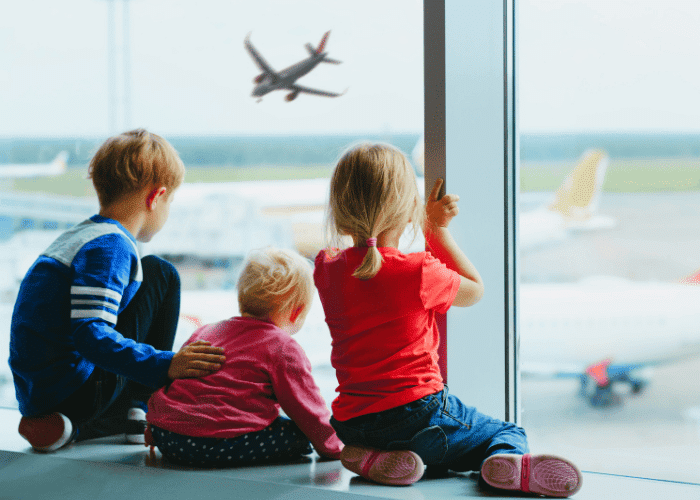
Long car rides become opportunities for audiobooks and discussions. Waiting at airports turns into people-watching and geography lessons. Even downtime at hotels can involve reading stories connected to the day’s adventures.
This seamless integration reduces learning fatigue and increases intrinsic motivation. Children engage because they want to, not because they have to, which is one of the strongest predictors of lifelong learning habits.
Creating Curiosity At Home And On The Road
You don’t need international travel to harness the science of curiosity. Local adventures—zoos, science centers, historical sites, or even neighborhood walks—can be just as impactful when paired with the right stories.
Parents can encourage curiosity by asking open-ended questions, modeling enthusiasm for learning, and allowing kids to explore topics deeply rather than rushing to “cover” material. Keeping a travel journal, drawing observations, or reenacting stories from trips can further reinforce learning.
The key is intention. When families view experiences as opportunities for discovery, curiosity becomes a daily practice rather than an occasional event.
Raising Lifelong Learners Through Wonder
Curiosity doesn’t fade on its own—it’s often crowded out by rigid systems and passive entertainment. Travel and stories help preserve that natural drive by reminding children that the world is full of puzzles worth solving and stories worth understanding.
By combining exploration with narrative, parents and educators can nurture minds that are adaptable, inquisitive, and eager to learn long after childhood ends. In a rapidly changing world, these traits may be the most valuable souvenirs children carry forward from every journey.