

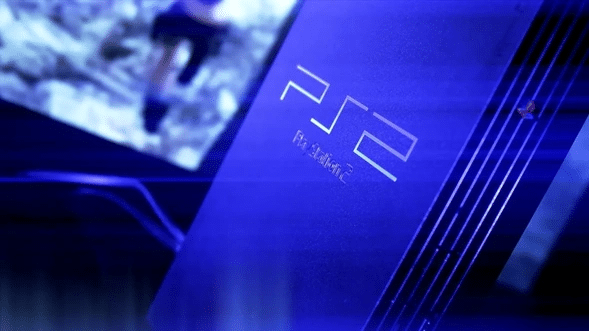
Every console generation has its ghosts. For the PlayStation 2, the haunting moment usually arrives when a disc that once booted instantly now grinds, clicks, and finally gives up. The TV stays black. The startup chime never comes. Yet somehow, the PS2 era refuses to disappear. Its games are still being translated, fixed, upgraded, and rediscovered by people who were never supposed to have access to the inner wiring of those worlds.
Every console generation has its ghosts. For the PlayStation 2, the haunting moment usually arrives when a disc that once booted instantly now grinds, clicks, and finally gives up. The TV stays black. The startup chime never comes. Yet somehow, the PS2 era refuses to disappear. Its games are still being translated, fixed, upgraded, and rediscovered by people who were never supposed to have access to the inner wiring of those worlds.
What keeps this generation alive is not just nostalgia; it’s a quiet, global effort built around game images and ROM dumps that let the PS2 exist far beyond its failing plastic shells.
A Console Stuck Between Past and Future
The PS2 arrived at an awkward moment in gaming history. It was powerful enough to pull off ambitious 3D worlds, but built on an architecture that had more in common with hardware labs than with the standardized engines we take for granted today. Developers juggled vector units, unusual memory layouts, and timing quirks that changed depending on how you pushed the system.
Back then, most players only saw the result: loading screens, cutscenes, and boss fights. Today, when fans open a PS2 game image, they see something else entirely — the scars of rushed deadlines, the tricks used to stream levels from disc, the ghosts of features that never made it into the final build.
When the Hardware Started Saying No
No one designed the PS2 to still be running in living rooms and bedrooms over two decades later. Fans tried to keep consoles alive by cleaning laser lenses, swapping out drives, or hunting for “just one more” used unit in good condition. But plastic ages. Solder cracks. Drives fail.
At some point, a decision had to be made: either let the games fade with the hardware, or move them into a form that could survive the next wave of technology.
That’s where ROMs quietly shifted from being “backup copies” to something more serious: the primary way to keep the PS2’s library actually reachable.
Opening a PS2 Game Image Is Like Reading a Studio’s Margin Notes
Dig into a single PS2 ROM and the illusion of a clean, finished product starts to crack. You might find:
debug rooms that no player was meant to enter
voice lines for scenes that never appear in the story
textures labeled as “old” or “broken” still sitting next to the final assets
half-implemented systems that hint at different design directions
These scraps are easy to miss during normal play, but they are invaluable once the game exists as data. The ROM becomes a record of how teams thought, panicked, improvised, and compromised. From the outside, a game looks finished. Inside the image, it’s clear that many PS2 titles were held together by clever tricks and careful balancing acts.
The Unpaid Engineers of the PS2’s Second Life
There is no official task force charged with preserving PS2 games. Instead, you find a loose network of people who each picked up a small part of the work.
The Readers of Failing Discs
Dumping a PS2 game properly is not just a matter of clicking “rip.” Some discs are scratched, some sectors are weak, and some releases differ subtly between regions or print runs. Dumpers compare multiple reads, verify checksums, repair what they can, and document what they can’t. Their goal is simple: get as close as possible to how the game existed when it left the factory.
The Translators Who Unlock Lost Libraries
A huge portion of the PS2 catalogue never left its original language. Years later, fans who never accepted that barrier began pulling scripts out of ROMs, rewriting them, and stitching new text back in. They adjust menu layouts, fit longer sentences into tight spaces, and rewrite UI flows so that a game designed for one region can quietly slip into another.
The Modders Who Refuse to Let Things Stay Broken
Some people are content to preserve a game exactly as it shipped. Others see a PS2 ROM as raw material. They fix long-standing bugs, restore hidden content, tweak difficulty curves, or rebuild textures for higher resolutions. The result is often a version of the game that feels both faithful and somehow more complete than the original disc ever did.
The Archivists Who Treat Game Data Like History
Behind the scenes, archivists collect everything that might help future players understand this era: ROMs, manuals, strategy guides, prototypes, demo discs, magazine ads, even forum posts from the launch window. To them, a PS2 game is not just a file — it’s a snapshot of how people made, marketed, and experienced games at a very specific moment in time.
What the PS2 Teaches by Accident
The PS2 was never designed as a teaching tool, yet its ROMs have become reference material for people who want to understand how 3D game design evolved. You can see studios experimenting with camera systems, loading pipelines, physics tricks, and narrative pacing in ways that modern pipelines rarely allow.
Some titles stream environments in thin slices to hide the limits of the DVD drive. Others sacrifice texture detail to maintain stable framerates. A few push the vector units so hard that even today’s emulators struggle to reproduce the timing perfectly. All of these decisions are encoded in the way data is arranged and accessed inside the ROM.
Clean, well-documented PS2 Roms give developers, researchers, and curious players a way to study those decisions without depending on aging hardware that might fail at any time.
Playing Old Games on New Screens Without Losing Their Soul
Running a PS2 classic through an emulator on a high-resolution monitor is not automatically a victory. Sharper edges and smoother framerates are nice, but the real challenge is more subtle: can the game still feel like itself?
That’s why accuracy matters. It’s not about worshipping technical detail for its own sake; it’s about preserving the rhythm of inputs, the weight of animations, the tiny delays that made combat or platforming feel a certain way. If those are wrong, the nostalgia is there but the experience is off by just enough to feel strange.
The better the ROM and the more carefully it was preserved, the easier it becomes for emulator developers to get these details right — or at least close enough that long-time players stop noticing the difference.
Why the PS2’s Story Still Isn’t Finished
More than twenty years after launch, the PS2 is still generating new work. Old games receive fan patches, unofficial quality-of-life updates, or complete overhauls. Obscure titles gain active communities decades after their release. People who missed the console entirely now meet it for the first time through emulation.
None of this was part of the original plan. The PS2 was supposed to have a normal hardware life cycle: launch, thrive, slowly disappear. Instead, the console has slipped into a kind of extended afterlife, powered by files that were once treated as disposable backups and are now treated like primary sources.
As long as those images are preserved, the PS2 is not just a memory. It is a system that can still be explored, questioned, and reinterpreted — a console that keeps finding new ways to stay alive even after the disc tray stops opening.